The Emmaus Cycle | Wall Paintings in Context and Close Up
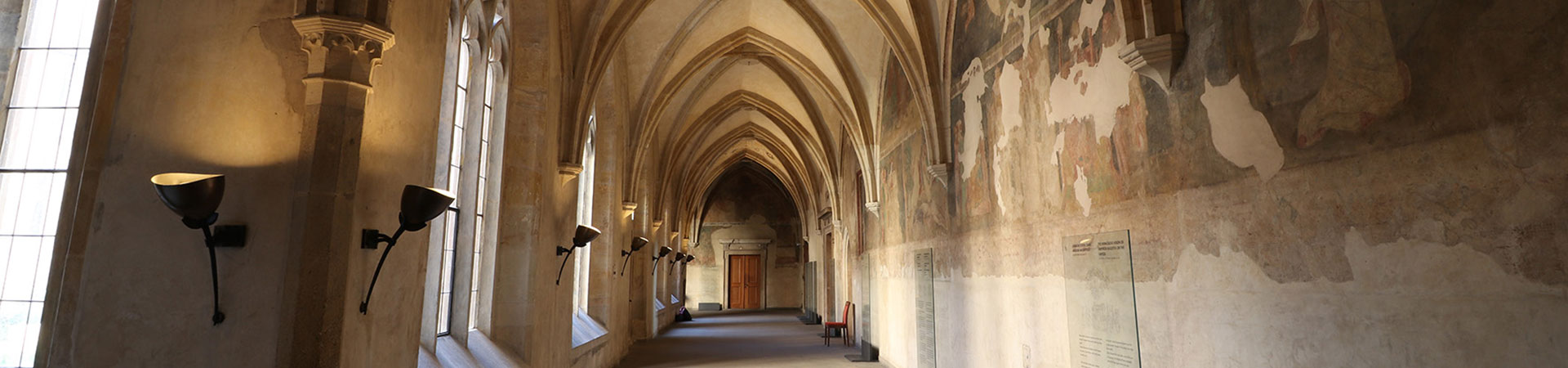 © Jan Vojtěchovský
About project
Aims of the Project
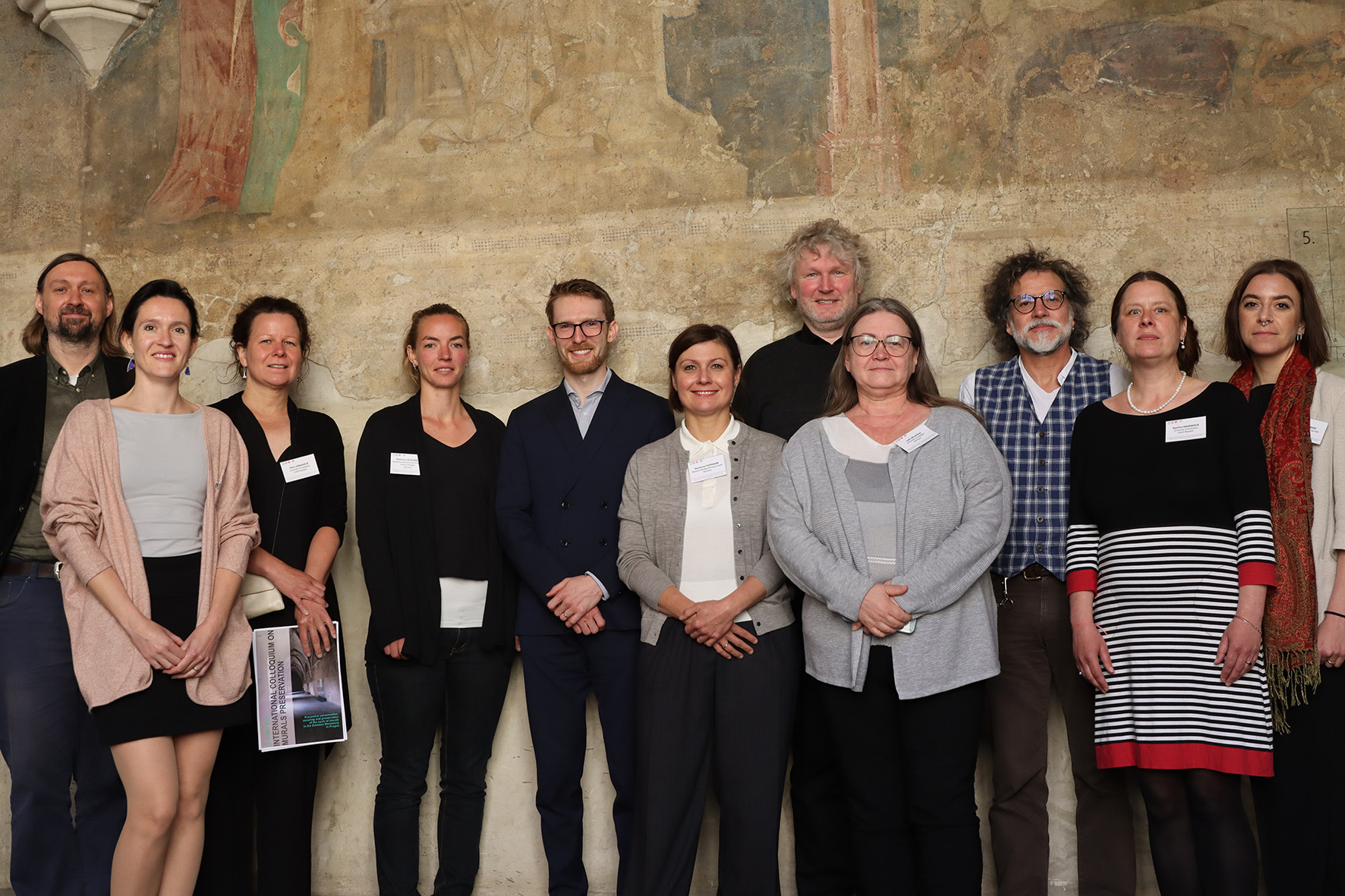
As indicated by its title, the aim of the project was to develop a conservation concept for the cycle of wall paintings in the cloister of the Emmaus Monastery in Prague. The project involved a model investigation of the original painting technique and materials, later interventions including previous restoration campaigns, as well as the current condition of the paintings. The project applied a comprehensive interdisciplinary approach based primarily on non-invasive and, where necessary, micro-invasive analytical methods. These included detailed photographic documentation and photogrammetry, spectral and multispectral imaging, microscopic examination, and mobile spectroscopic techniques such as XRF, Raman, and NIR spectroscopy. The project also included environmental monitoring taking into account hygrothermal relationships, the impacts of climate change, and air pollution in Prague.
In addition, these methods were supplemented by two new research approaches aimed at increasing their informative value:
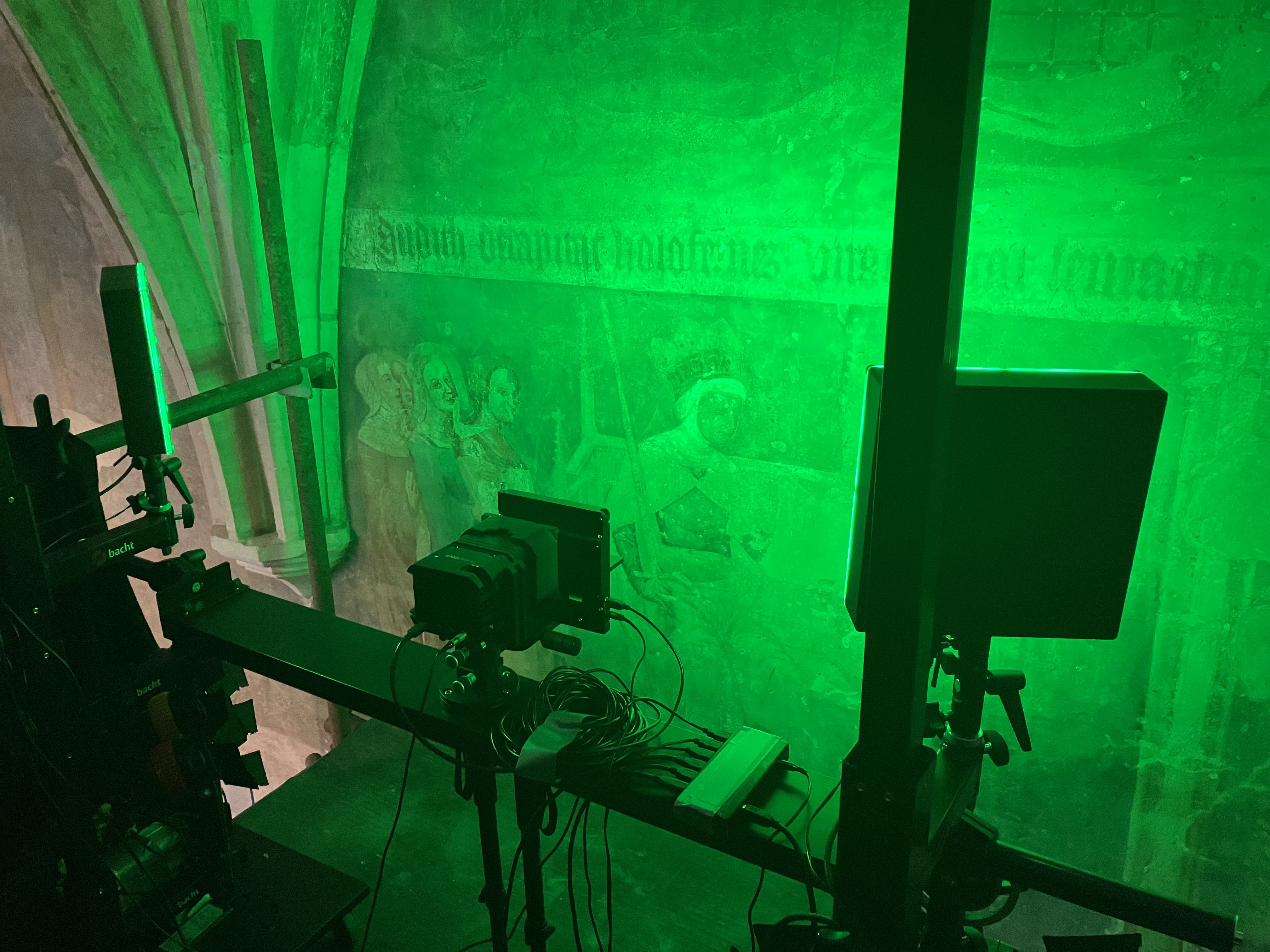
• A multispectral investigation approach based on the new “Rainbow” camera system developed by Phase One. Until now, this system had only been used in museums and galleries, and within the framework of the project it was applied to the investigation of wall paintings for the first time. Unlike conventional devices, its high-resolution spectral images (100 MP) can provide more precise information on the distribution of materials used (such as pigments) and on other properties of the paintings invisible to the naked eye.
• A risk analysis based on the ABC method developed by the Canadian Conservation Institute and ICCROM for the assessment of potential risks to museum objects. The calculation approach makes it possible to define the extent of certain risks for museum objects. It is based on numerical ABC scales, which are used to quantify the frequency of loss events and the expected loss of value for various risks. The project extends these criteria to include environmental and cultural risks for the first time.
Main Activities and Results of the Project
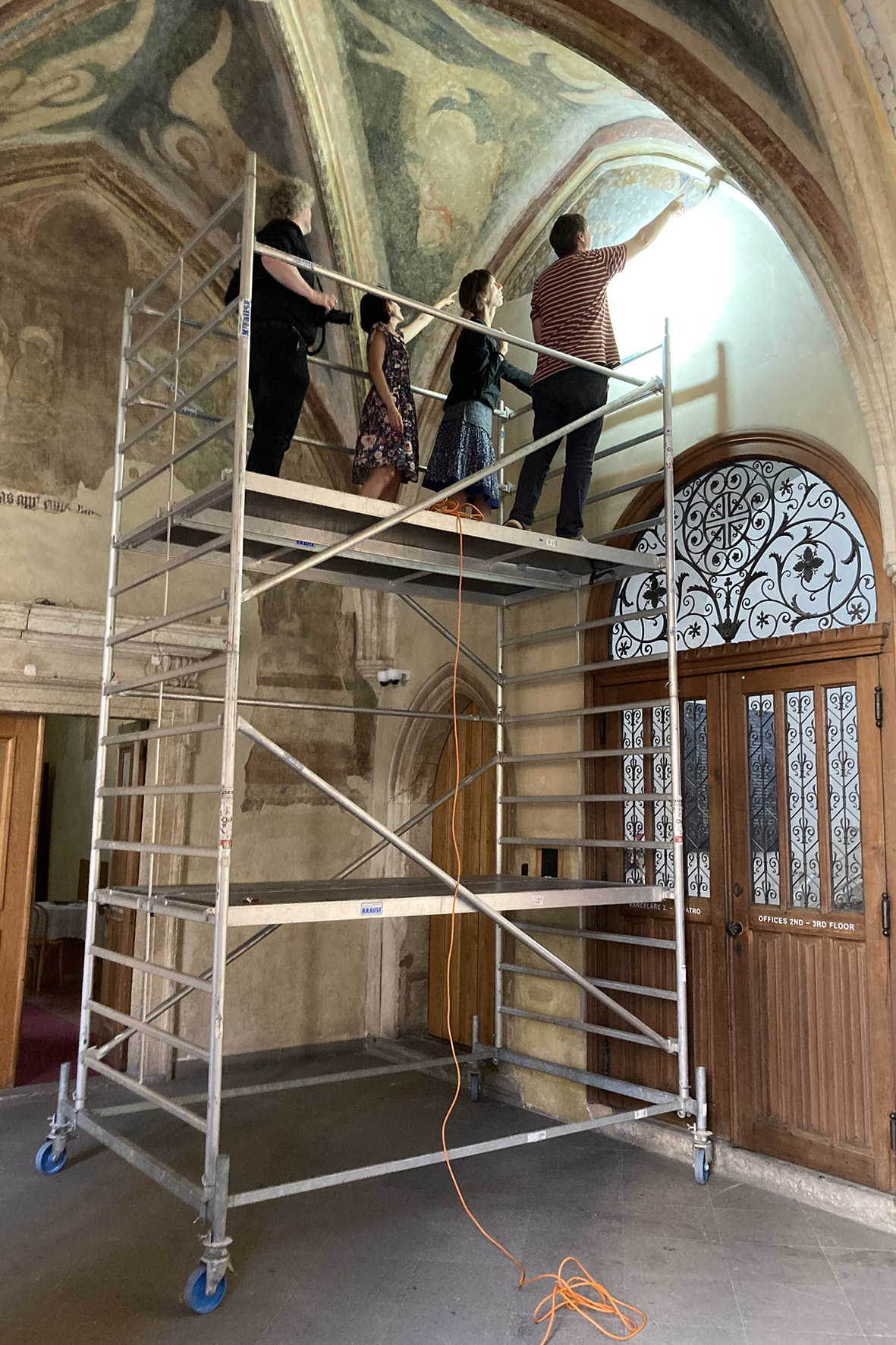
Within the framework of the project, the following activities were carried out:
- Cataloguing of previously unregistered historical documents,
- Documentation of the current condition of the wall paintings, the extent and character of their deterioration, and evaluation of its causes, including the creation of a detailed catalogue of phenomena comprising 80 entries,
- Climate and environmental monitoring and assessment of the current conditions to which the wall paintings are exposed,
- Differentiation of the original wall paintings from later overpaintings, and identification and precise description of previous restoration interventions on the individual paintings,
- Combination of various non-invasive imaging and instrumental investigation methods for the assessment of the state of preservation,
- Assessment of all anthropogenic influences with regard to the visual and material changes of the wall paintings (past and present air pollution, historical overpaintings, modifications carried out by the Beuron School at the turn of the 19th and 20th centuries, the impact of wartime events, restoration interventions carried out between the 1940s and 1960s, and changes occurring since the last restoration campaign),
- Application of the ABC method for the development of a risk management plan as one of the bases for establishing a concept for the preventive conservation, protection, and preservation of the paintings,
- Organisation of an international colloquium and publication of an English-language monograph documenting the project results in order to achieve the broadest possible international impact,
- Preparation of a website summarising the project results, including a 3D presentation of the cloister and its paintings aimed at providing visitors with an accessible introduction to the significance of the wall paintings.
Innovation and Exemplary Character of the Project
Through its scope, level of detail, and interdisciplinary nature, the comprehensive research approach was intended to demonstrate an exemplary model for the preparation of conservation concepts of this kind. It included the use of imaging and non-invasive instrumental methods for the identification of materials used in the wall paintings and for obtaining new detailed information on anthropogenic damage. Particularly innovative was the application of the multispectral “Rainbow” camera system for the investigation of wall paintings. The system enables the acquisition of high-resolution spectral images providing exceptionally detailed information. The further development of this technology in a new field of application — wall paintings — contributes to expanding the possibilities of non-destructive conservation investigation while simultaneously providing material for visitor-oriented presentation.
Equally unique was the testing of the ABC method in the context of historic buildings. This risk assessment tool was further developed through the inclusion of cultural and environmental factors and is therefore particularly relevant in connection with damage phenomena related to climate change.
Among other outcomes, the project results make a significant contribution to the understanding of the techniques and materials of medieval wall painting within the European cultural context, thus also providing added value for art historical research.
The project also included an educational dimension. Several investigation campaigns were carried out in which students from all three participating institutions were involved in the collection and evaluation of data. In this way, the project contributed to the professional development of young specialists in the field of conservation-restoration.