The Emmaus Cycle | Wall Paintings in Context and Close Up
 © Jan Vojtěchovský
The Emmaus Cycle
Wall Paintings in Context and Close Up
The Emmaus Cycle
Wall Paintings in Context and Close Up
Welcome to the website created within the framework of the international research project “Concept for the Preventive Conservation, Safeguarding and Preservation of the Murals Cycle in the Cloister of the Emmaus Monastery in Prague.” The project was carried out between 2022 and 2026 and was funded by the Deutsche Bundesstiftung Umwelt (German Federal Environmental Foundation). The project involved two German universities — Technische Hochschule Köln and Staatliche Akademie der Bildenden Künste Stuttgart, together with the Czech partner — University of Pardubice, Faculty of Restoration.
Description of the Emmaus Cycle
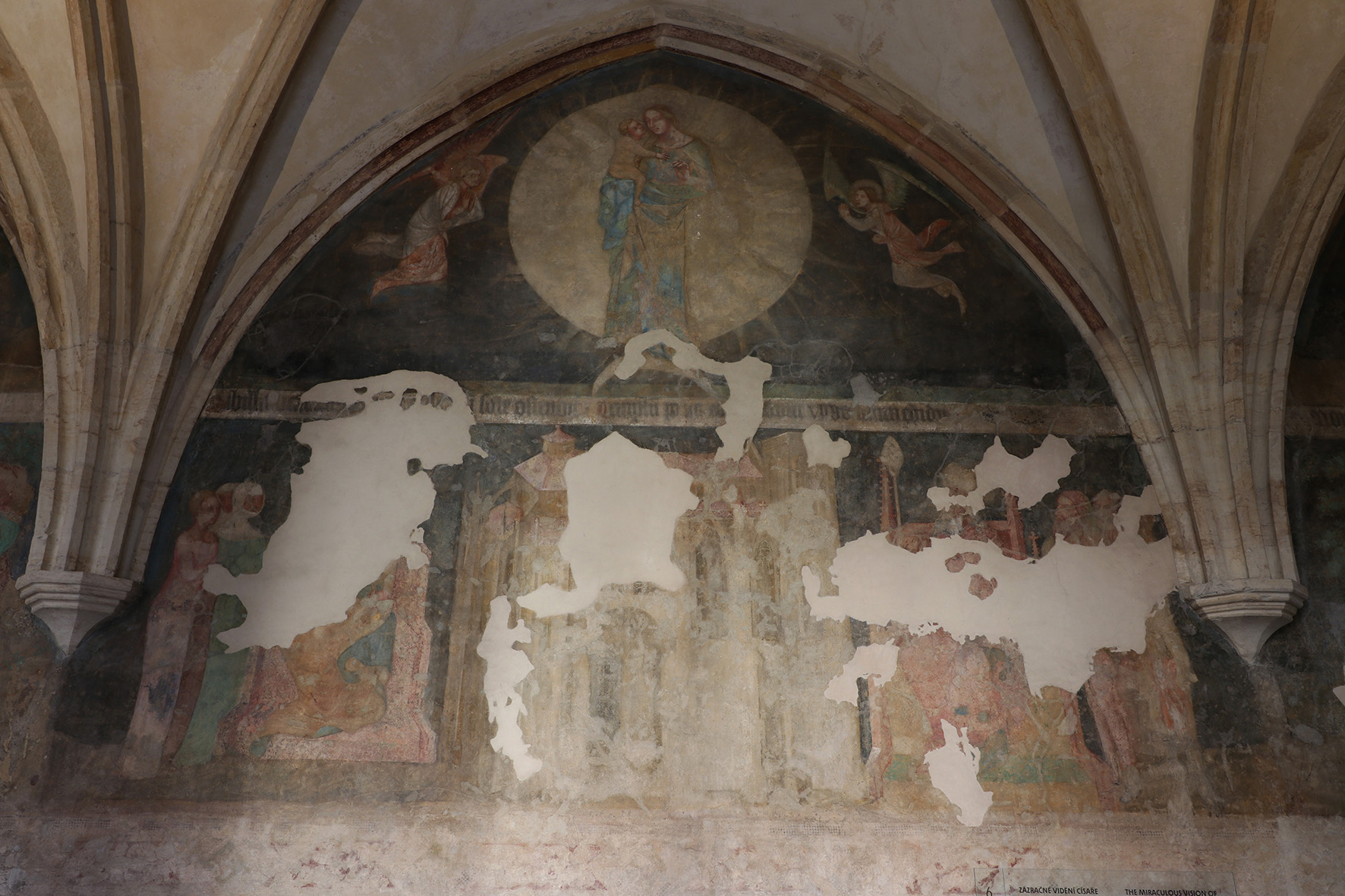
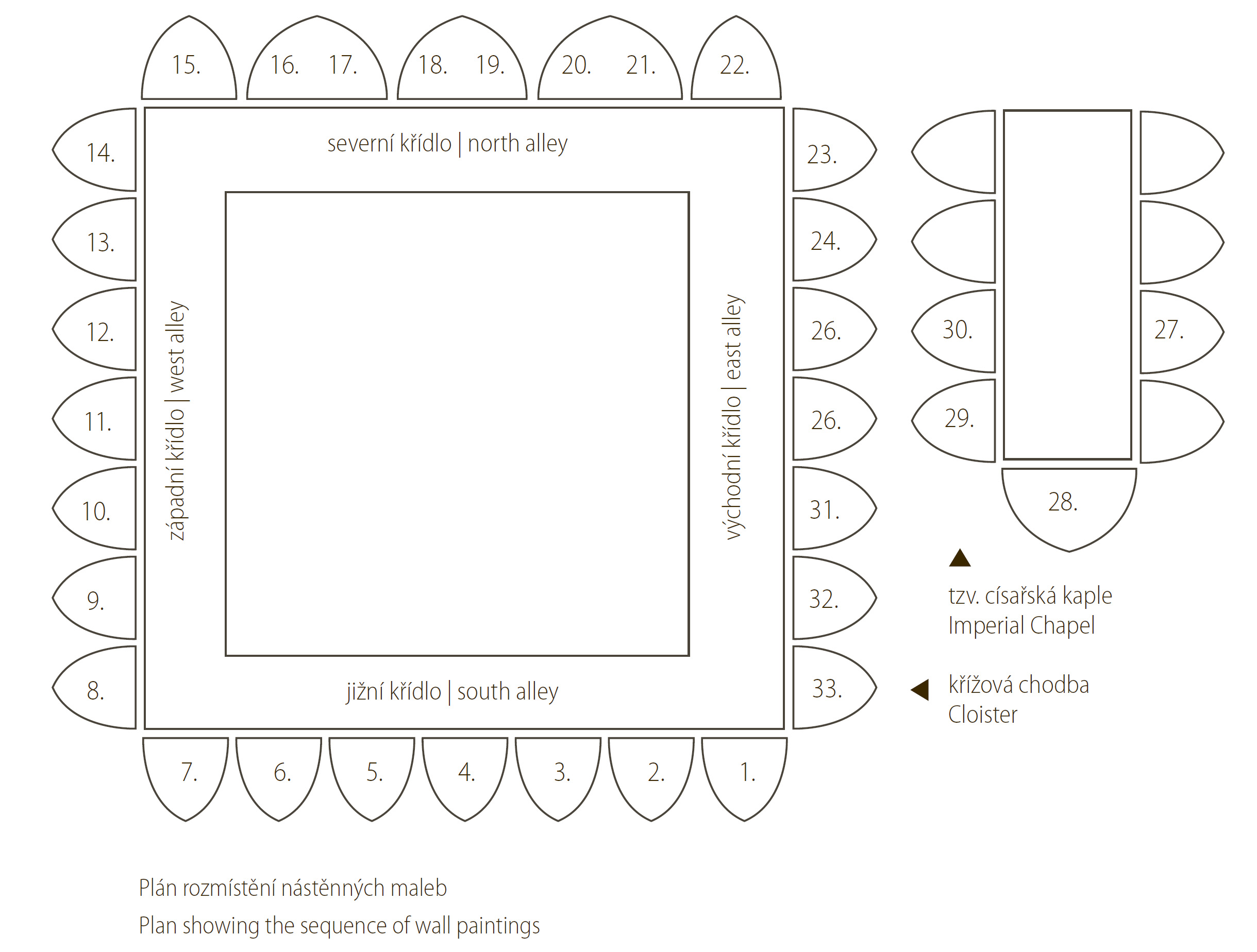
The Emmaus Cycle dates from the late 1360s and early 1370s. Originally, there were 90 scenes in 33 bay fields. The scenes began with the first bay field of the south walk and continued from left to right to the central bay on the eastern wall. Four chronological compositions were located probably in the adjacent chapel (scenes 27–30). The last three consequential compositions were again on the eastern wall.
As indicated by the 15th century description, the cycle featured the history of salvation from the fall of angels to the descent of the Holy Spirit. The life of Jesus culminating with his crucifixion, situated in the chapel, was the core of the story. The ‘typological scenes’, pictorial theological notes referring to the presence of God’s intention in all events, commented on the main storyline.
The cycle was designed so that each section represented a specific chapter: The southern wall was reserved for preIncarnation events – the predestination of the Virgin Mary being the main motif. The western wall featured Jesus’s childhood or hidden life; the northern wall his public activities that foreshadowed the church’s mission. The eastern wall began with the Passion which culminated in the chapel. Events after the resurrection closed the cycle.
Layout of bays and typological study
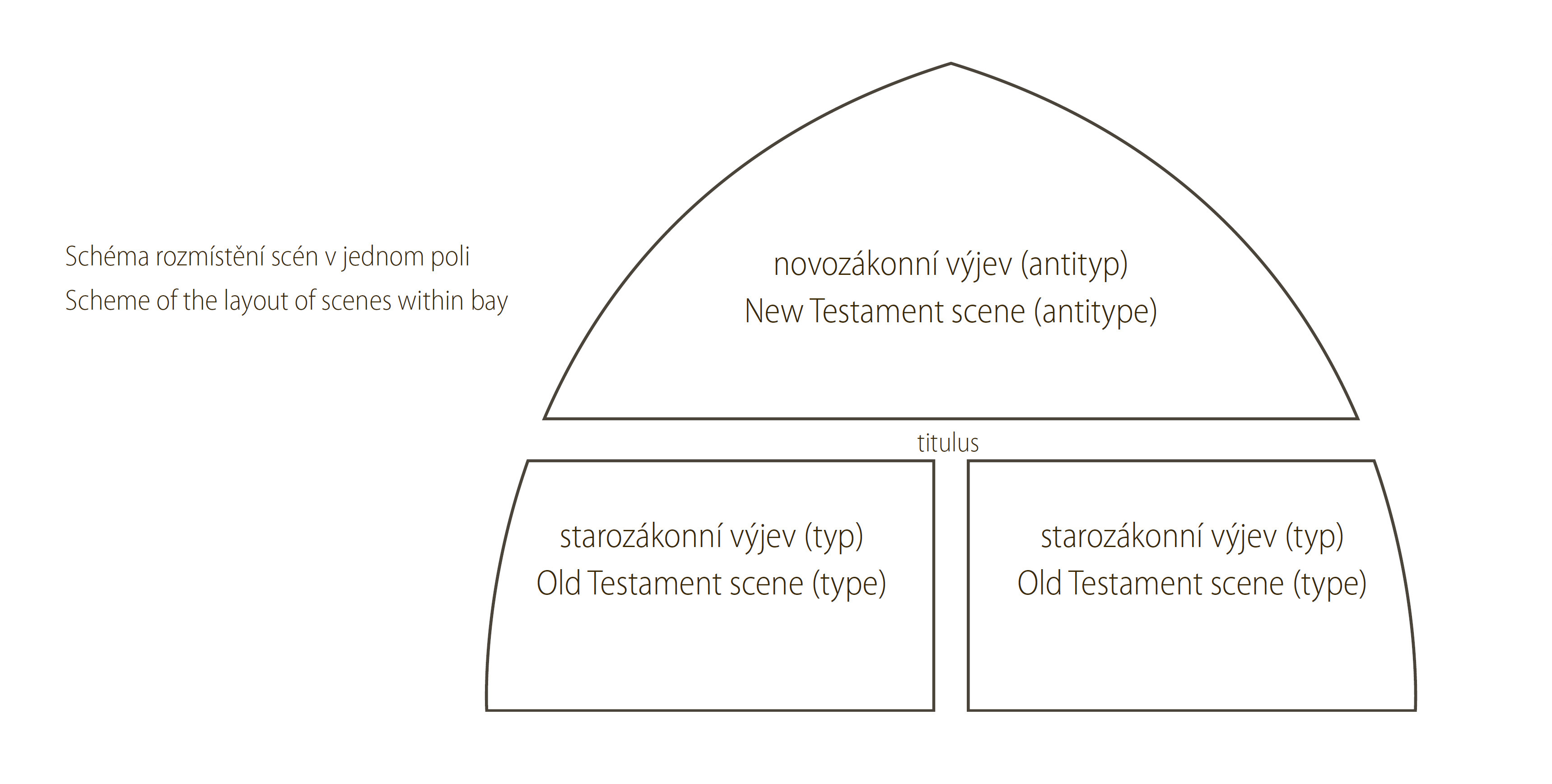
Each bay field was vertically divided into three registers. The lowest decoration band (nearly gone) encircled the entire cloister. An inscription bar divided the upper two registers. The Latin inscription fragments (tituli) originated in the 15th century. The uppermost section featured the main scene, usually from the New Testament; below were two Old Testament scenes – archetypes.
Storytelling through archetypes was based on the popular exegetical method (way of the Scripture interpretation) which explained the Old Testament events as a sequence of events foreshadowing Jesus’s life. Old Testament characters such as Isaac, King David, Samson, and the patriarch Joseph were mere prefigurations (typoi, figurae) of Christ; their actions were always related to those of Jesus.
The Paupers’ Bible (Biblia pauperum) and Mirror of Human Salvation (Speculum humanae salvationis) were best known for presenting this learning through texts and pictures. Although the two books inspired the unknown author of the Emmaus Cycle ‘libretto’, he did not fully identify with either of them. Since the overall concept is closer to the Mirror (also beginning with the Fall of Angels) the Emmaus Cycle can be regarded as its original monumental variation.