The Emmaus Cycle | Wall Paintings in Context and Close Up
The fall of Lucifer
The fall of Lucifer (Speculum humanae salvationis, chap. I)- The fall of Simon the Magician (Golden Legend, Feast of St Peter, chap. LXXXIV) and The Overthrow of King Khosrow (Golden Legend, Feast of the Exaltation of the Holy Cross, chap. CXXXI)
Inscription: not preserved
Uppsala description: Quomodo Lucifer propter superbiam de celo cecidit, Symon Magus propter suam iactanciam de aere ad terram cecidit, Eraclius imperator Cosdroam regem de turri proiecit propter suam superbiam. (Just as Lucifer fell from heaven because of his pride, so Simon Magus fell from the air to the earth because of his boasting, and Emperor Heraclius cast King Chosroes down from the tower because of his pride.)
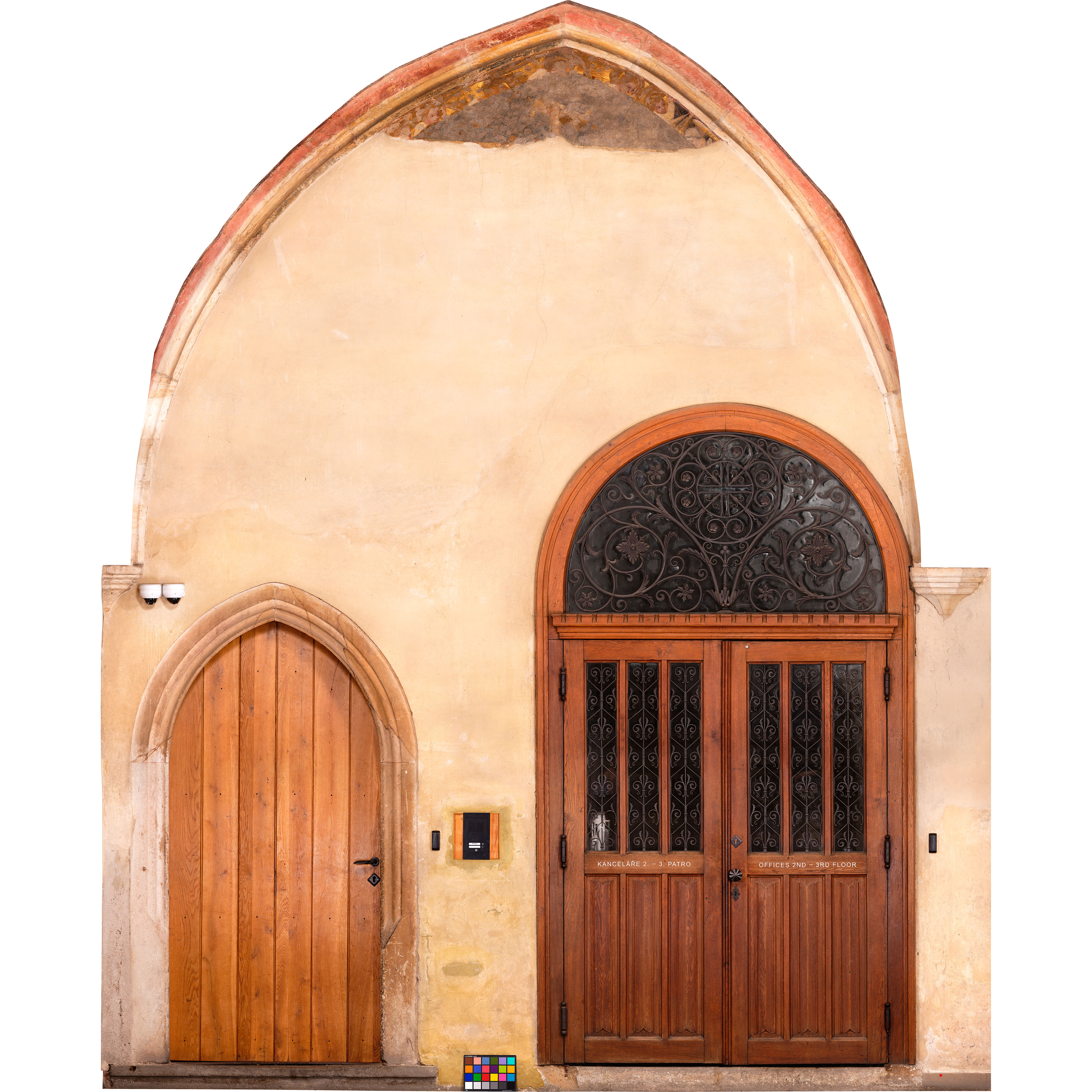
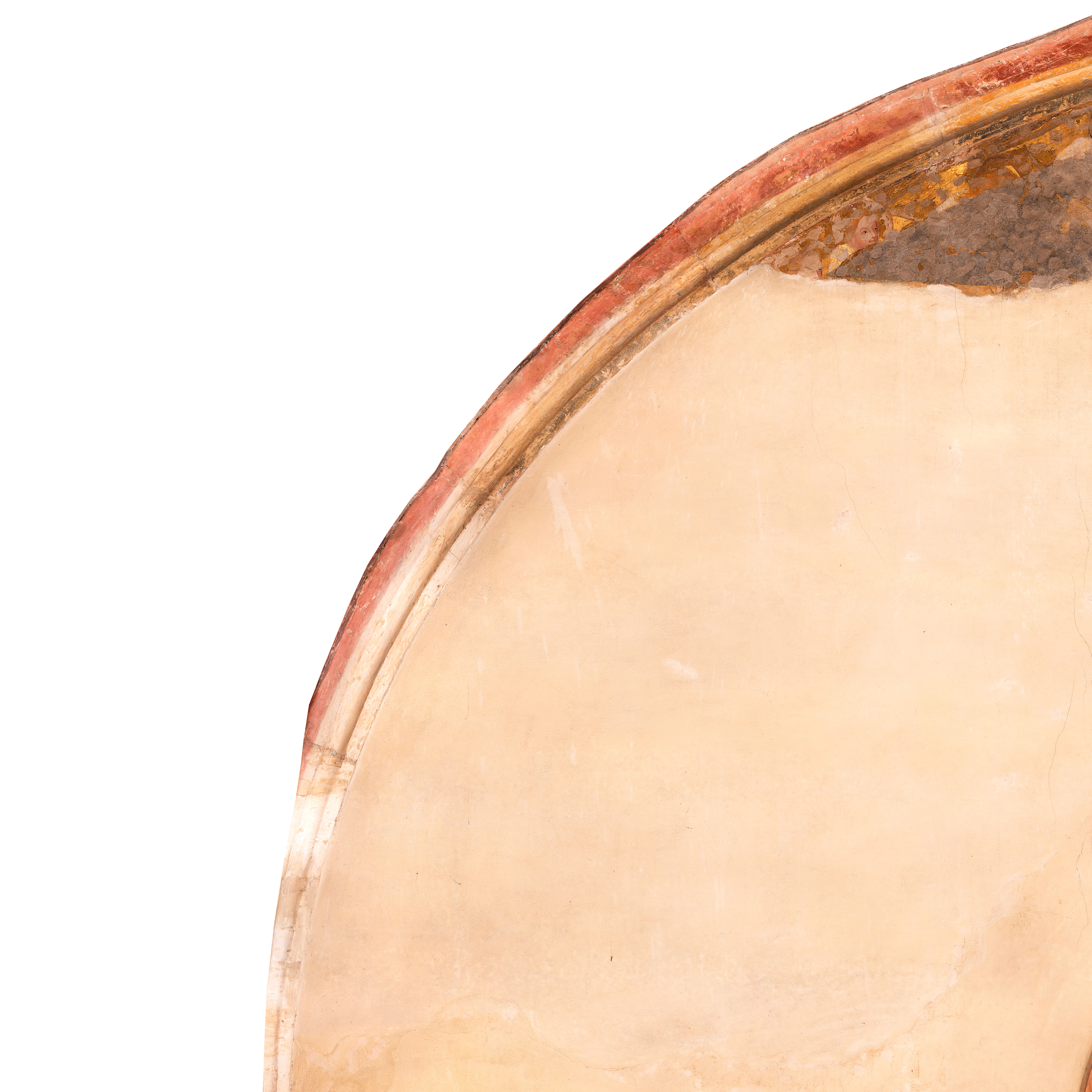
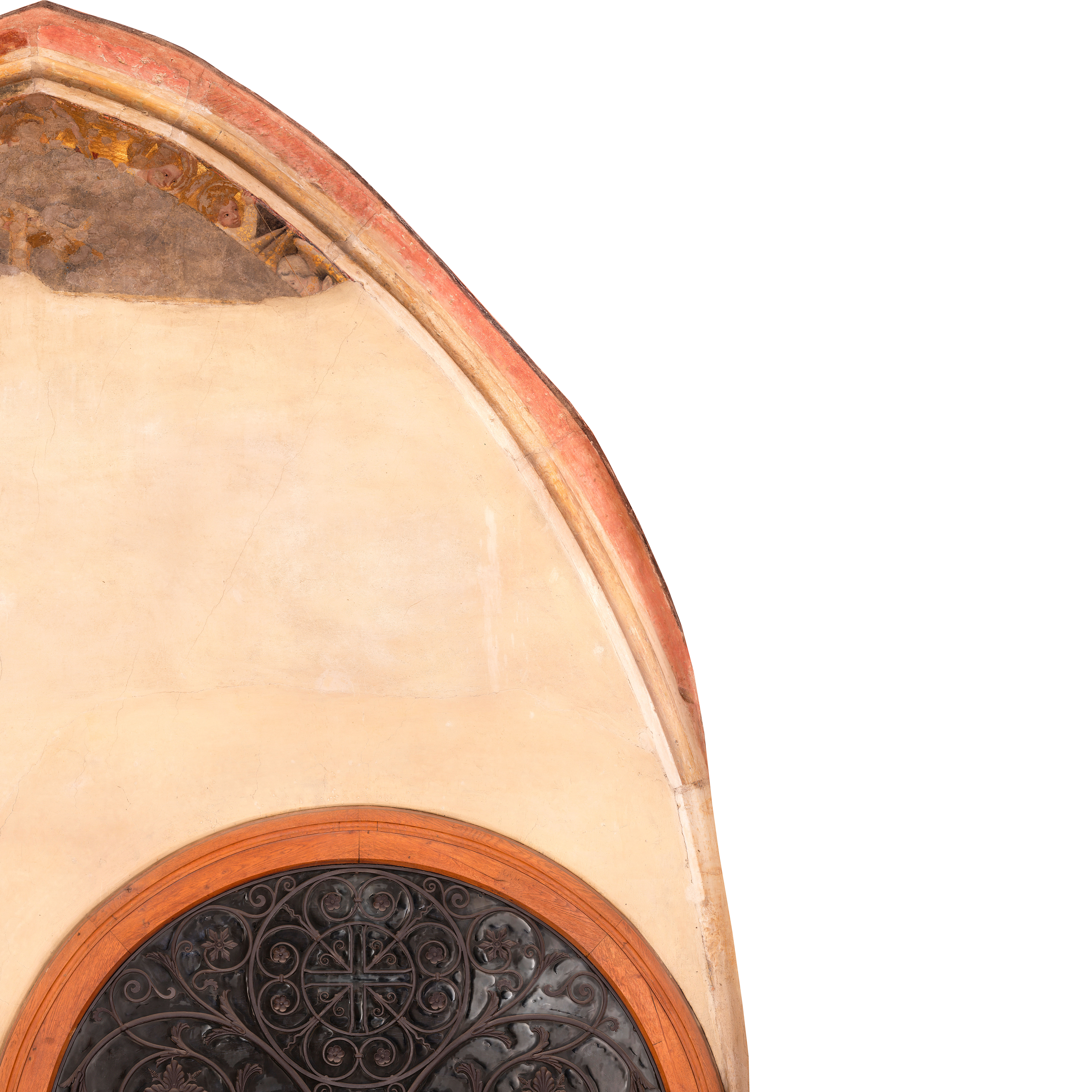
a. The first scene of the entire cycle depicted the story of the fall of Lucifer, who rebelled against the Lord; along with him, his followers were cast down from the heavens. This story was well known from medieval literature and was placed at the very beginning of its narrative in the Speculum humanae salvationis, the principal source of inspiration for the Emmaus cycle. Only small angelic heads at the front of the vault have survived from the scene, which likely represented some of the angels surrounding the Lord’s throne, as we can infer from visual analogies. These angels are dressed in magnificent garments adorned with gold stencils. Their wings were also golden. One of the angels on the far right holds a slender spear, which he presumably used to strike down the arrogant angels, who were probably painted in the lower part of this scene. We can assume that during their fall they were transforming into devils.
b. In the second field, the final episode of the rivalry between St. Peter and Simon the Magician, an opponent of Christianity, was depicted. The legend tells how Simon boasted that he would ascend to heaven. Adorned with a laurel wreath on his head, he leapt from a tall tower on the Capitoline Hill and began to fly. However, the demons who were supporting Simon’s flight, at Peter’s command, let him fall to the ground. We can assume that the scene likely showed St. Peter in prayer and Simon falling from the heavens.
c. The third scene recounted part of the legend associated with the Feast of the Exaltation of the Holy Cross. The Persian king Khosrow II conquered Jerusalem and seized the relic of the Holy Cross, with which he locked himself in a tower in a magnificent chapel. The Roman emperor Heraclius set out on a punitive expedition, defeated him, cast him down, and returned to Jerusalem with the Cross. The scene may have depicted Khosrow falling from the tower, on which the victorious Heraclius stands holding the Cross in his hand.
Následující pole ✖