The Emmaus Cycle | Wall Paintings in Context and Close Up
The Flagellation of Christ
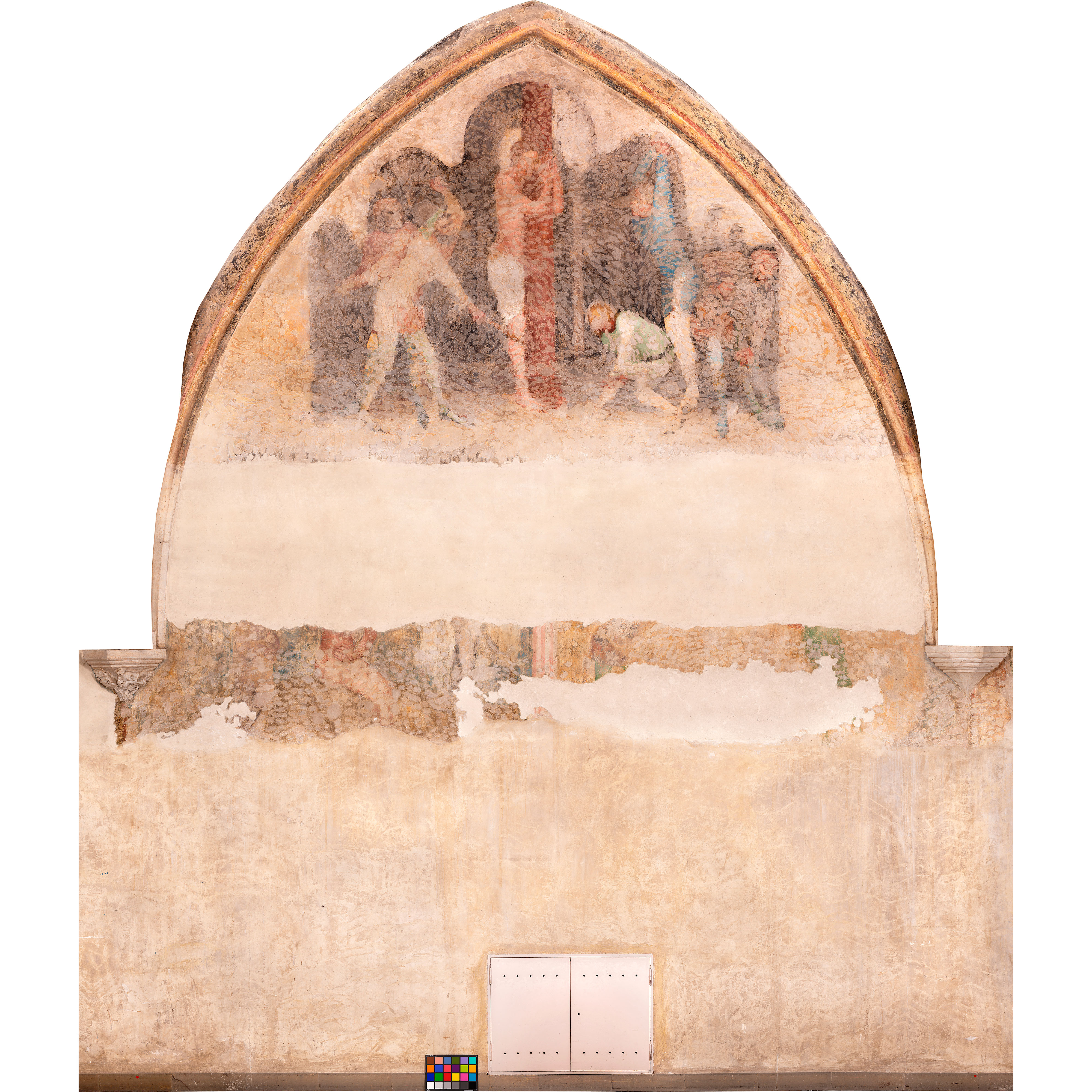
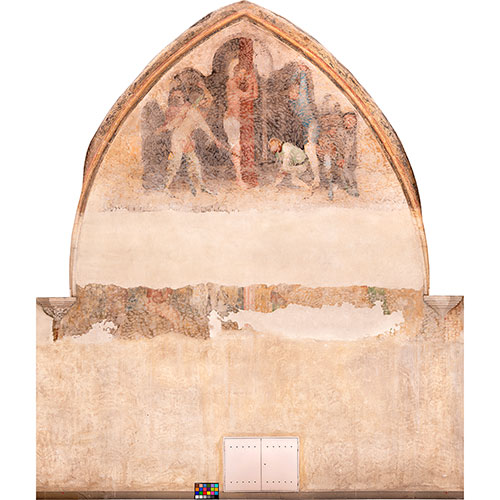
The Flagellation of Christ (Mt 27:26; Mk 15:15; Jn 19:1) – Job Tormented by His Wife (Job 2:6–11) and The Binding of Achior (Jdt 5:5 – 6:13)
Inscription: illegible
Uppsala description: Flagelatur Job. Flagelatur Christus. Ligatus Achior in mandatum Olofernis.
(Job is scourged. Christ is scourged. Achior is bound by the order of Holofernes.)
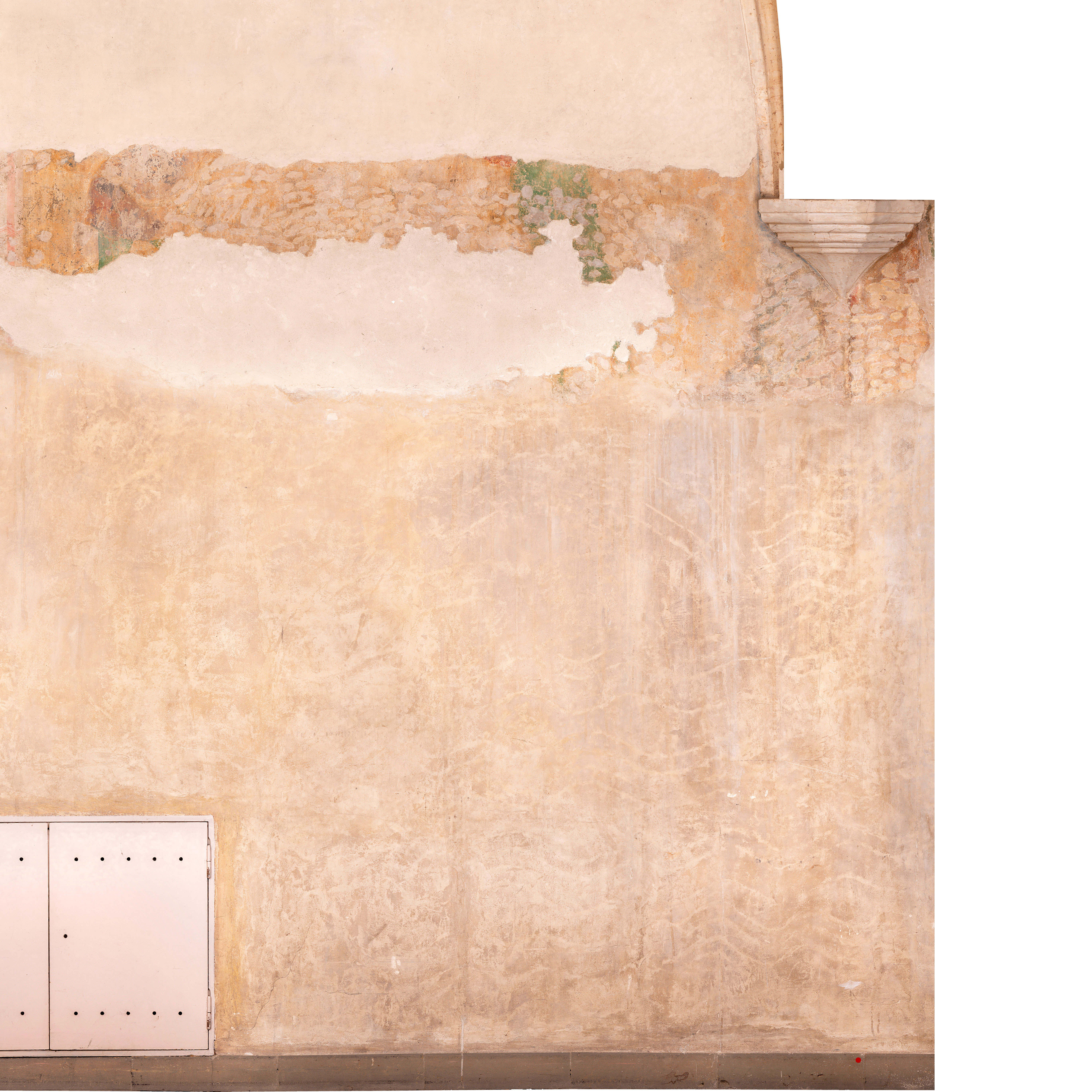
The main scene, along with fragments of the two lower scenes, was damaged by keying - that is, by incisions made with a sharp tool to prepare the plaster for a new layer.
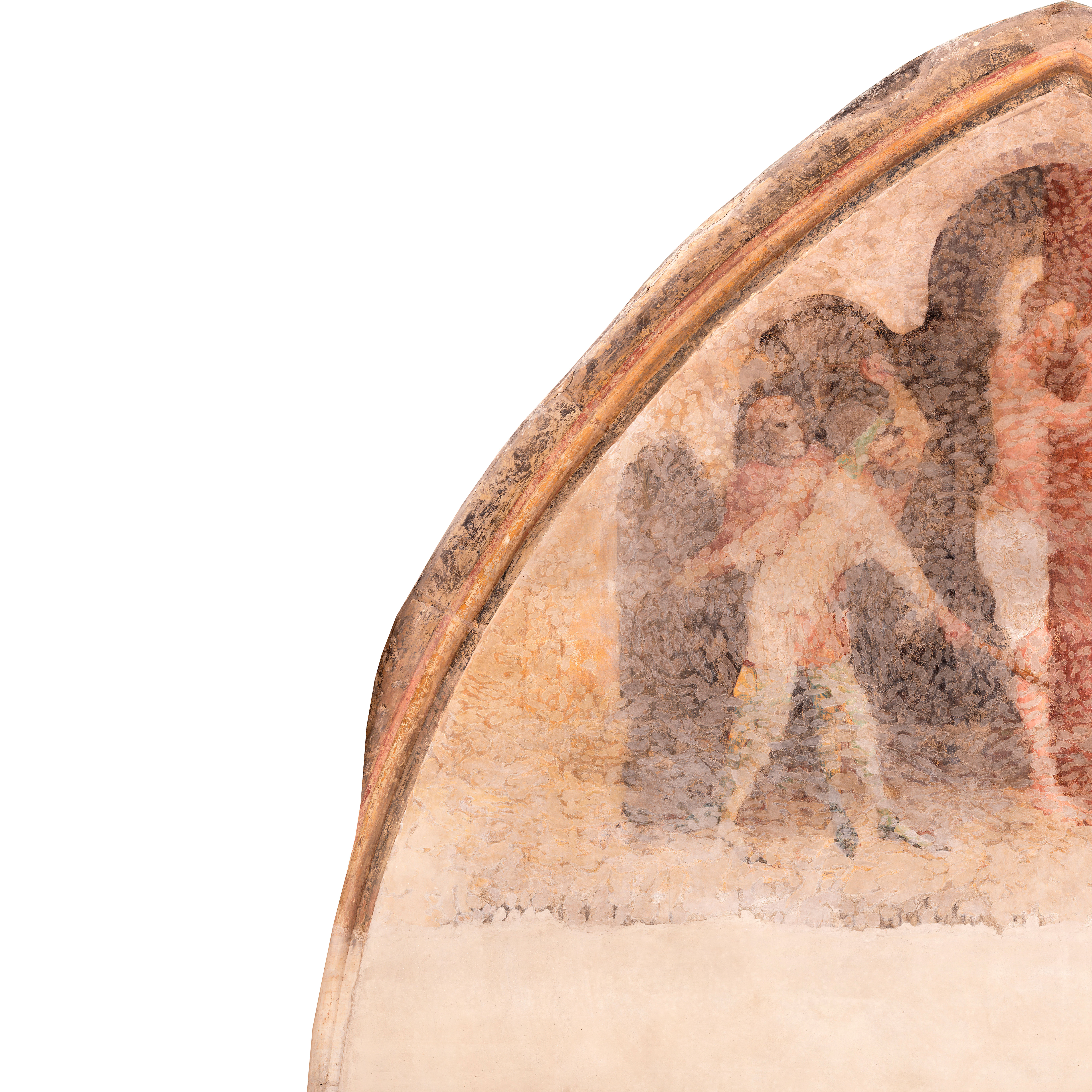
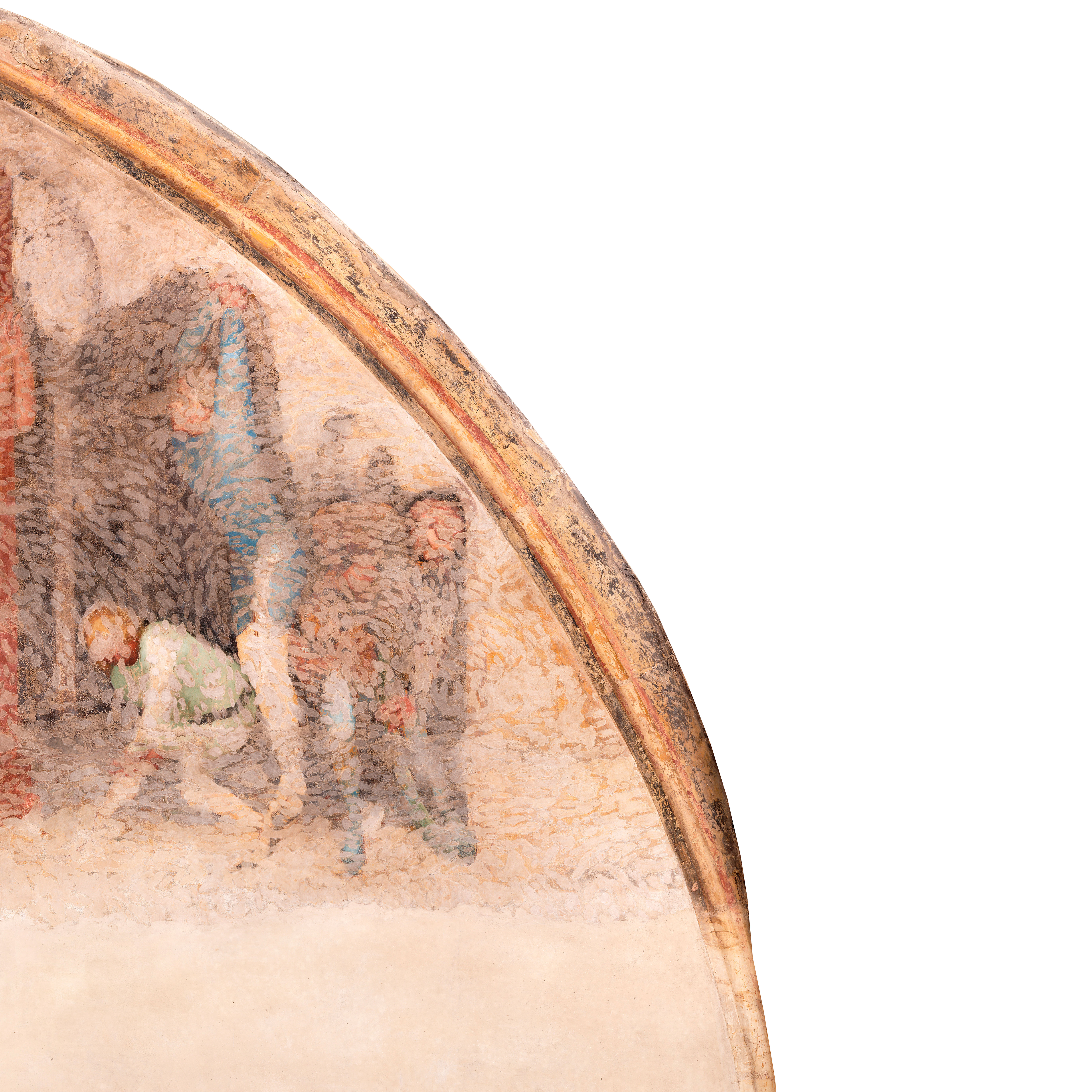
a. The scene of Christ’s Flagellation is set in an interior space. In the center of a vaulted hall, the half-naked Jesus is tied to a column, embracing it from the left side. Behind him stand two of his tormentors, each holding whips in variously extended arms. On the other side, three more men are depicted. The central figure is raising a scourge (apparently) above his head with outstretched arms. In front of him, crouched on the ground, is another man who may be tying Jesus’ feet to the column, while the last one, bent forward, appears to be preparing some kind of instrument.
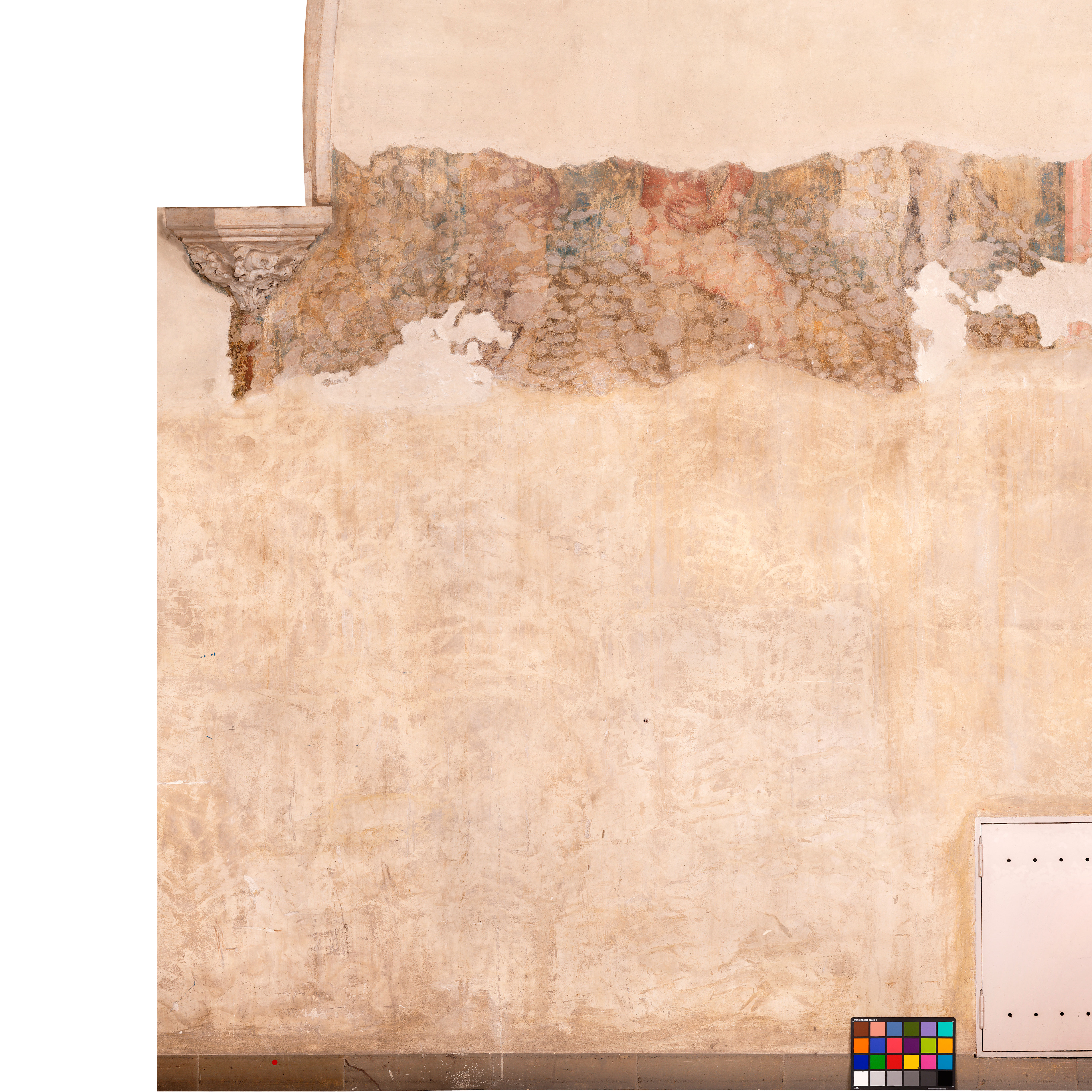
b. The first typological parallel depicted the humiliation of the Old Testament figure Job. This righteous man was tested by the Lord to prove his faithfulness. Job was struck by every possible calamity—he lost his children and his wealth. In the second chapter, he was afflicted with boils and sat down on a heap of dung (according to the Vulgate). His wife mocked him, asking why he did not curse God for what had befallen him. This scene was described in the Speculum humanae salvationis (Chapter XX), which states that Job was scourged by the devil with whips (verberibus) and by his wife with words (verbis). The iconography of the scene typically showed Job seated naked on a heap of dung, with the devil holding a scourge and his wife standing beside him. The scene in Emmaus followed this model: at the center sat a completely naked Job; from the left approached what was likely his wife (a fragment of a pinkish garment remains), while to the right stood what was likely the devil (a greyish figure).
c. Achior, the commander of the Ammonite army, warned Holofernes not to march against the Israelites. As punishment, Holofernes had him bound and left lying near the city of Bethulia, within sight of its inhabitants. The exact composition of the scene cannot be determined with certainty. Only one figure is clearly visible on the left side of the painting (wearing green trousers and a brown tunic), and possibly another on the right (in green garments). If the painters here followed the scheme known from manuscripts of the Speculum humanae salvationis (chapter XX), then there would have been a tree in the center, with Achior tied to it, and two men—one on either side—binding him.
Předchozí pole | Následující pole ✖