The Emmaus Cycle | Wall Paintings in Context and Close Up
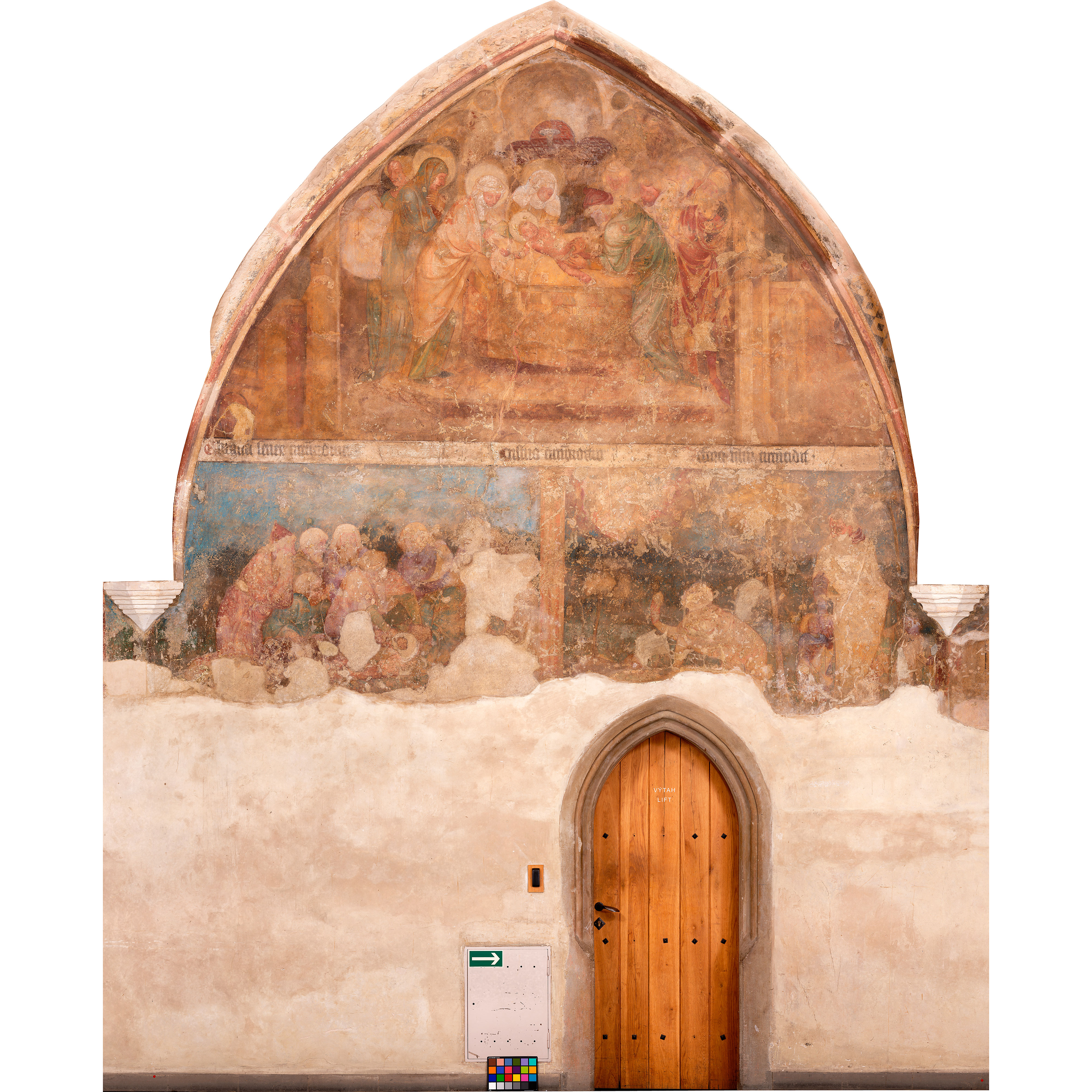
The Circumcision of the Lord
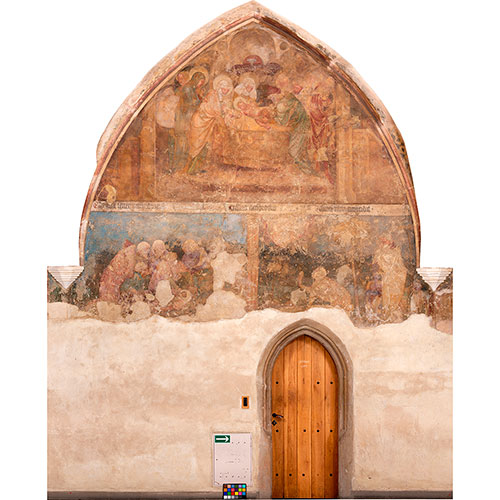
The Circumcision of the Lord (Luke 2:21) – The Circumcision of Abraham (Gen 17:1–27) and Zipporah Circumcises Her Son (Exod 4:24–26)
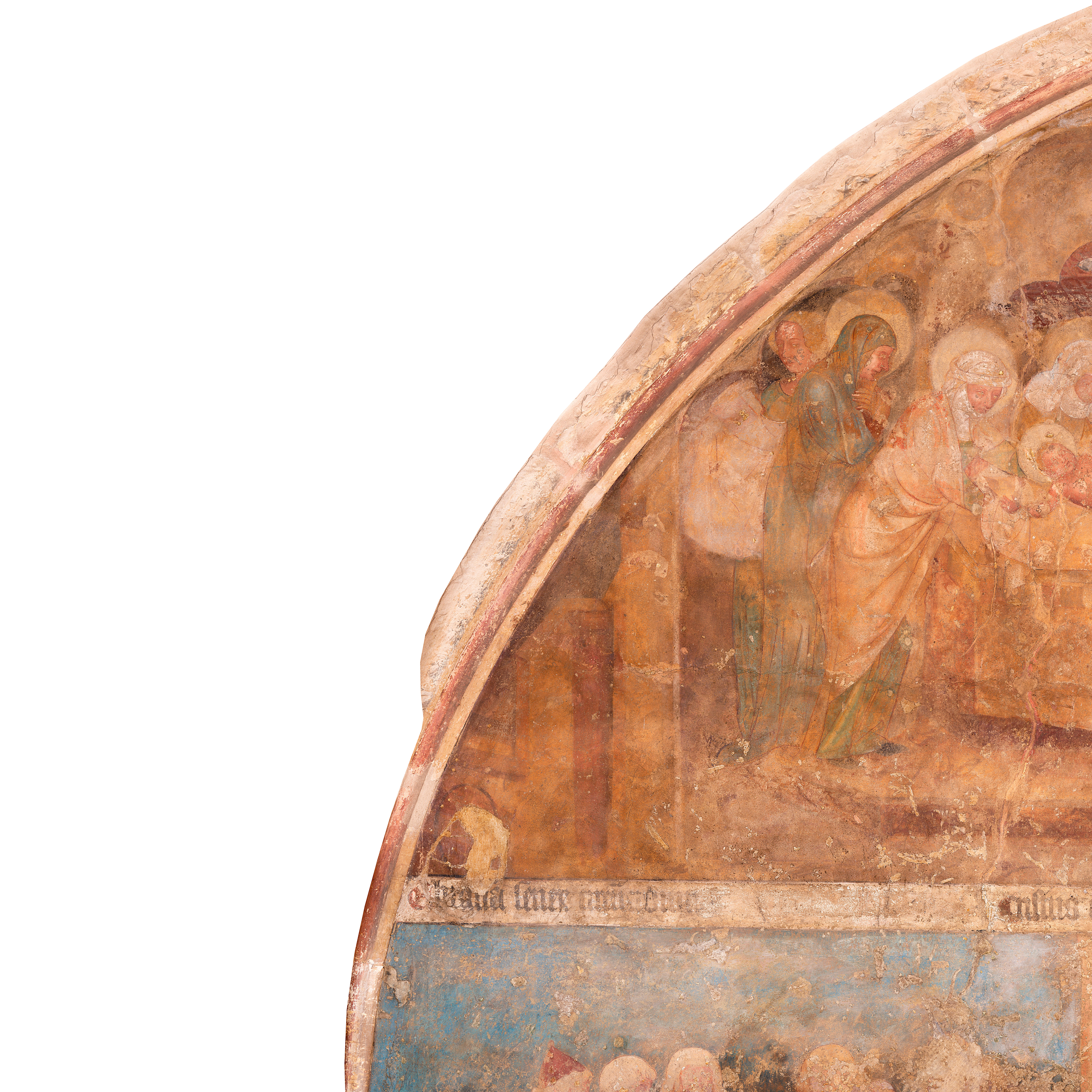
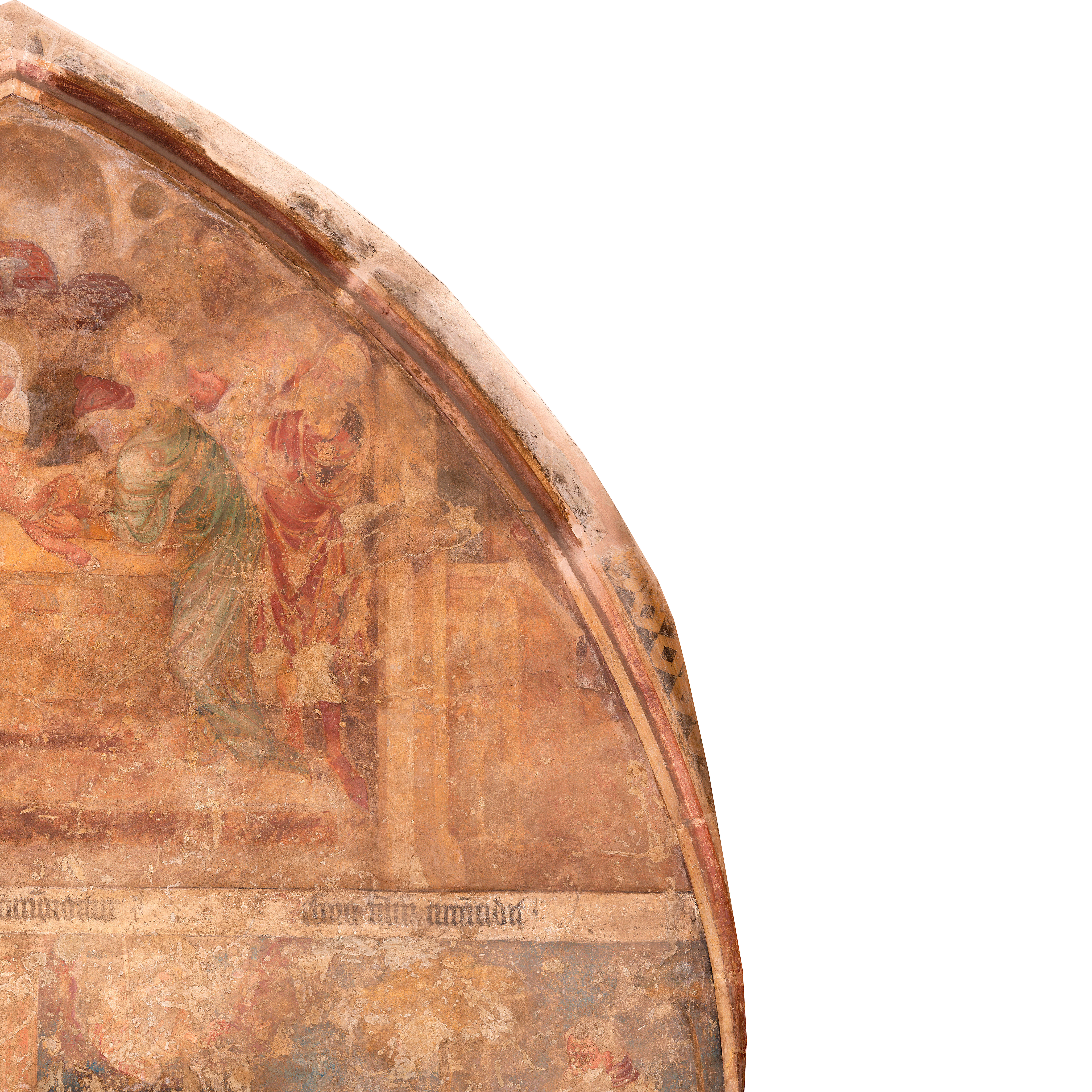
Inscription: Abraham senex circumciditur. Cristus circumciditur. Zefora filium circumcidit.
(The old man Abraham is circumcised. Christ is circumcised. Zipporah circumcised her son.)
Uppsala text: Circumciditur Abraham. Christus circumciditur. Et Sephora filium circumcidit et sic angelum placuit. (Abraham is circumcised. Christ is circumcised. And Zipporah circumcised her son and thus appeased the angel.)
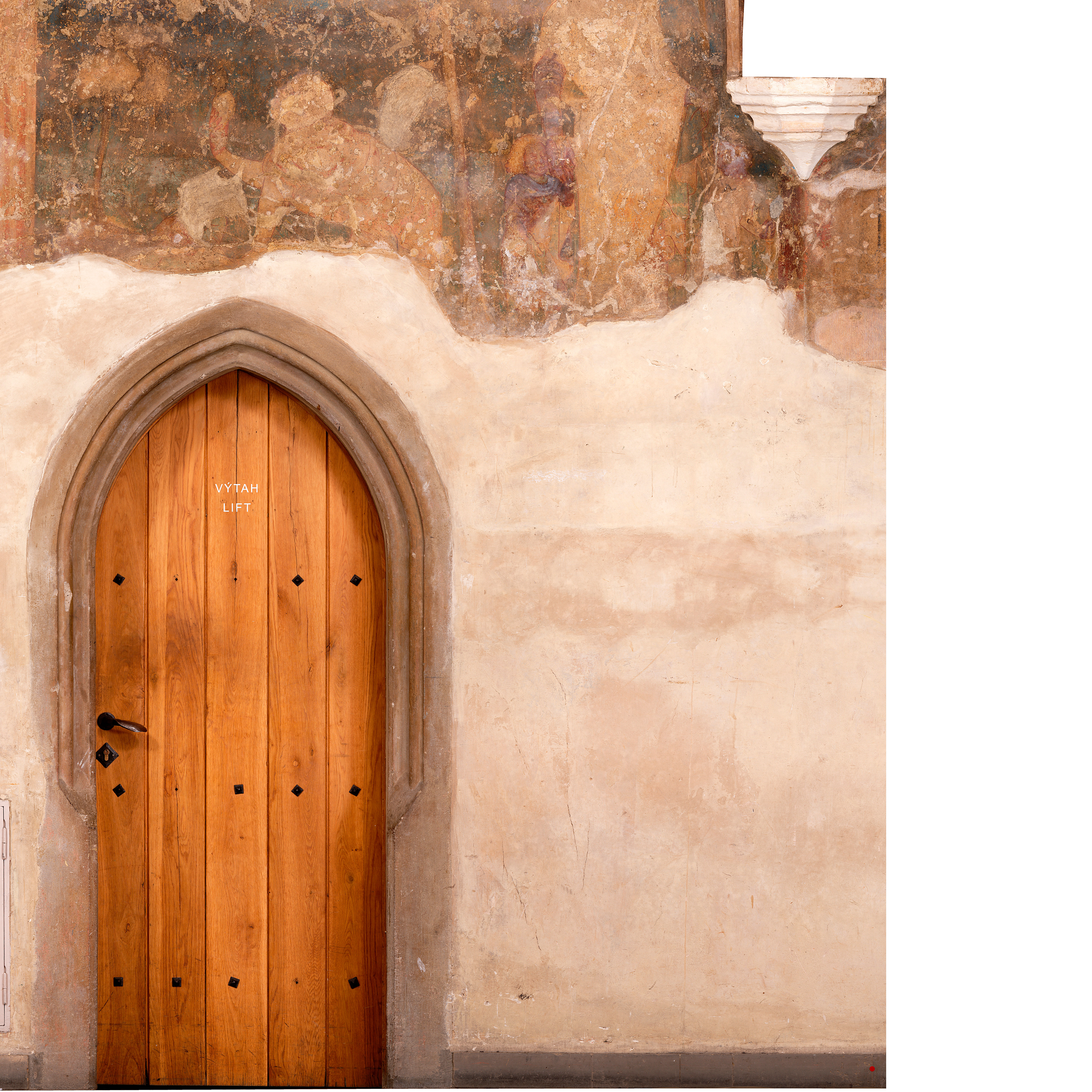
a. According to Jewish law, every boy was to be circumcised eight days after birth as a sign of the covenant with the Lord. In accordance with this commandment, Jesus was also brought to the temple to undergo this ritual. The Circumcision of the Lord therefore takes place in the temple, with an altar painted at the center of the scene. On the altar lies the infant Jesus, held from the left by two holy women (perhaps the prophetess Anna and Mary´s cousin Elizabeth?). Behind them stands the Virgin Mary, her hands crossed over her chest, perhaps in a gesture of humble acceptance. Peeking out from behind her shoulder is a young girl holding a white cloth, likely meant to wrap the infant. On the right, a priest bends over the child to perform the circumcision, while three other men observe behind him—one of them identified by a distinctive Jewish cap. The bearded man in the back right is likely St. Joseph.
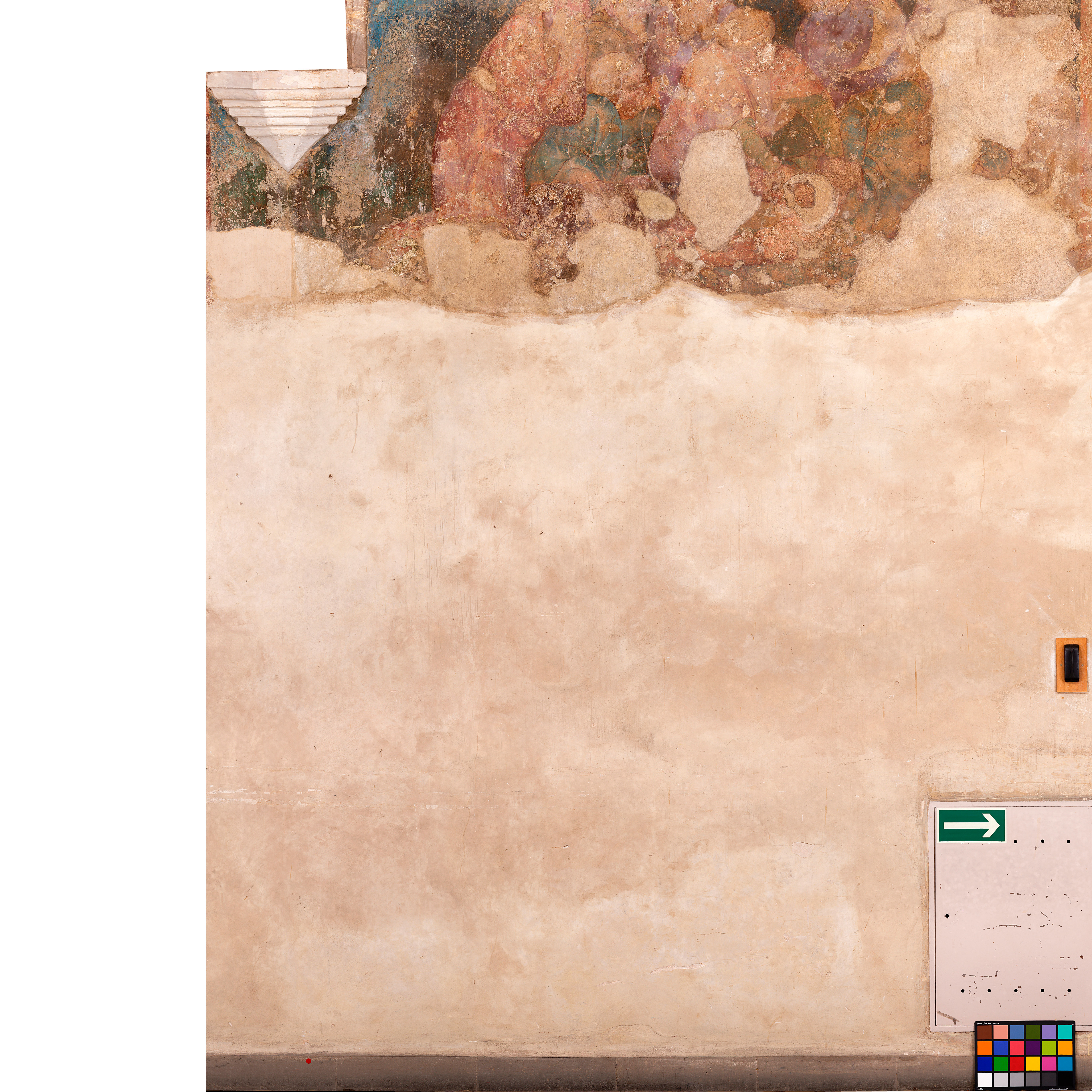
b. The first typological parallel depicts the circumcision of Abraham, which, however, is not described in the Old Testament, and so the scene reflects the painter’s imagination. In the Bible, we learn that God made a covenant with Abram, who was then renamed Abraham, and the sign of this covenant was to be the circumcision of all male members of his people. Abraham obeyed God and had all the men circumcised, including himself. In the scene -whose lower part is destroyed - we see Abraham lying on a bed. A man in a red garment is bending over him, performing the circumcision, while six other men, each with different expressions on their faces, look on.
c. Zipporah, the Midianite wife of Moses, circumcised their son Eliezer in order to avert the wrath of the Lord. In the scene, Zipporah is shown kneeling on the ground, holding the boy with her left hand while raising her right hand, in which she grips a flint knife to perform the circumcision. Moses stands to the right, observing the act and leading his circumcised firstborn son, Gershom.
In the Middle Ages, the Circumcision of Jesus was not interpreted as the moment when He accepted the sign of the covenant, but rather as the beginning of His suffering and the first shedding of His blood—a foreshadowing of the Passion. From a chronological perspective, the placement of the event is also inaccurate: the circumcision took place on the eighth day after birth, whereas the visit of the Magi to the Holy Family in Bethlehem occurred earlier. However, the sequence of scenes follows the liturgical calendar, in which the Circumcision is celebrated on January 1st and the Adoration of the Magi on January 6th.
Předchozí pole | Následující pole ✖