The Emmaus Cycle | Wall Paintings in Context and Close Up
The Expulsion from Paradise
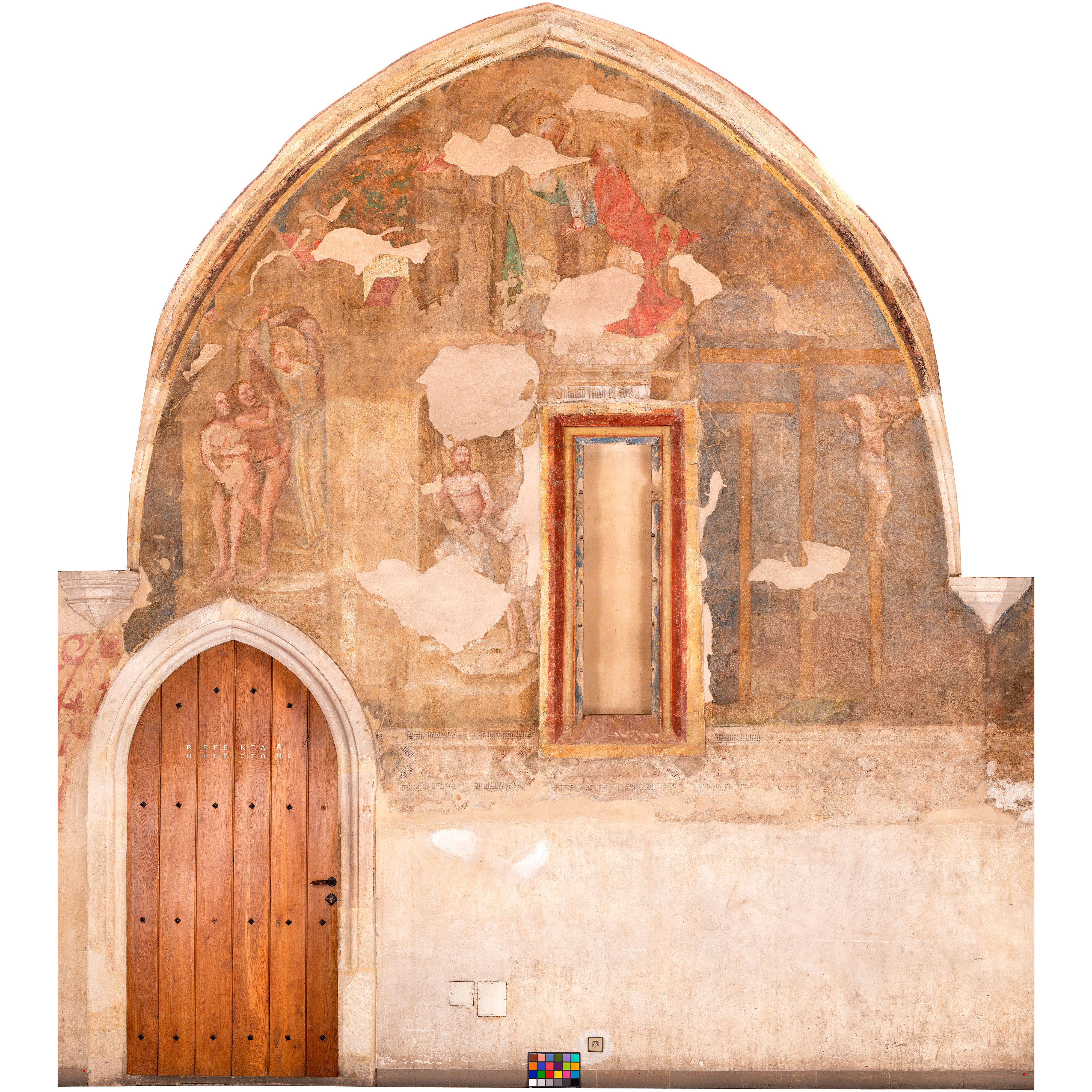
The Expulsion from Paradise (Gen 3:23–24) – Enoch Taken into Paradise (Gen 5:24) and The Good Thief Received into Paradise (Luke 23:43)
Inscription: Introduccio Enoh et Elye (The Entry of Enoch and Elijah)
Uppsala description: Item expulsio Adam et Eve de paradyso. Introduccio Enok et Helye in paradysum et latronis et alter latro manet in cruce. (The expulsion of Adam and Eve from Paradise. The entry of Enoch and Elijah and the thief into Paradise; the other thief remains on the cross.)
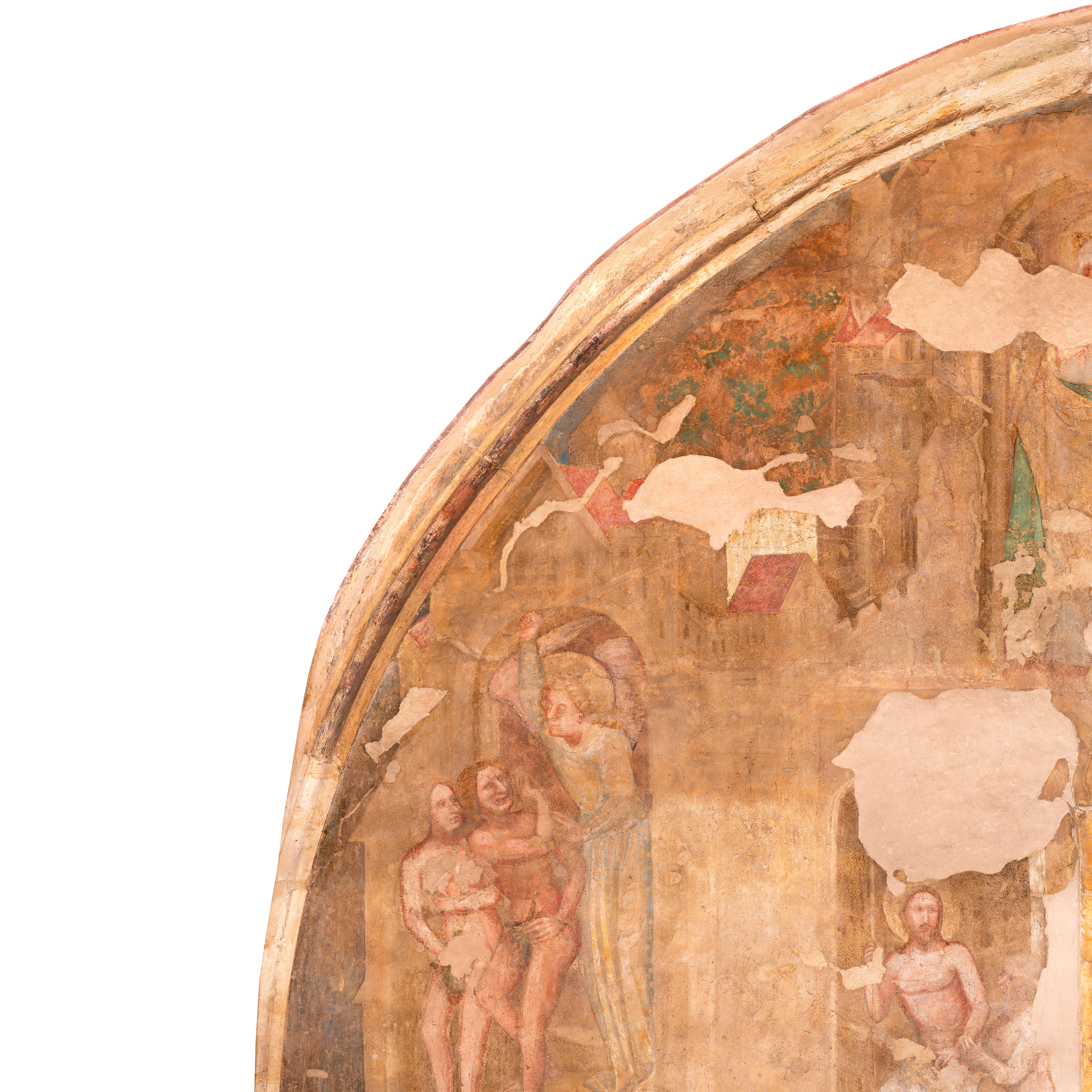
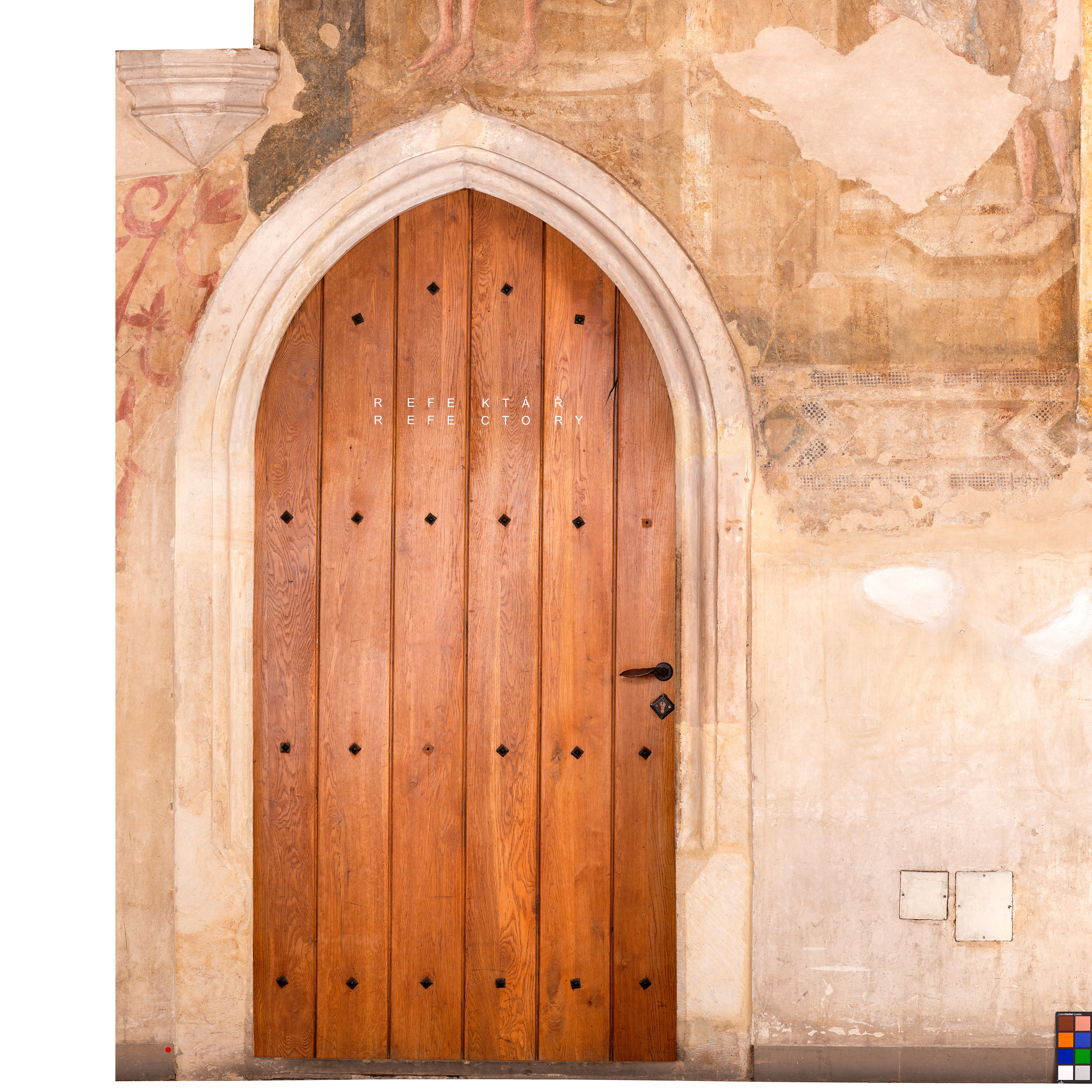
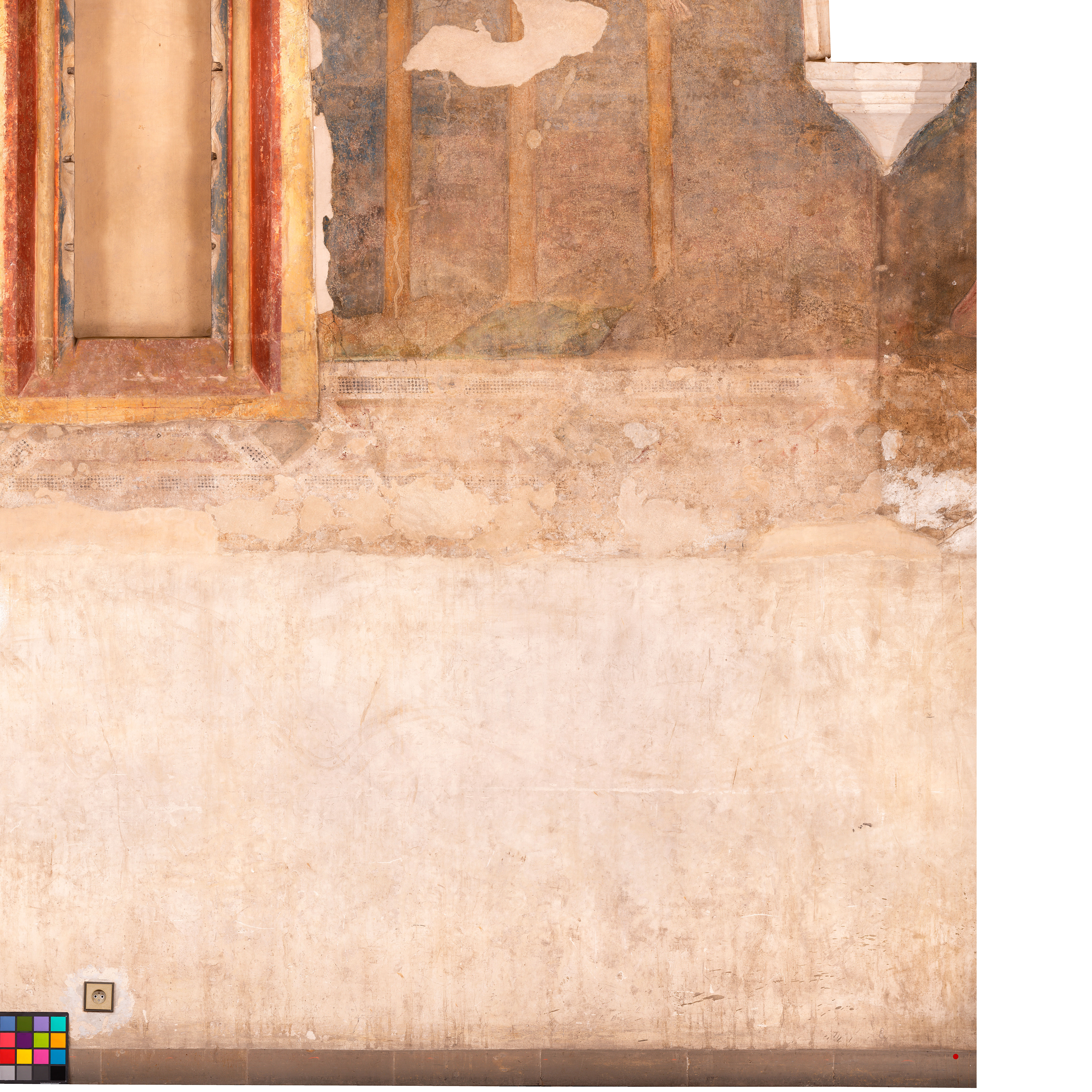
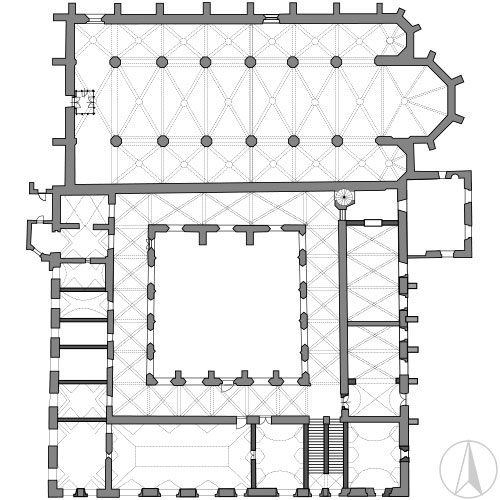
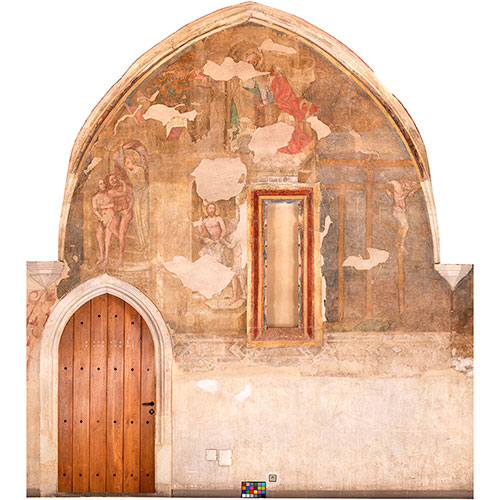
In the center of this field we see the second original Gothic window, which opened into the refectory. The surviving polychromy is also original. The layout of the scenes likely responds to the disruption of the field’s unity caused by the window. The individual scenes unfold in front of three city gates, set in a high surrounding wall. Within the city we see buildings as well as trees, whose leaves were created using stencils.
This section of the cycle completes the story of the fall of the first humans and, at the same time, already foreshadows the redemption that will come through Jesus’s death on the cross. In an analogous way, a reference to the cross of Christ appears in the central field of each of the four wings of the cloister.
a. On the steps leading from the city gate in the lower left, we see naked Adam and Eve walking, covering their shame with green leaves. They are turning back; Eve’s face is completely calm, while Adam’s is contorted in an expression of despair. Above them in the gate, an angel hovers with a sword raised above his head, driving them out of Paradise.
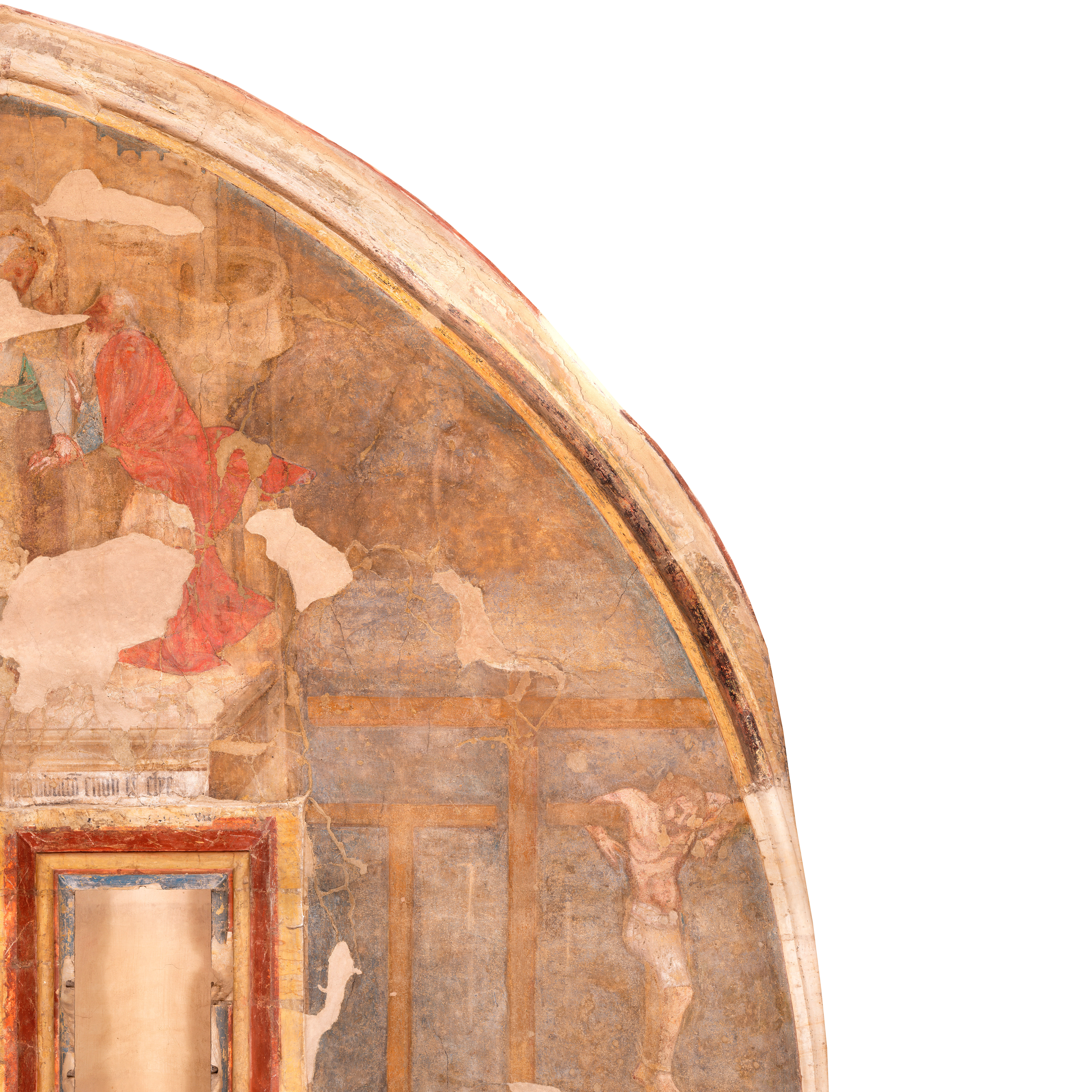
b. The scene above the window depicts the Lord holding the hand of an elderly man and leading him into Paradise. This is certainly Enoch, a descendant of Seth, the third son of Adam. According to the Book of Genesis, the Lord took him away with Himself, which has been interpreted to mean that he was brought into Paradise. Both the inscription and the description mistakenly refer to the scene as the reception of Elijah into Paradise; however, that episode is depicted in the penultimate field of the cycle. This error indicates that the inscriptions are later additions, as their author was no longer entirely certain about the identification of the scene.
c. The third scene is divided into two parts by the window. To the left of the window, the resurrected Christ stands before the gate of Paradise, holding a banner in His right hand and, with His left hand, taking the hand of the Good Thief, to whom He had promised on the cross that he would be with Him in Paradise that very day. To the right of the window, we see three crosses on Golgotha—two of them empty, while on the third remains the thief who was crucified on Jesus’ left side.
Předchozí pole | Následující pole ✖