The Emmaus Cycle | Wall Paintings in Context and Close Up
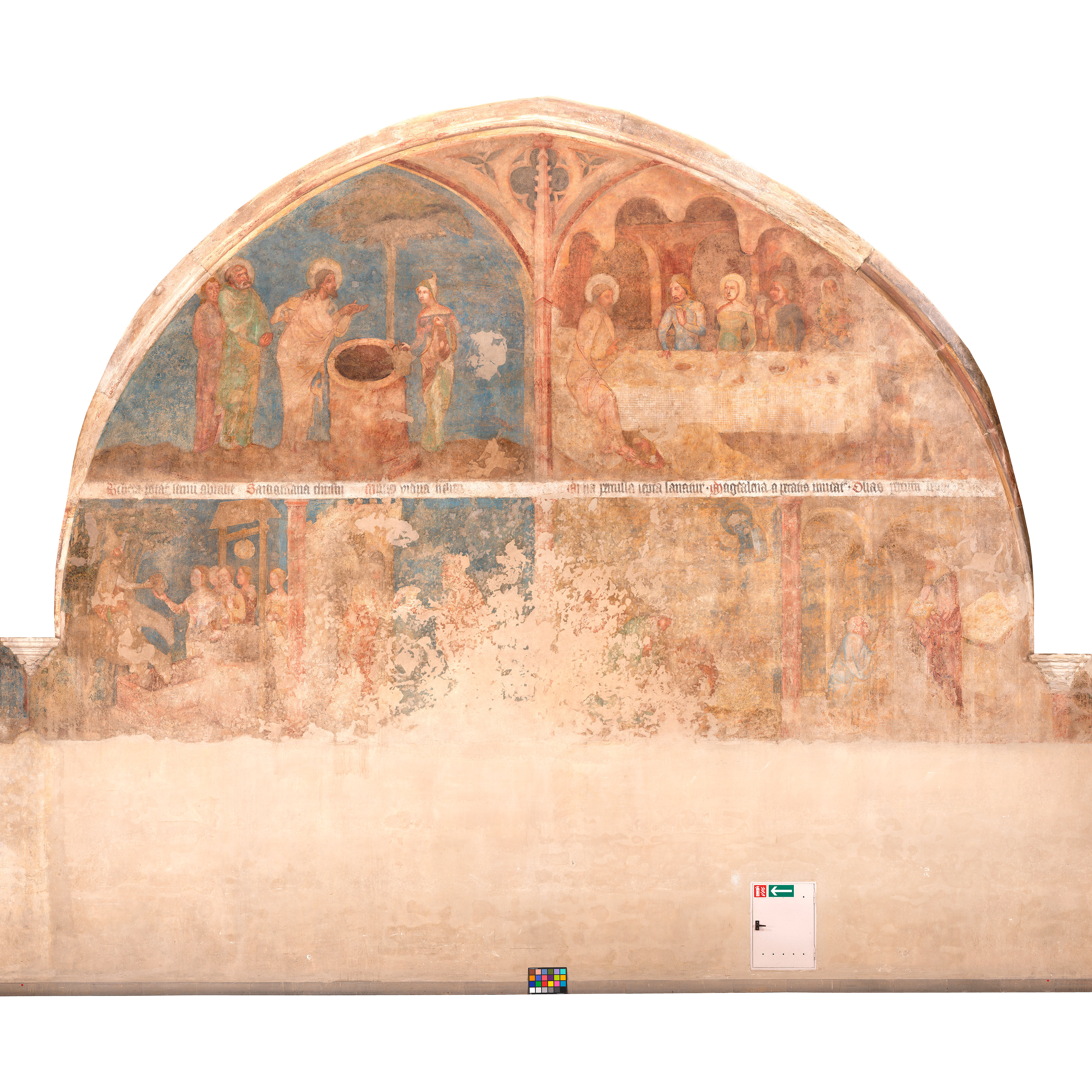
Christ and the Samaritan Woman
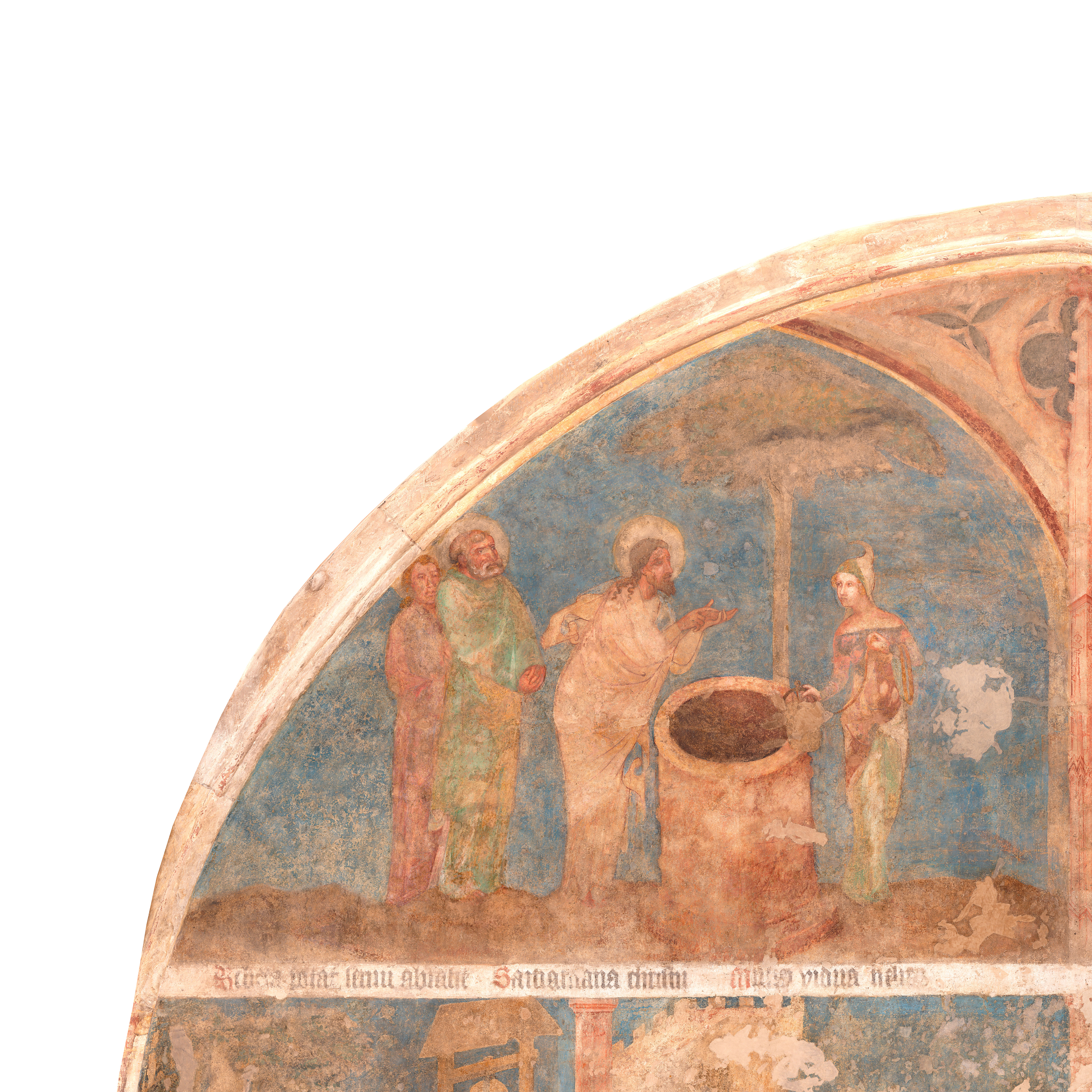
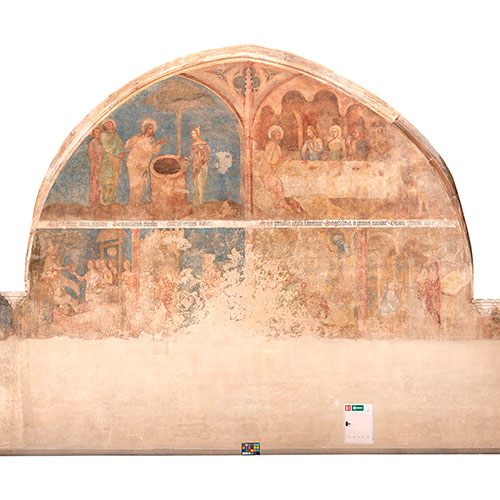
Christ and the Samaritan Woman (John 4:1–27) – Rebekah Gives Water to Abraham´s servant (Gen 24:10–21) and the Widow of Zarephath Gives Water to Elijah (1 Kgs 17:8–16)
Inscription: Rebeca potat servum Abrahe. Samaritana Christum. Mulier vidua Heliam.
(Rebekah gives water to Abraham’s servant. The Samaritan woman [gives water to] Christ. The widow [gives water to] Elijah.)
Uppsala text: Rebeca viro porrigit. Christus ad fontem a Chananea aquam postulat. Et due ymagines scilicet vir et mulier.
(Rebekah hands [water] to a man. Christ at the well asks water from a Canaanite woman. And two figures, namely a man and a woman.)
a. The story of Jesus’ encounter with the Samaritan woman takes place at Jacob’s well. Jesus stopped there on his way to Galilee while the disciples went into the city to buy food. He remained by the well and asked the Samaritan woman for a drink. She was surprised that a Jew would speak to a Samaritan woman and ask her for water. Jesus told her that she, in fact, should be asking him for living water, which he could give. At the end of their conversation, he astonishes her by revealing that he knows she has had five husbands.
In the center of the scene is a simple round well, with a tree growing behind it. To the right stands a very slender woman dressed in a fashionable garment with exposed shoulders and wearing a curious hat twisted into a point. With her right hand, she holds a water jug resting on the rim of the well, while her left holds a coiled rope. She gazes toward Jesus, who stands on the other side of the well, looking her in the eye and, with the fingers of his raised hand, appears to be counting—likely the number of her husbands. From the left, Saints Peter and John are approaching, seemingly just returned from the city and surprised to find Jesus speaking with a woman.
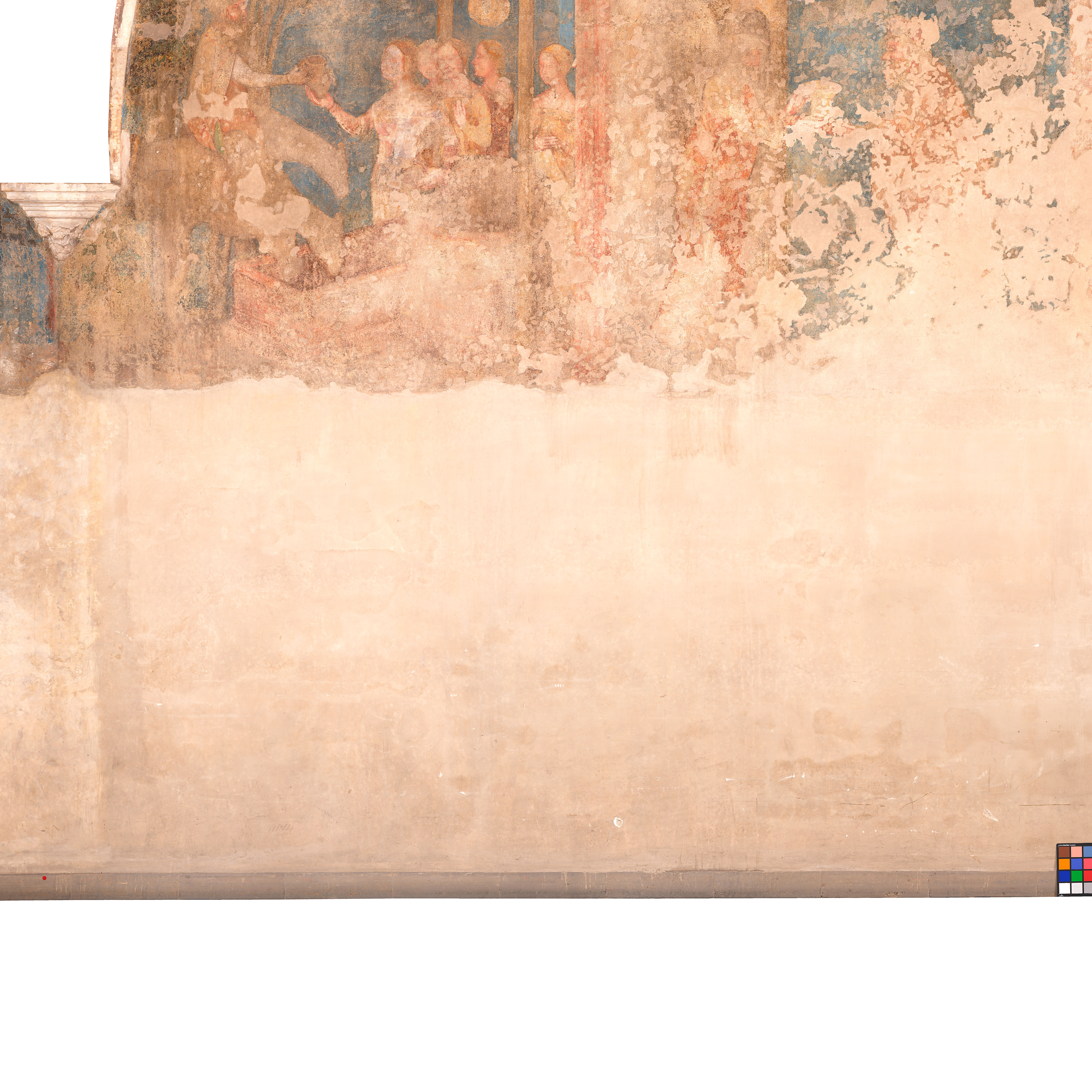
b. The first typological parallel recounts the story of Abraham’s servant, who was sent with gifts to find a bride for Isaac. He meets Rebekah at a well, where she offers water to him and his camels. The servant then gives her gifts and asks her father for her hand.
On the right stands a group of three animals—camels—with a man seated on the middle one. The animals lower their heads toward a water trough, while the man extends his hand toward the young woman who is handing him a jug. The girl, accompanied by other women, stands by a well equipped with a pulley.
c. The final scene was heavily damaged in 1945; its appearance is known to us only from a historical photograph. It depicts the same story as the previous composition: the widow of Zarephath offering the prophet Elijah a cup of water. The composition was arranged in a very similar way: the woman stood in the city gate, facing the prophet.
As in the previous compositions, the female figures here are also interpreted as prefigurations of the Church. While the Samaritan woman - symbolizing the Church - was given living water by Christ himself, the other two women offer water of their own accord. In this way, the Church too is the source of the water that grants eternal life.
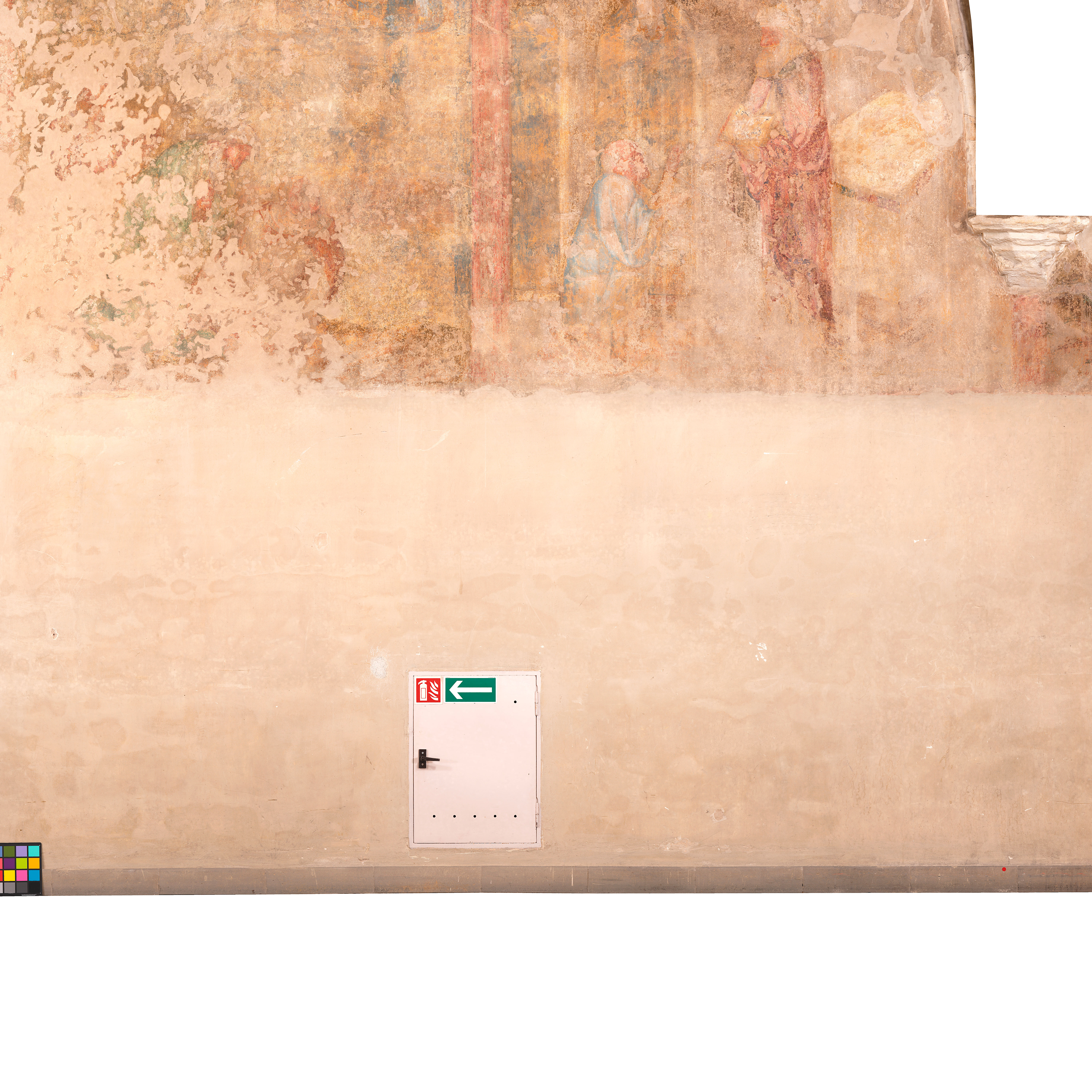
Jesus Anointed, or Mary Magdalene Cleansed of Her Sins
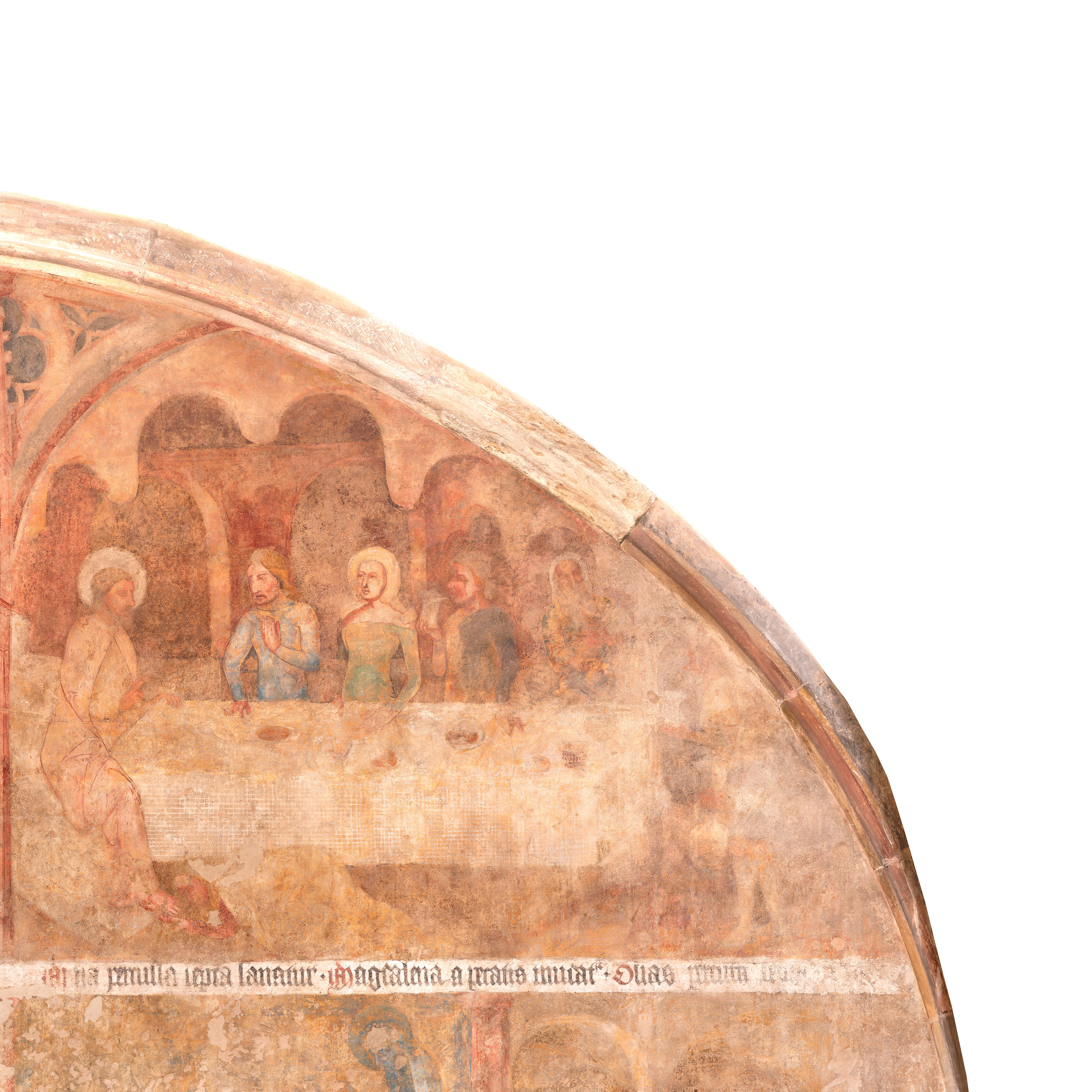
Jesus Anointed, or Mary Magdalene Cleansed of Her Sins (Matt 26:6; Mark 14:3–9; Luke 7:37; John 12:1–8) – Moses Intercedes for the Healing of His Sister Miriam (Num 12:1–15) and The Offering for the Cleansing of Lepers (Lev 14:1–32)
Inscription: Maria percussa lepra sanatur. Magdalena a peccatis mundatur. Osias percutitur lepra. (Miriam, struck with leprosy, is healed. Magdalene is cleansed of sins. Uzziah is struck with leprosy.)
Uppsala description: Moyses pro sorore leprosa procidens Dominum adorat. Maria in domo Symon procidens veniam postulabat. Pro leprosis mundatis aves offerebantur. (Moses, falling to the ground for his leprous sister, worships the Lord. Mary, in the house of Simon, fell to the ground and begged for forgiveness. For the cleansing of lepers, birds were offered.)
This composition is the final scene in the sequence of depictions from Christ’s public ministry.
a. The story of Jesus’ anointing is told in a similar way in all four Gospels: Jesus is invited to a meal, and during the meal, a woman enters and anoints him with costly oil. Three of the Gospels interpret the act as a foreshadowing of Jesus’ death, while only Luke emphasizes that the woman was a sinner and that Jesus forgave all her sins. This moment is clearly accentuated here as well, as indicated by the inscriptions and the chosen typological parallels.
At the head of a long table sits Jesus, who is blessing Mary Magdalene. She kneels in front of the table, holding Jesus’ foot in her hands, kissing it, and possibly wiping it with her hair. Four other diners are seated at the table; the first is likely Simon, in whose house the feast is held (according Matthew). Next to him is a woman in a fashionable contemporary gown with bare shoulders and a cruseler headdress. Beside her sits another man, and then another woman. At the far right, there was originally a figure of a servant carrying a jug.
b. The first typological parallel tells the story of Moses’ sister Miriam, who was struck with leprosy as punishment for boasting that the Lord also spoke through her. Moses then interceded with God, who agreed to cleanse Miriam of the disease after seven days.
This scene was also severely damaged in 1945. However, older photographs clearly show three kneeling figures on the left: two men and one woman, who is almost curled up on the ground. The central figure is likely Moses, and behind him is probably Aaron. Both are pleading for their sister’s healing. In the upper right, the Lord appears, blessing Miriam’s recovery.
c. The subject of the final scene was likely correctly identified only in the Uppsala description, as it corresponds both to what is visible in the scene and to the overall thematic logic of the composition. It depicts the offering that a person healed of leprosy was required to present to the Lord in order to be ritually cleansed of the disease.
The scene takes place inside the temple. On the right, in front of the altar, stands a priest holding an open book and showing it to a man kneeling before him - presumably the former leper who has come to the temple to make an offering for his healing.
The composition emphasizes Christ’s power to forgive sins. Leprosy is presented as a symbol of sin, while healing represents forgiveness. It is precisely the mediation of this forgiveness to repentant sinners that is one of the essential tasks of the Church.
Předchozí pole | Následující pole ✖