The Emmaus Cycle | Wall Paintings in Context and Close Up
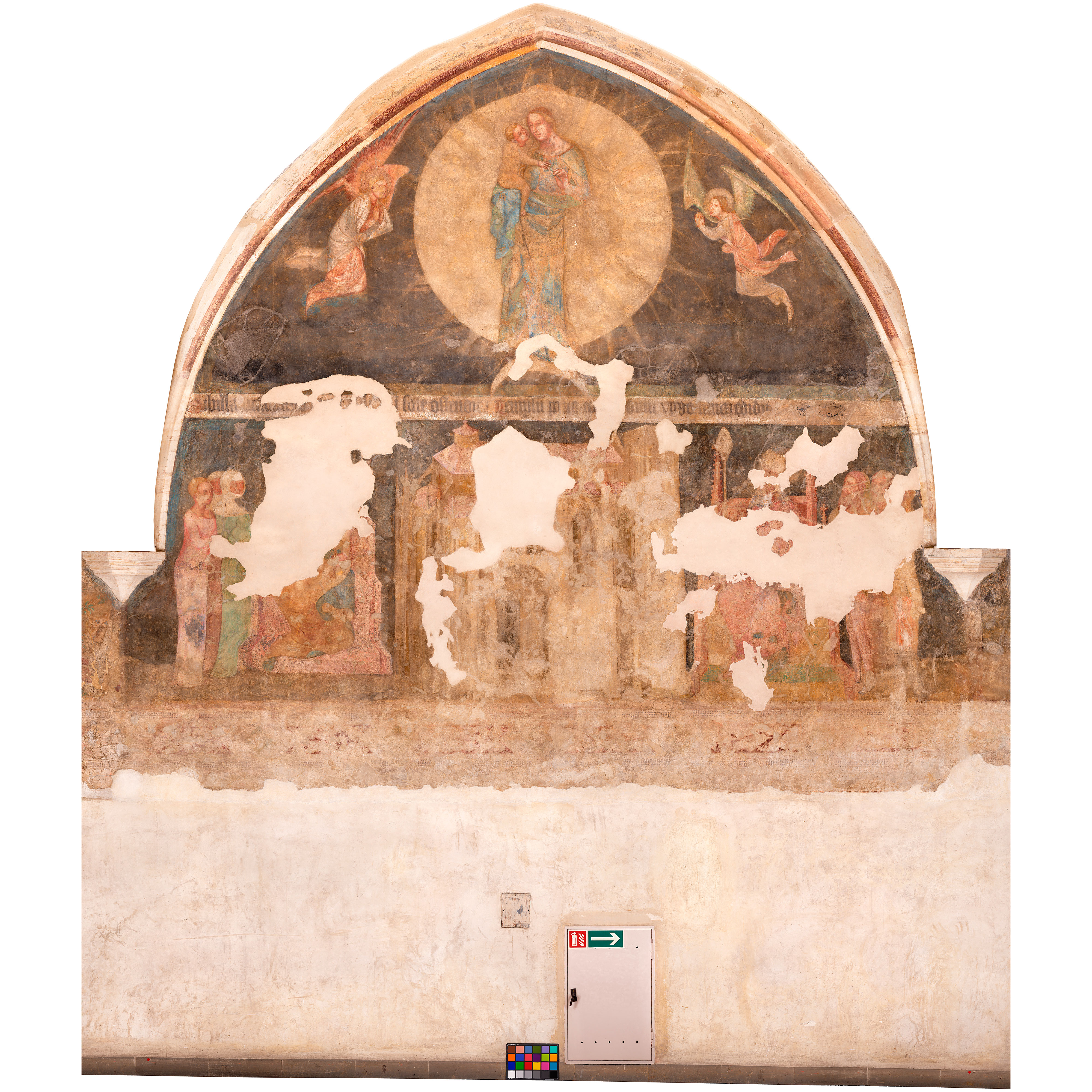
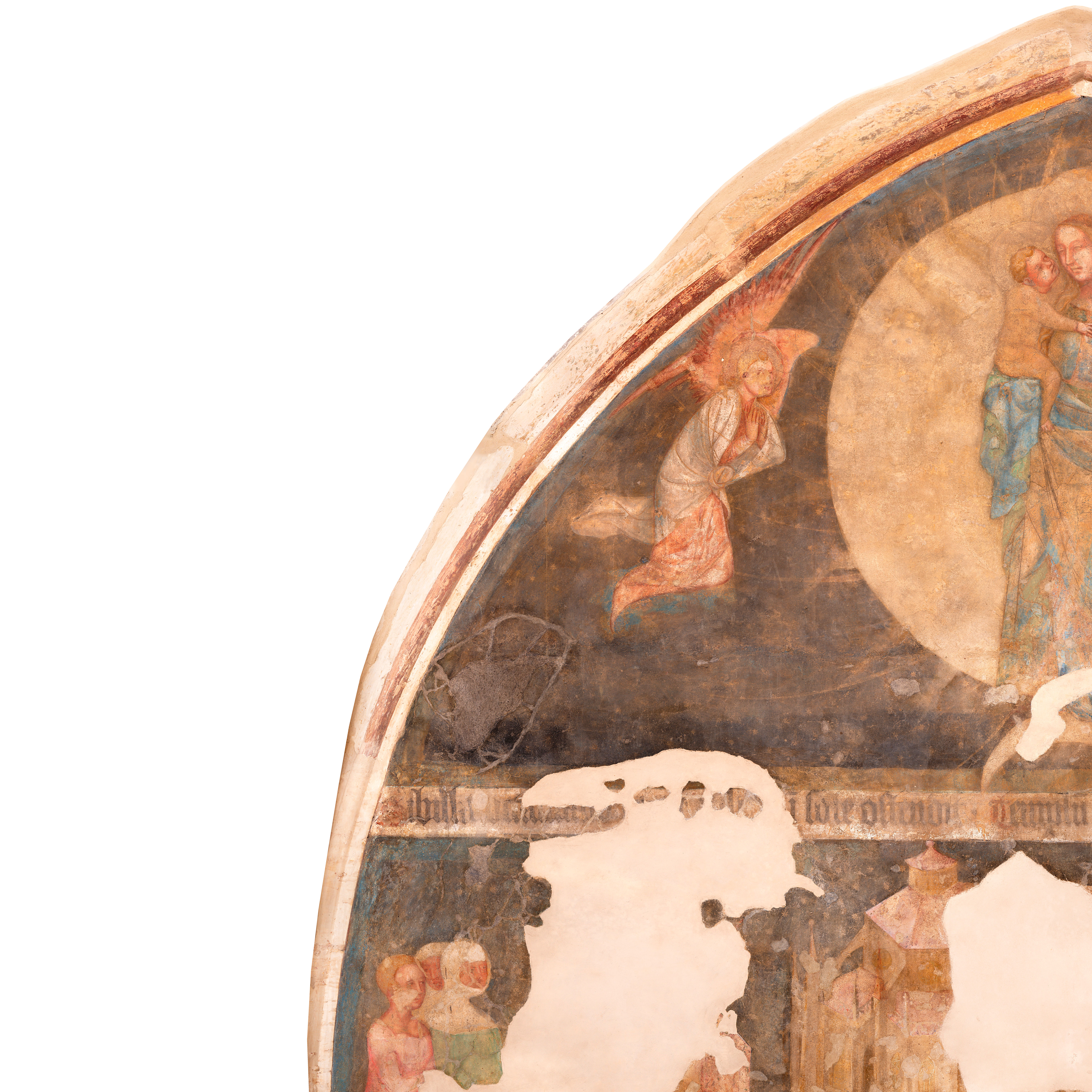
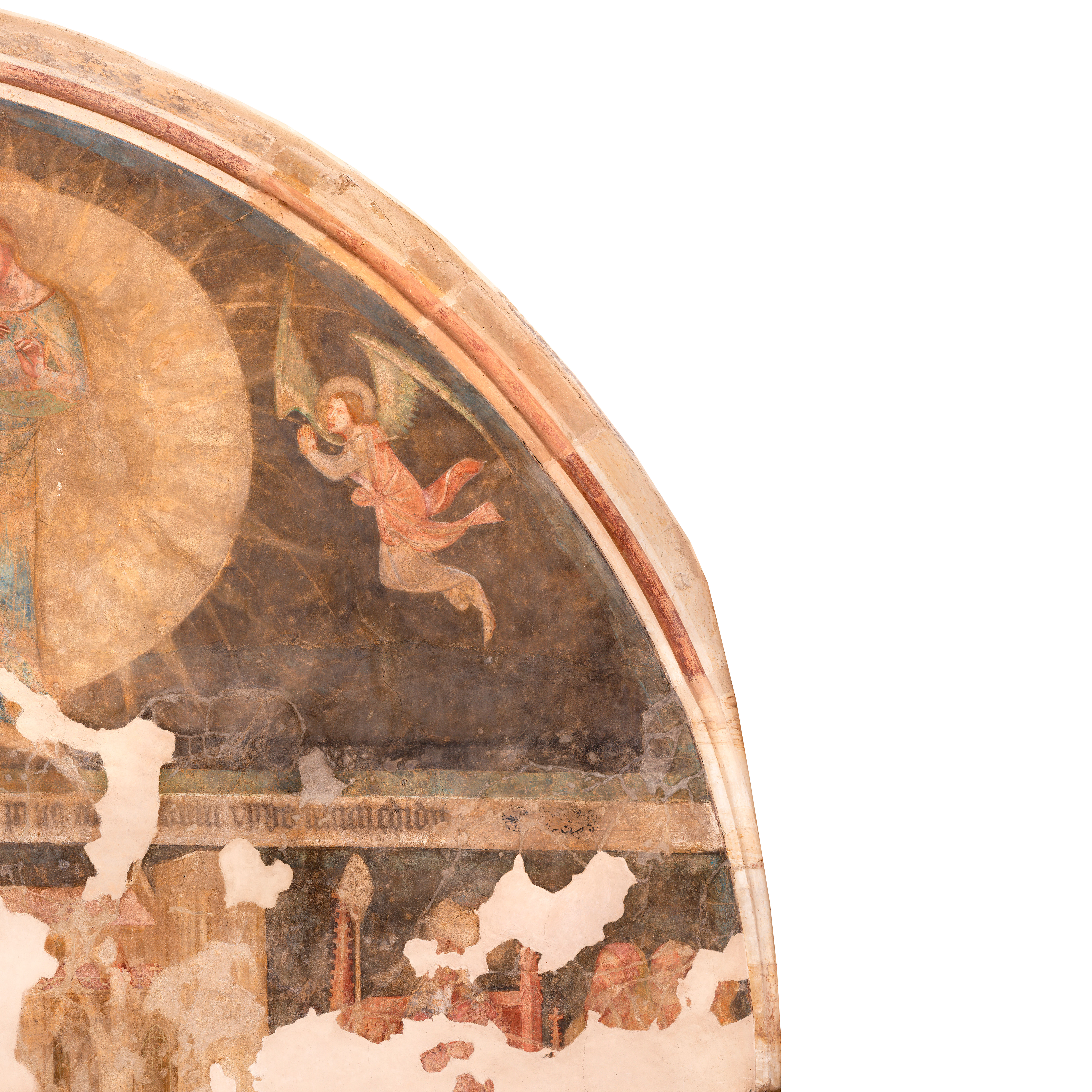
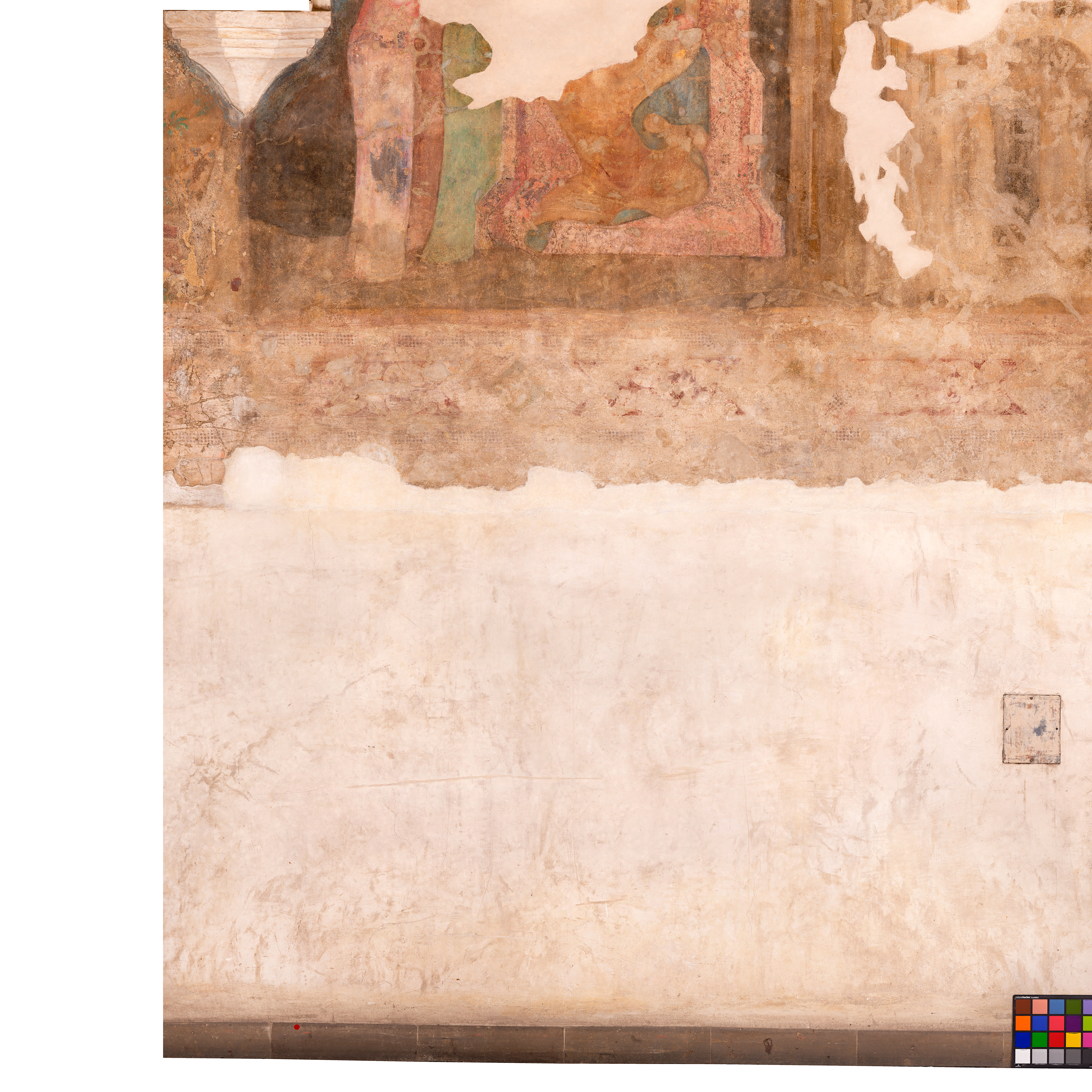
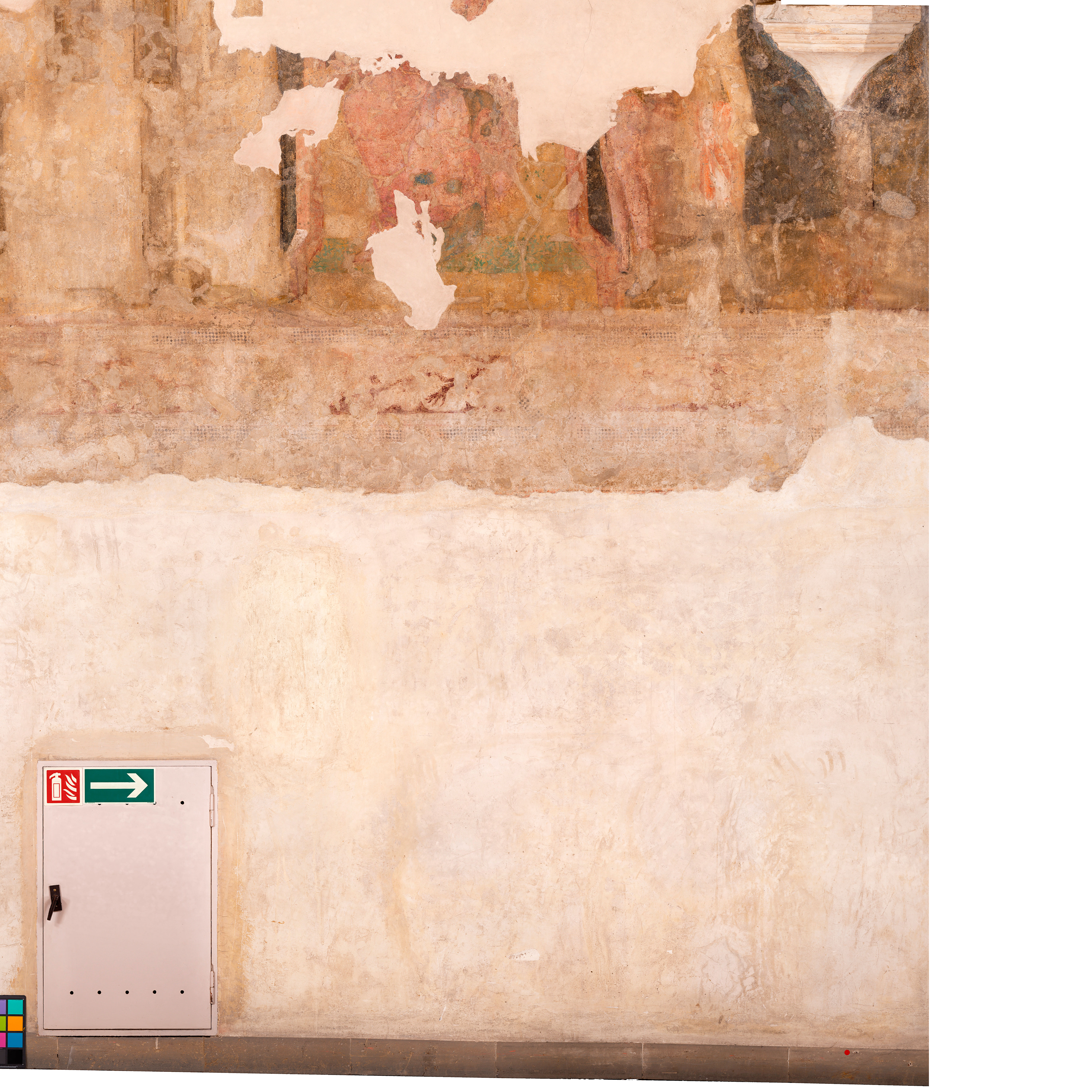
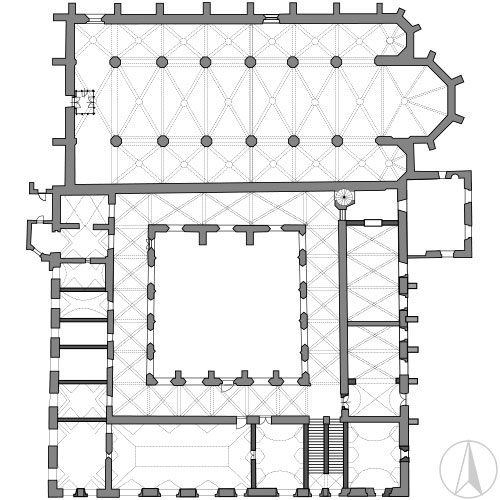
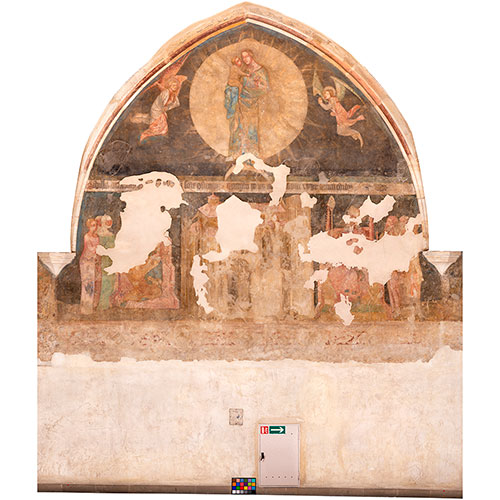
The Miracle of Ara Coeli – The Vision of Emperor Augustus on the Capitoline Hill
The Miracle of Ara Coeli – The Vision of Emperor Augustus on the Capitoline Hill (Speculum humanae salvationis, chap. VIII)
Inscription: Sibilla Octaviano virginem cum filio in sole ostendit. Templum Pacis corruit, dum virgo filium edidit.(The Sibyl showed Octavian a virgin with a child in the sun. The Temple of Peace collapsed when the virgin gave birth to the child.)
Uppsala description: Sybilla Octaviano imperatori virginem cum filio in circulo indicit, Octavianus advocans populum, cum circuit, templum Pacis corruit, dum virgo filium peperit.
(The Sibyl revealed to Emperor Octavian a virgin with a child in a radiant disc; Octavian summoned the people, and when they gathered, the Temple of Peace collapsed — this was when the virgin gave birth to the child.)
The field consists of a single scene, although it is divided in the middle by an inscription band. The painting was again damaged in 1945. The subject of the painting continues the theme of the previous field and once more presents the Virgin Mary as the woman predestined to be the Mother of God. To convey this message, the well-known legend of the miraculous vision witnessed by Emperor Augustus on the Capitoline Hill was chosen.
The story tells how Augustus summoned the prophetess Sibyl to advise him whether he should allow the Roman Senate to proclaim him a god. Sibyl was confined for three days in the emperor’s palace on the Capitoline. When she finally met with Augustus, the heavens opened, and a radiant disc appeared in the sky. At its center stood a woman holding a child in her arms. Then a voice proclaimed: “Haec est ara coeli” (“This is the altar of heaven”). Augustus realized that the child was the true future god and erected an altar to the child and his mother on that very spot. The church standing between Sibyl and Augustus in the painting represents the Basilica of Aracoeli in Rome, which marks the site of the alleged miracle and whose name preserves the memory of this legend.
The choice of this scene also points to the figure of the monastery’s founder, Charles IV, who at the time of the painting’s creation was the Roman Emperor. Charles IV regarded himself as the successor of Augustus, here depicted as divinely chosen and the first venerator of the Virgin Mary and Jesus.
Předchozí pole | Následující pole ✖