The Emmaus Cycle | Wall Paintings in Context and Close Up
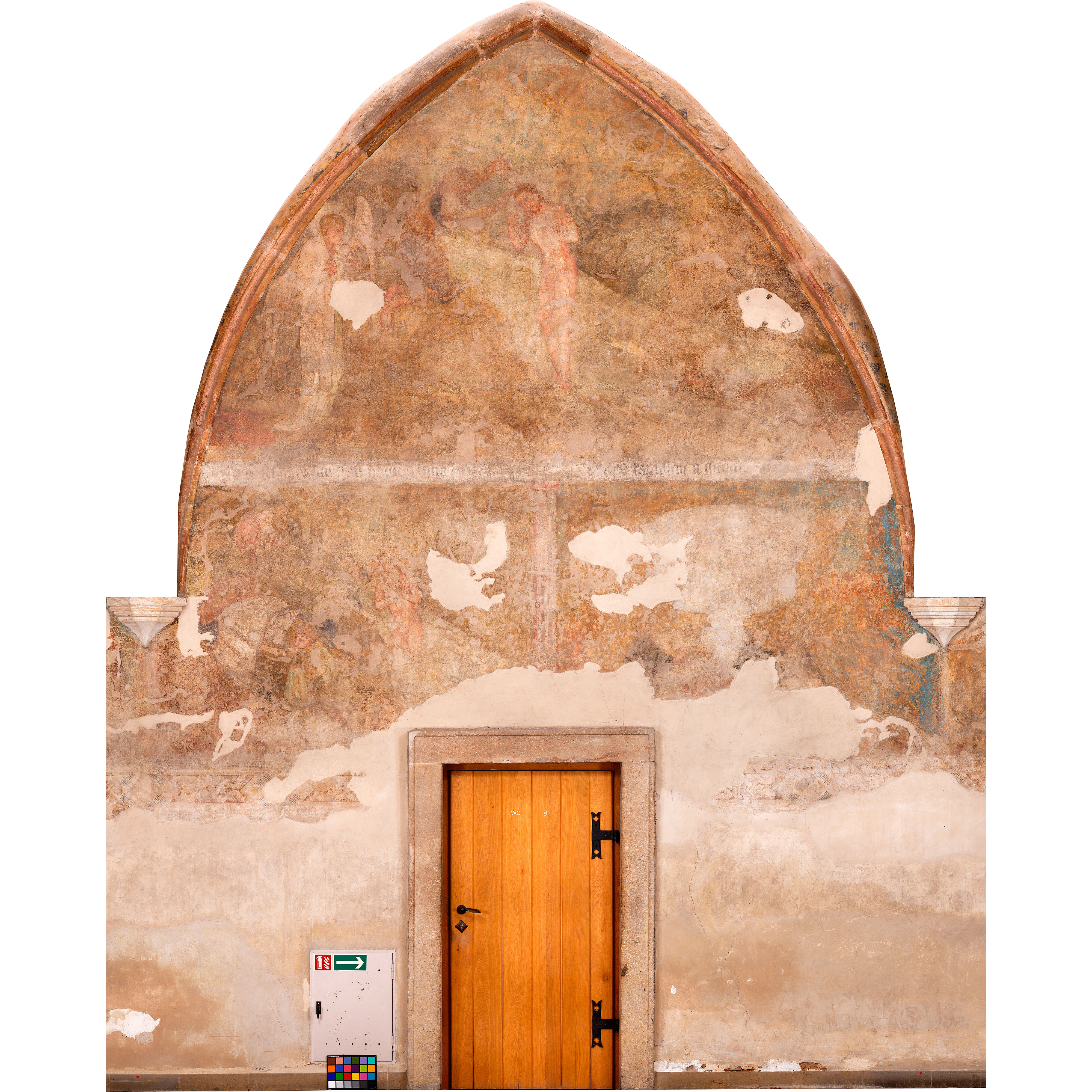
The Baptism of Christ
The Baptism of Christ (Mt 3:13–17; Mk 1:9–11; Lk 3:21–22; Jn 1:29–34) — Naaman Cleansed of Leprosy (2 Kgs 5:1–14) and The Bronze Sea (1 Kgs 7:23–26)
Inscription: Christus baptizatur a Joanne (Christ is baptized by John.)
(The inscription is fragmentary; only the description of the main scene can be reconstructed.)
Uppsala description: Naaman Syrus lavatur in Iordane. Christus baptizatur. Lavantur holocausta in mari eneo.
(Naaman the Syrian is washed in the Jordan. Christ is baptized. Sacrifices are washed in the Bronze Sea.)
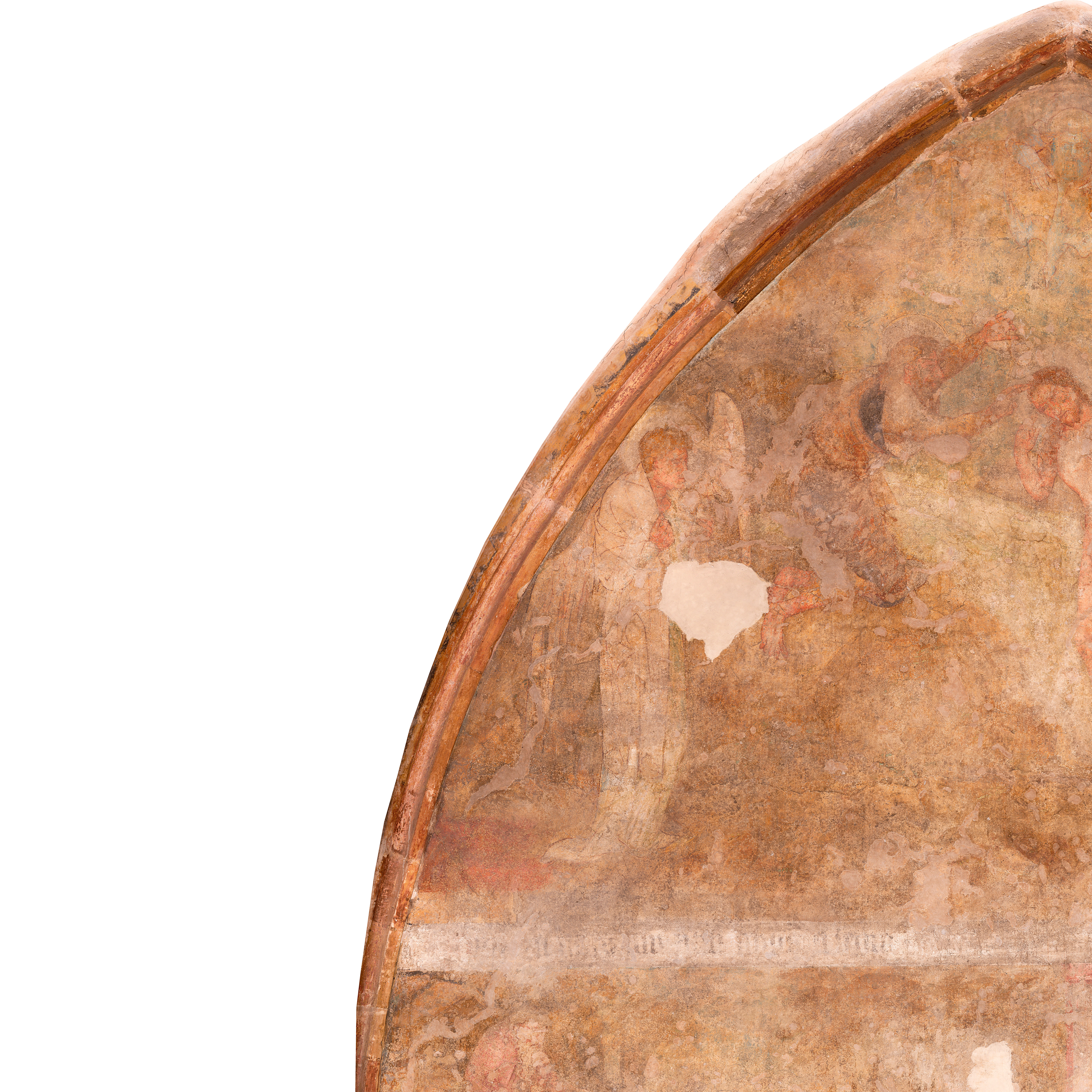
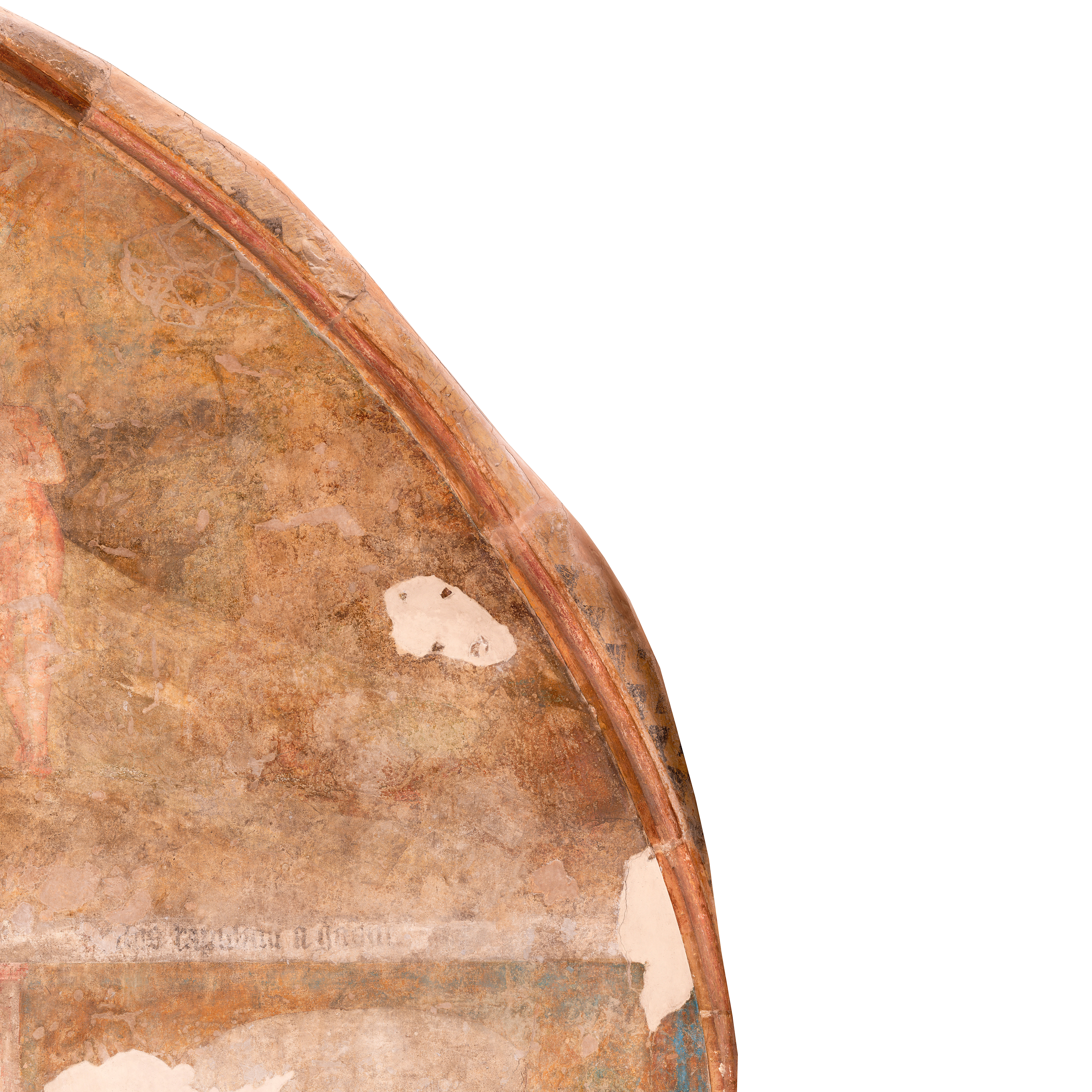
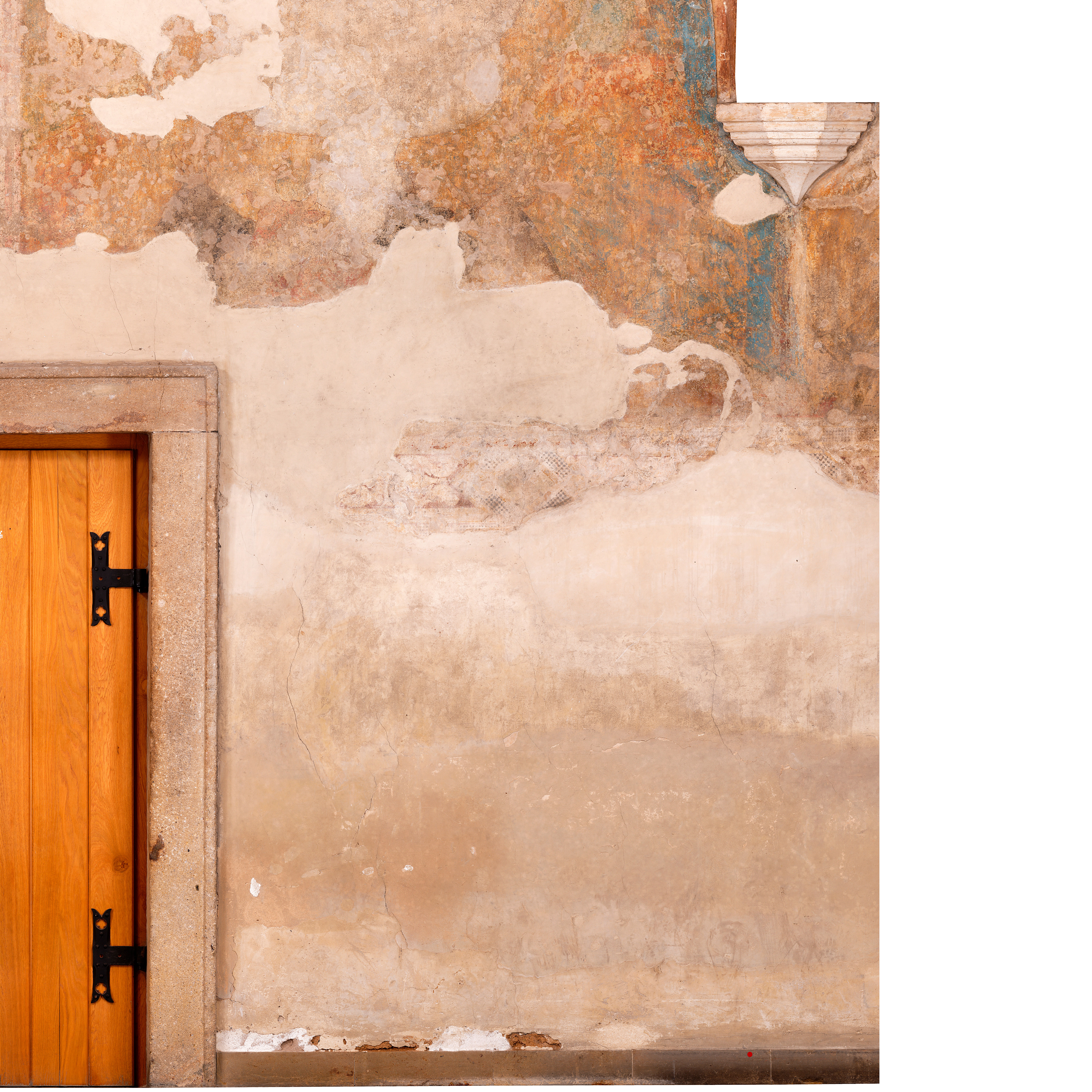
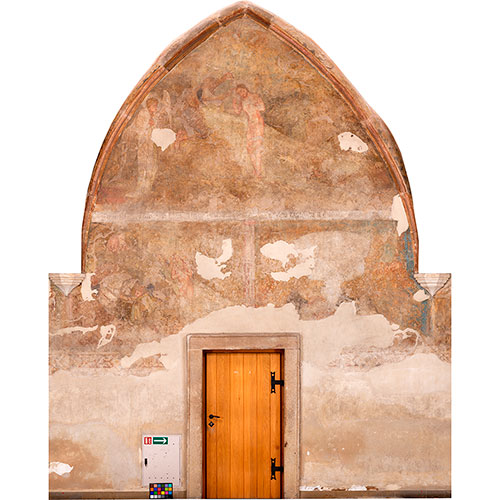
a. The Baptism of Jesus is understood as the first initiatory step before His public ministry. This scene was laid out rather generously, with almost the entire right side left open to reveal a stylized landscape filled with small bushes and trees. In the center of the scene, Jesus stands naked in the River Jordan, His head bowed to the left, His left hand held before His chest, and His right hand raised in a gesture resembling a blessing.
Saint John the Baptist kneels to the left of Jesus, on the riverbank, on a rocky ledge. With his left hand he pours water from a small vessel onto Jesus’s head, while his right hand touches His head—perhaps in a gesture of blessing.
From above, a dove descends toward Jesus, released by God the Father, who is depicted watching from the heavens at the very top of the painting. At the far left stands a slender, noble figure of an angel dressed in a white robe. The angel holds a white towel in his hands—both a practical item and perhaps a symbolic reference to the white garment worn by catechumens.
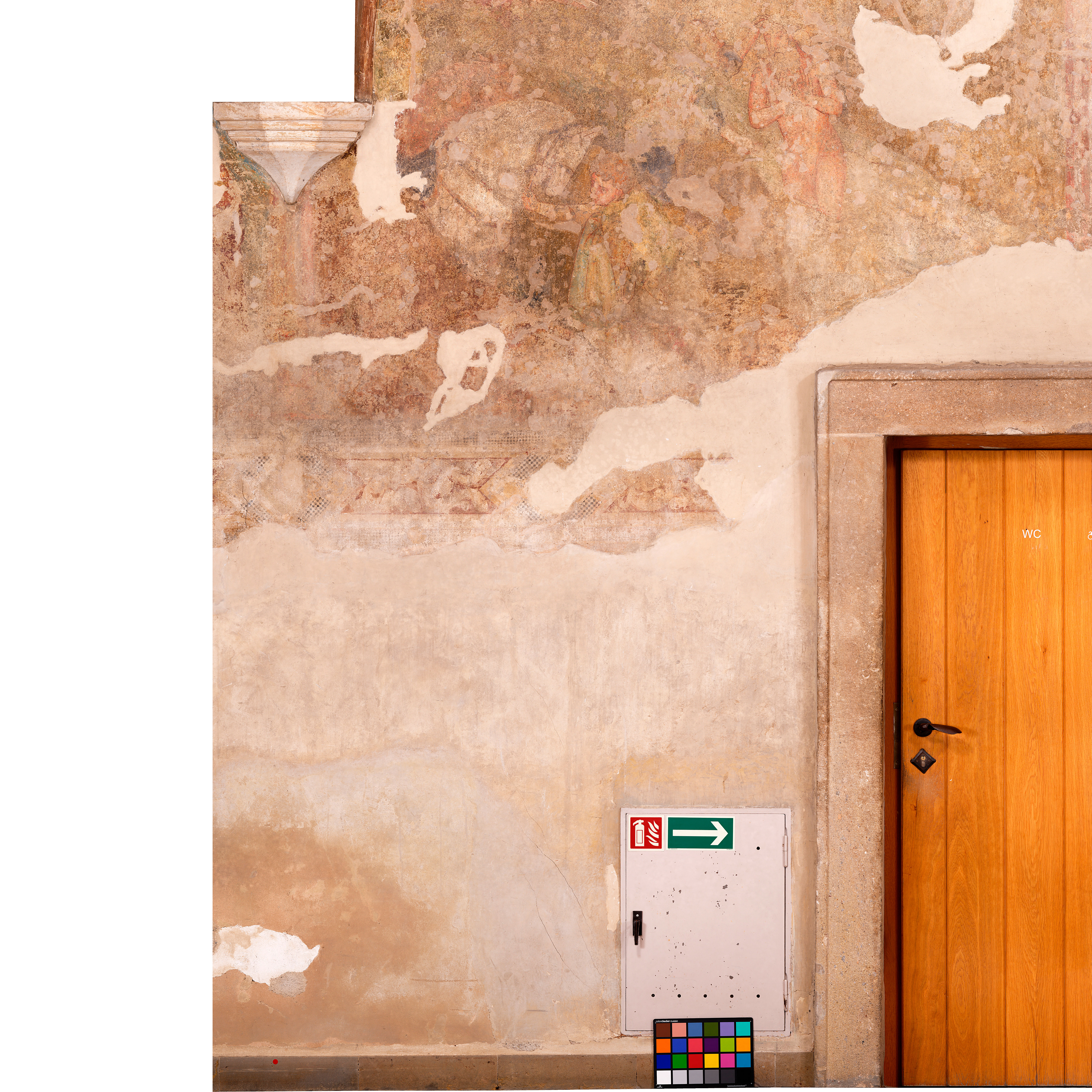
b. The scene of Naaman’s cleansing in the waters of the Jordan tells the story of the Syrian military commander who suffered from leprosy. When he was sent to the king of Judea with a letter, the king in turn sent him to the prophet Elisha. Elisha advised him that he would be healed if he washed himself in the River Jordan. Naaman followed this advice, and so it happened.
The scene deliberately seeks to closely imitate the main scene, so that the parallel is visually clear. In the center of the scene, the naked commander Naaman stands in the Jordan, his head bowed in the same manner as Jesus’s, though with his hands devoutly clasped over his chest.
Someone on the left bank is pouring water over Naaman, although this detail is not mentioned in the Bible. In the upper left corner, the prophet Elisha watches from a small shelter. Below him, a servant waits with Naaman’s horse.
c. he so-called Bronze Sea represents the ritual basin in which the temple priests washed themselves before performing sacrifices. According to the biblical description, it stood on twelve bronze oxen. In the Middle Ages, it came to be depicted as a large chalice or baptismal font. Thus, here we see a kind of enormous chalice, beneath which are perhaps four oxen of various colors.
The parallels to the Baptism of Christ were chosen to emphasize the purifying power of baptism: Naaman washed away leprosy, that is, sin; likewise, in the Bronze Sea, the priests purified themselves before the sacred sacrifice. Jesus Himself had no need of purification, but established this sacrament for the purification of sinners.