The Emmaus Cycle | Wall Paintings in Context and Close Up
Christ Fasts in the Desert and Is Tempted
Christ Fasts in the Desert and Is Tempted (Matt 4:1–4, Luke 4:1–13) - Moses Fasts on Mount Sinai (Exod 34:28) and Elijah, Strengthened by Bread, Fasts for Forty Days (1 Kgs 19:1–8)
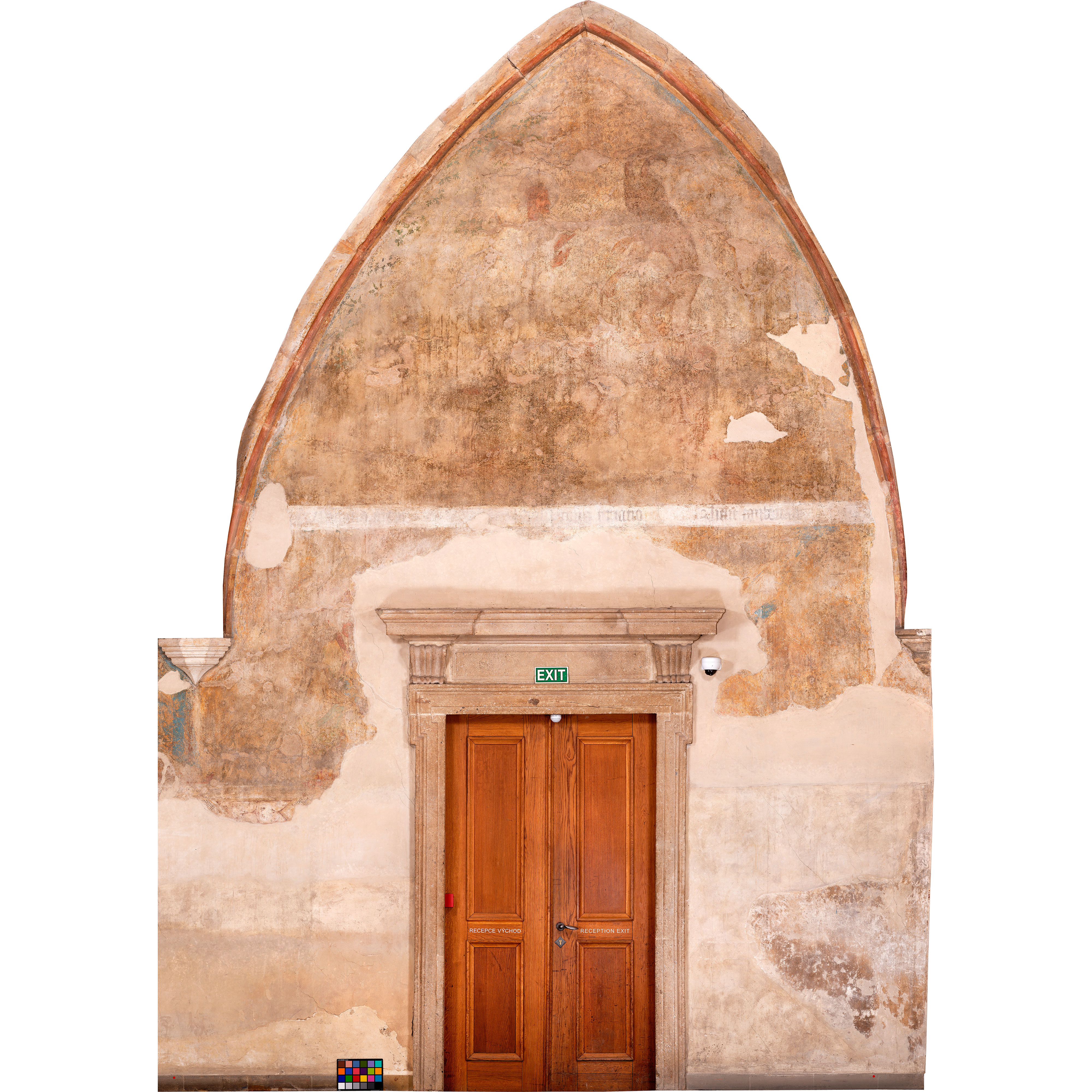
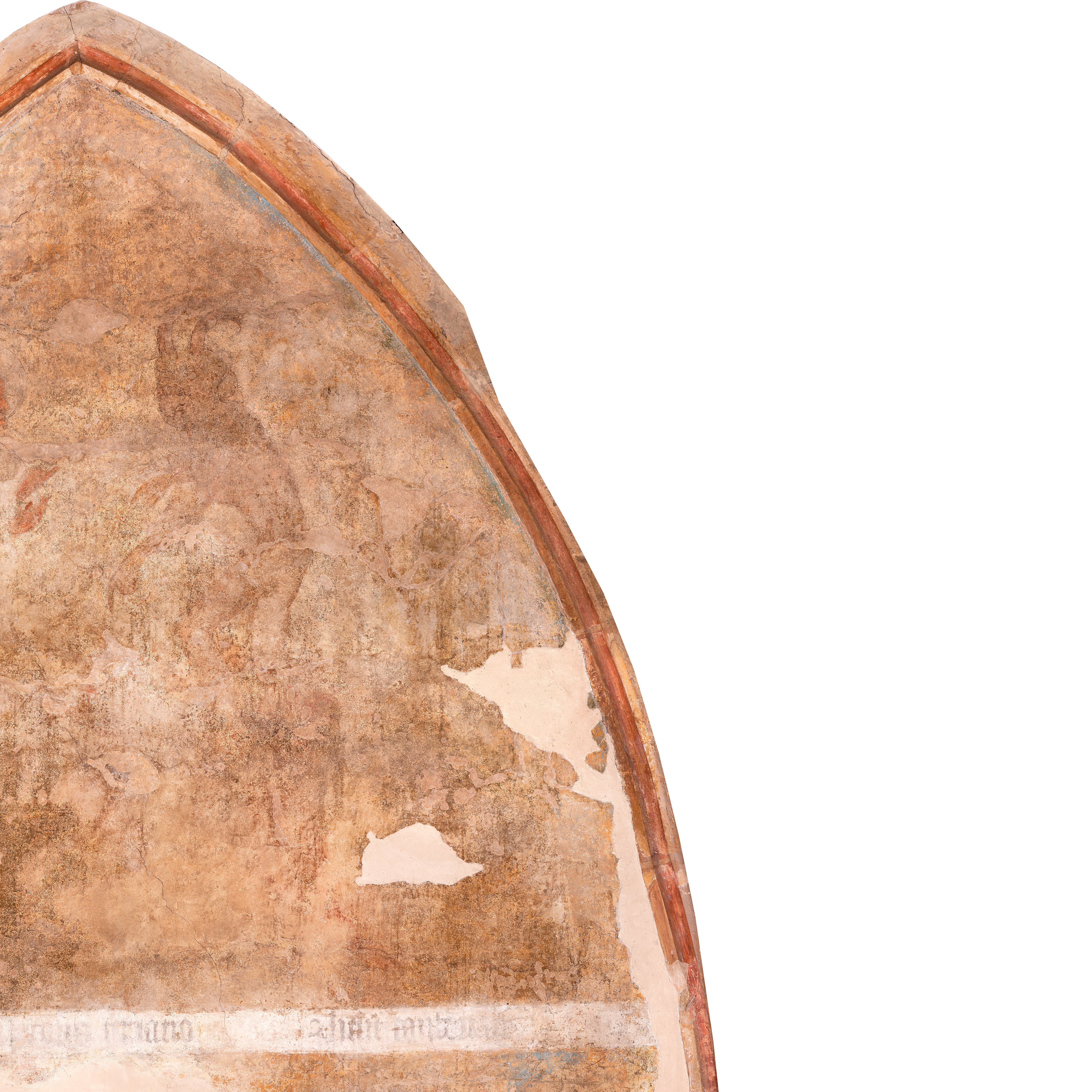
Inscription: … …is <ten>tatio. <H>elie conf<ortatio>. (… temptation. Elijah’s strengthening.)
Uppsala Description: Ieiunavit Moyses XL diebus. Ductus est Ihesus in desertum. Comedit Helyas in deserto subcinericium panem.
(Moses fasted for forty days. Jesus was led into the desert. Elijah ate bread baked under ashes in the desert.)
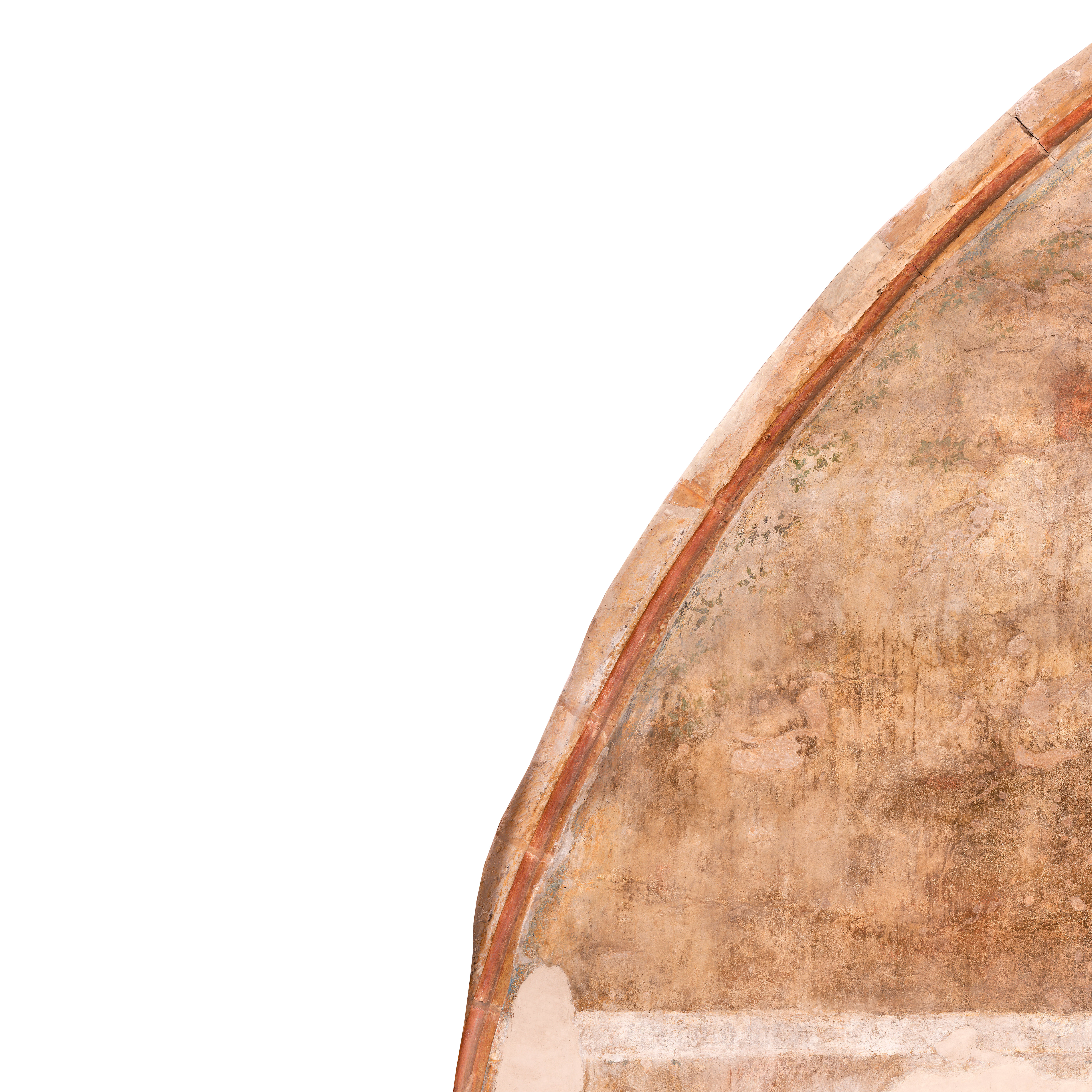
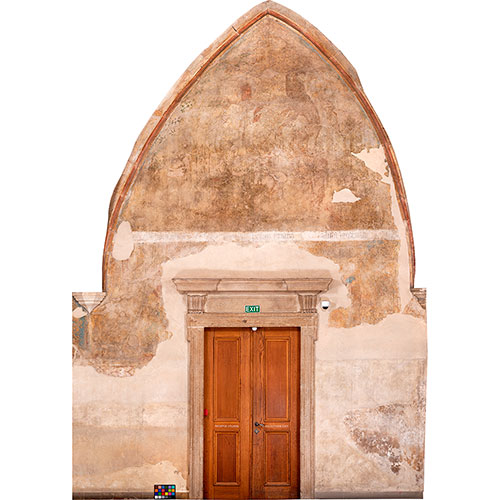
a. The main scene depicts the well-known story of the Temptation of Christ in the Desert. Jesus first fasted for forty days and forty nights, and only then did the devil come to tempt Him. First, the devil tried to persuade Him to turn stones into bread. Then he urged Him to throw Himself down from the temple. Finally, he offered Him dominion over the world.
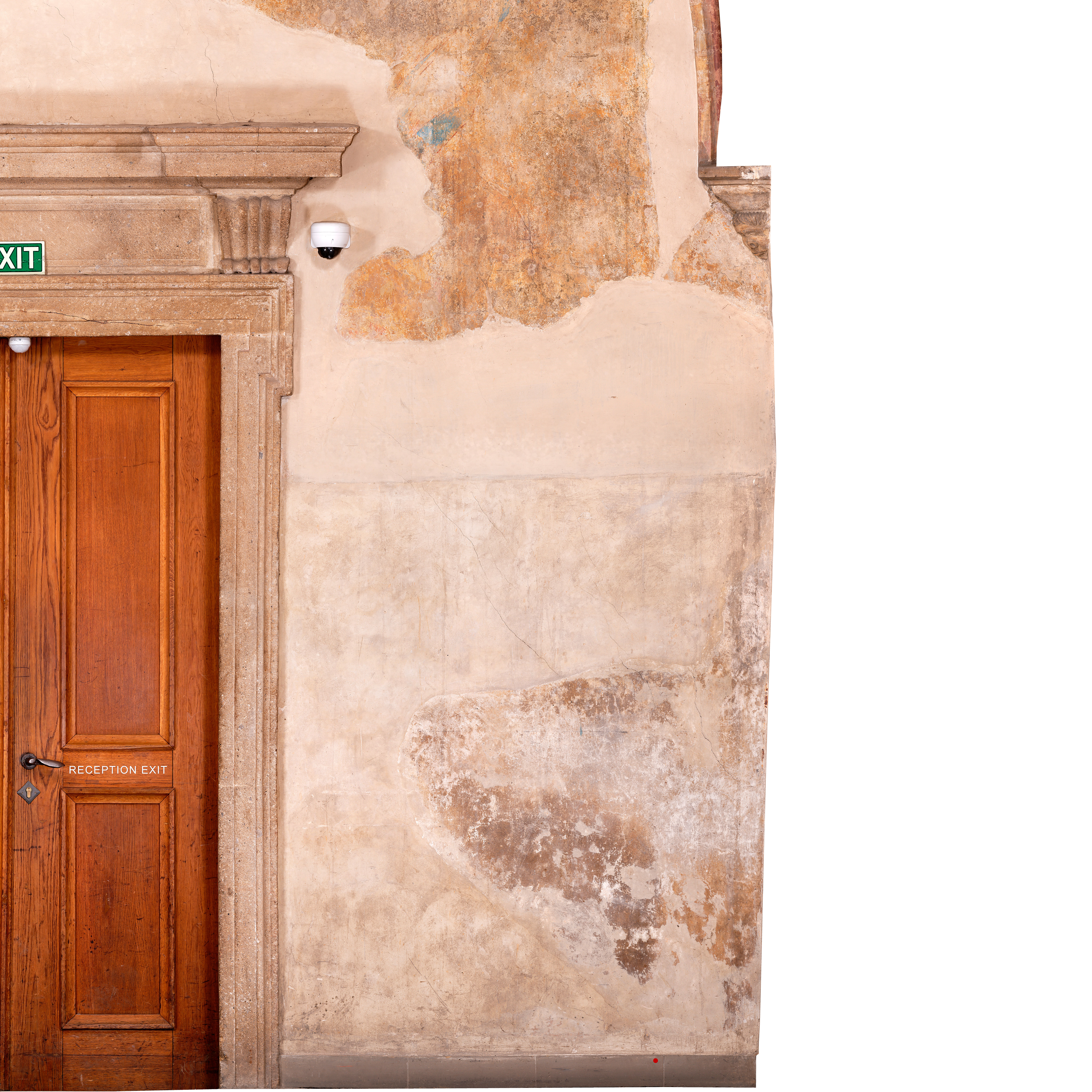
Here, the first temptation is depicted, although the scene is once again difficult to read. Jesus, wearing a long flowing robe, stood on the left (His face and hands are still visible), raising His right hand upwards. Opposite Him stood a grotesque devil with a twisted face, horns, and frog-like legs, pointing downward toward a pile of stones.
The scene fittingly concludes the wall, marking the final preparation before Jesus’ public ministry, which unfolds on the next wall.
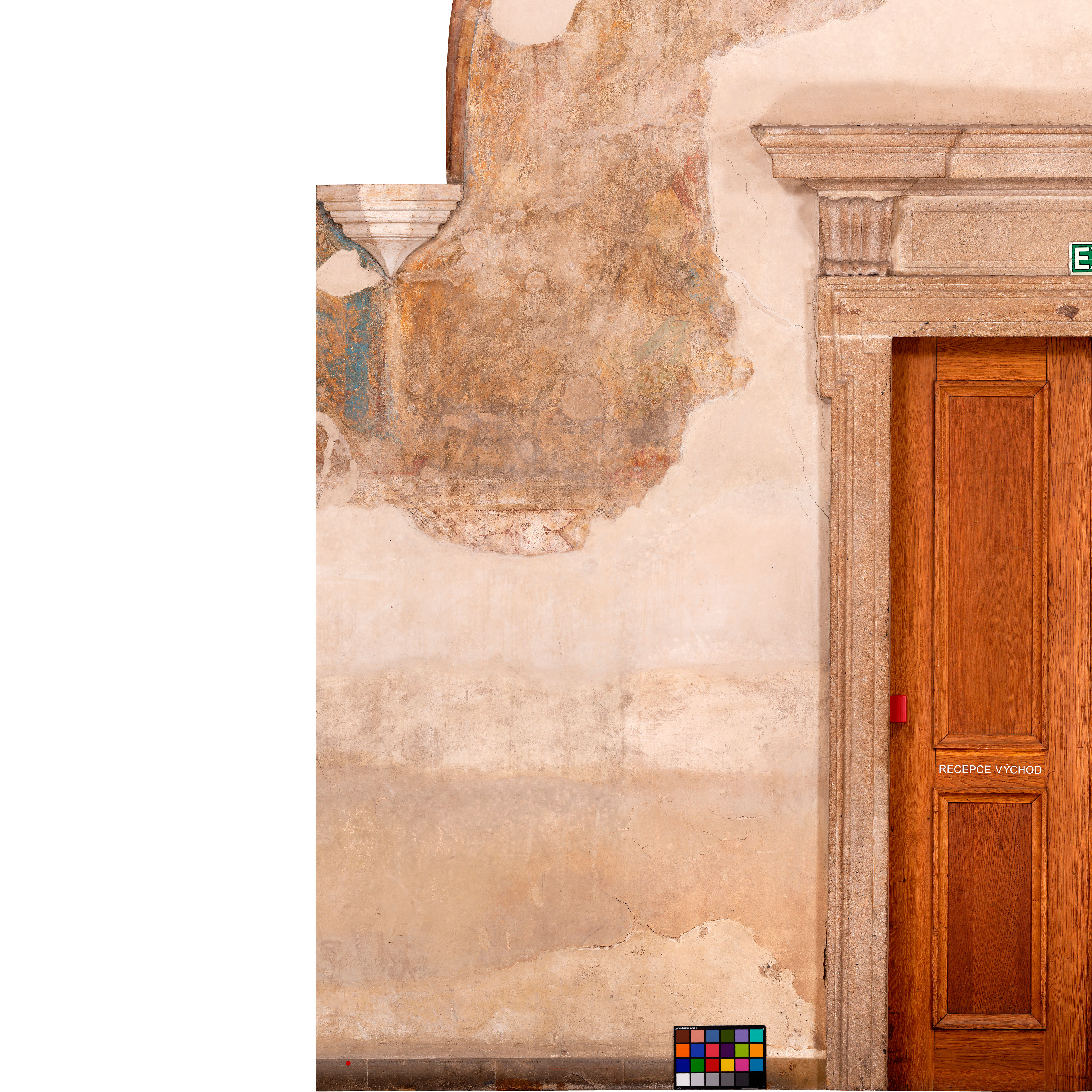
Both typological scenes were largely destroyed when the Baroque portal was installed. At the end of the 19th century, the figures in both scenes were still visible, but today only a fragment remains on the left side.
b. The first typological parallel likely depicted Moses on Mount Sinai, where he remained with the Lord for forty days and forty nights without taking any food. Only after this did he descend from the mountain carrying the Ten Commandments. In the scene, a kneeling Moses was painted on the left, with his hands resting on his knees (the underdrawing of the robe and the area where the face once was can still be discerned). He may have been holding the Tablets of the Law. Behind him there was a rocky landscape. The now-destroyed half of the scene may have shown the mountain with the Lord speaking to Moses at its summit
c. The prophet Elijah fled into the desert to escape the wrath of Queen Jezebel, where an angel brought him bread and water to strengthen him. After eating this meal, the prophet went on in the strength of that food for forty days and nights.
It is impossible to reconstruct the full composition of the scene. In the centre, we can make out some underdrawing, perhaps the part of angel wings. Possibly, an angel once stood here, bringing Elijah the strengthening meal, with the sleeping prophet lying in front of him.
Předchozí pole | Následující pole ✖