The Emmaus Cycle | Wall Paintings in Context and Close Up
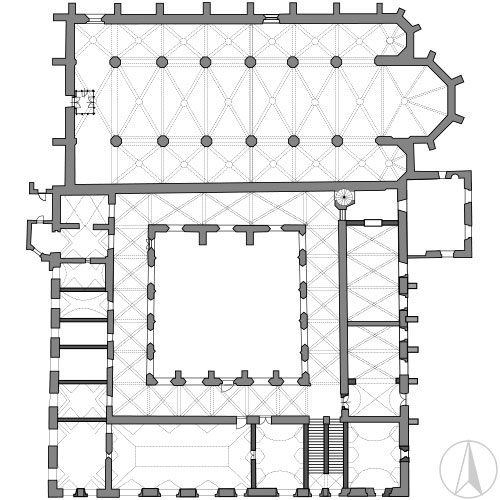
Resurrection
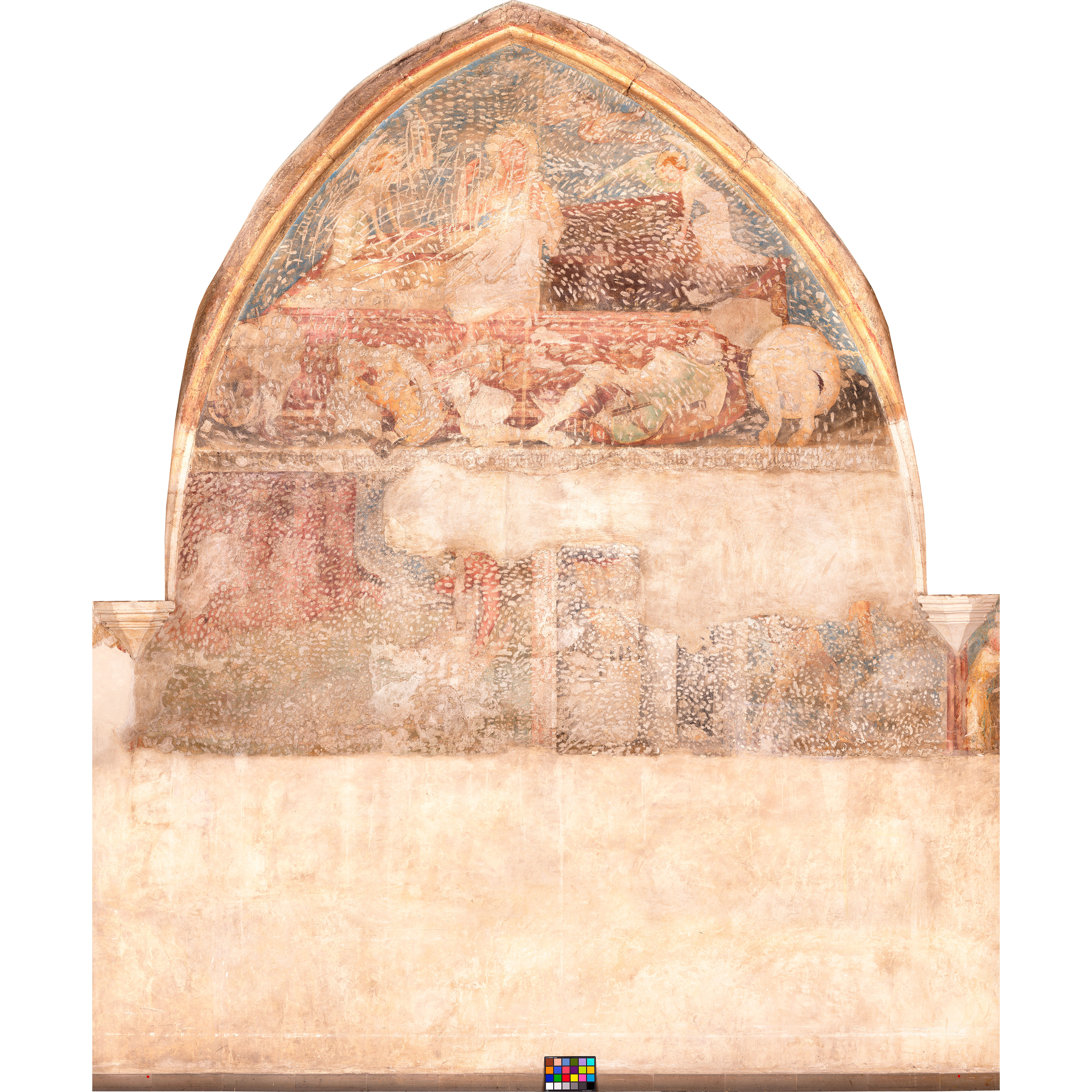
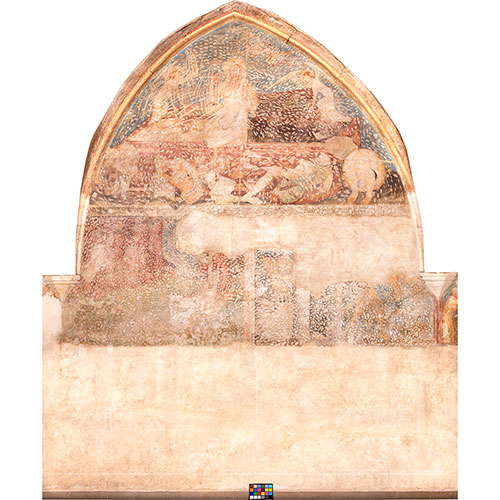
Resurrection (Matt 28:1–10; Mark 16:1–8; Luke 24:1–9; John 20:1–18) – Jonah cast out by the whale (Jon 1–2) and Samson carrying the gates of Gaza (Judg 16:1–3)
Inscription (fragmentary): Exiit Io… de ventre ce… …rgit …s… …fert ...t… s …pson … is … …us …tas …tis
Reconstruction proposal: Exiit Io<nas> de ventre ce<ti>. <Su>rgit <Chri>s<tus> ... <Au>fert … <Sam>pson ...
(Jonah came out of the belly of the whale. Christ rises from the dead. Samson carries …)
Uppsala Description: Ionas de ventre ceti eripitur. Christus resurrexit. Sampson portas asportavit.
(Jonah is rescued from the belly of the sea creature. Christ has risen. Samson carried away the gates.)
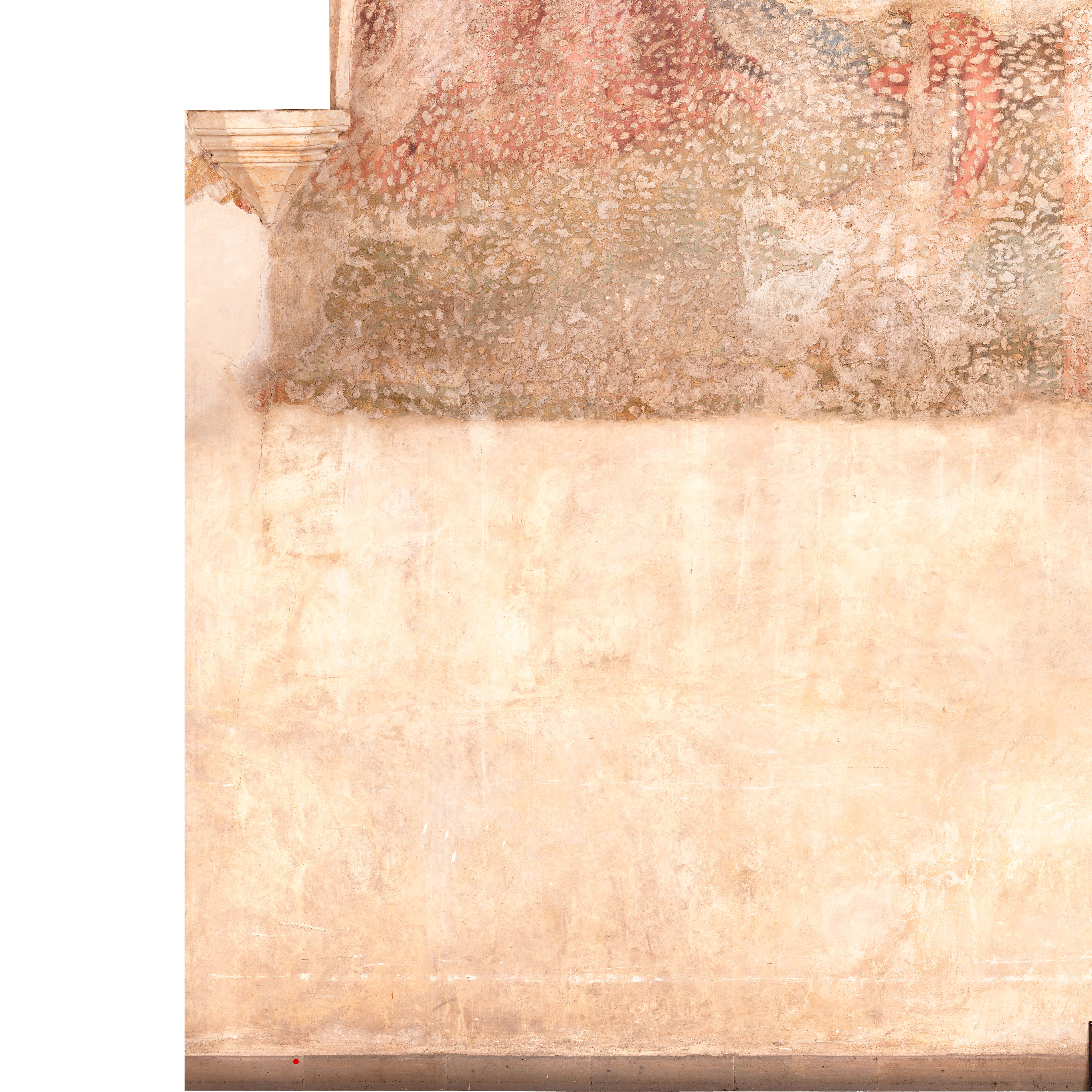
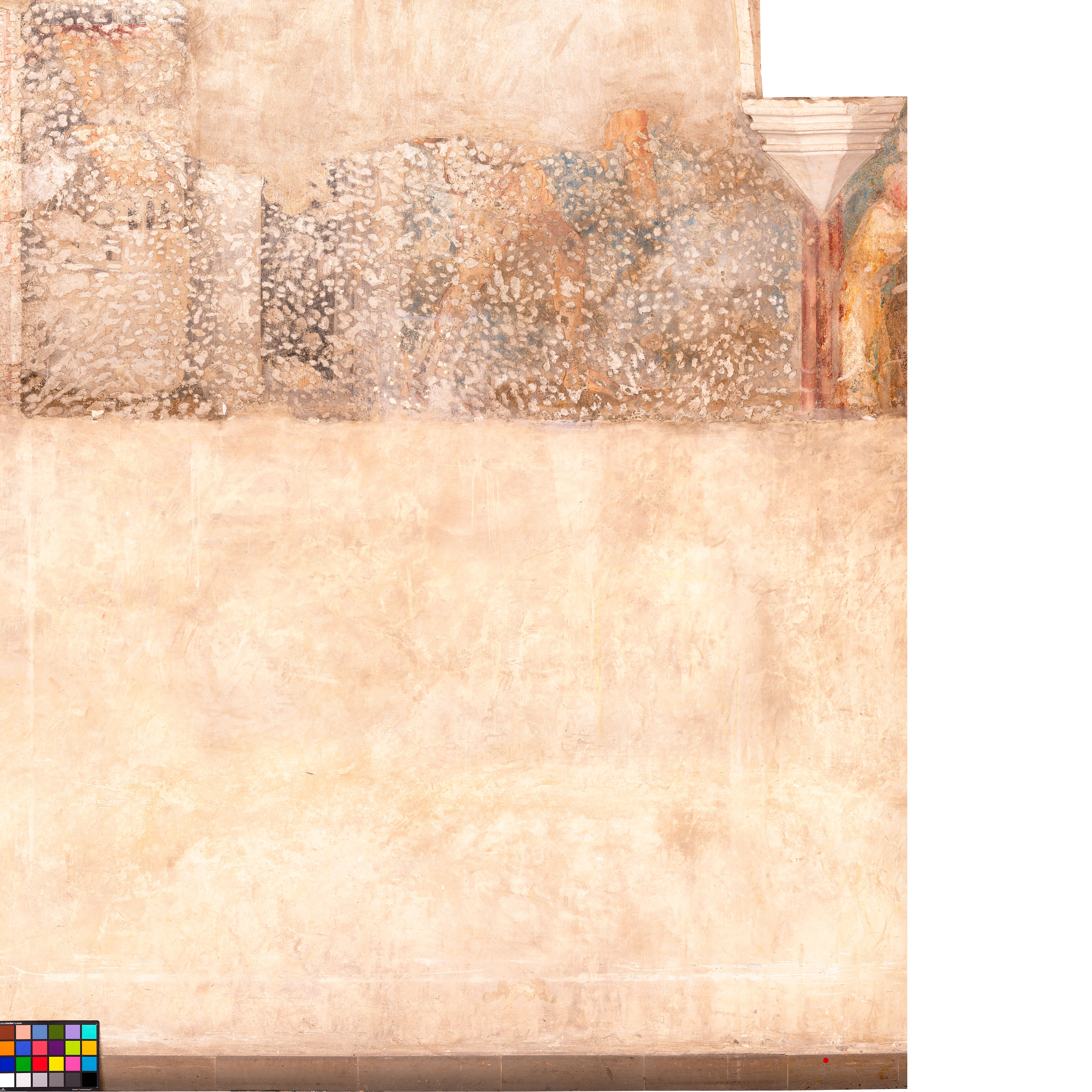
This composition marks the beginning of the final part of the cycle devoted to the glorification of Christ - namely, the last three scenes. This scene too was damaged by keying (incisions made to prepare the surface for a new layer of plaster), as it was later covered by early modern overpainting.
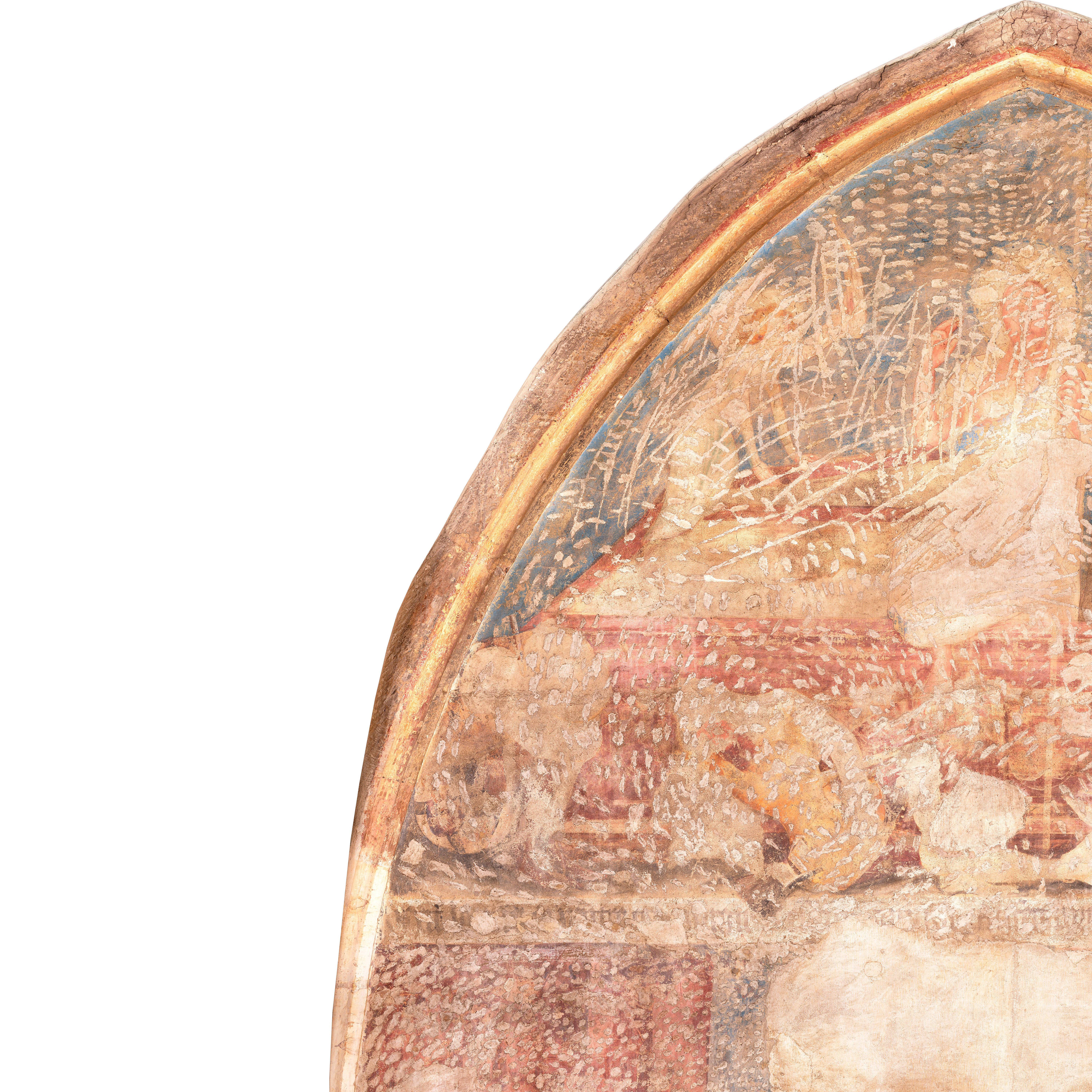
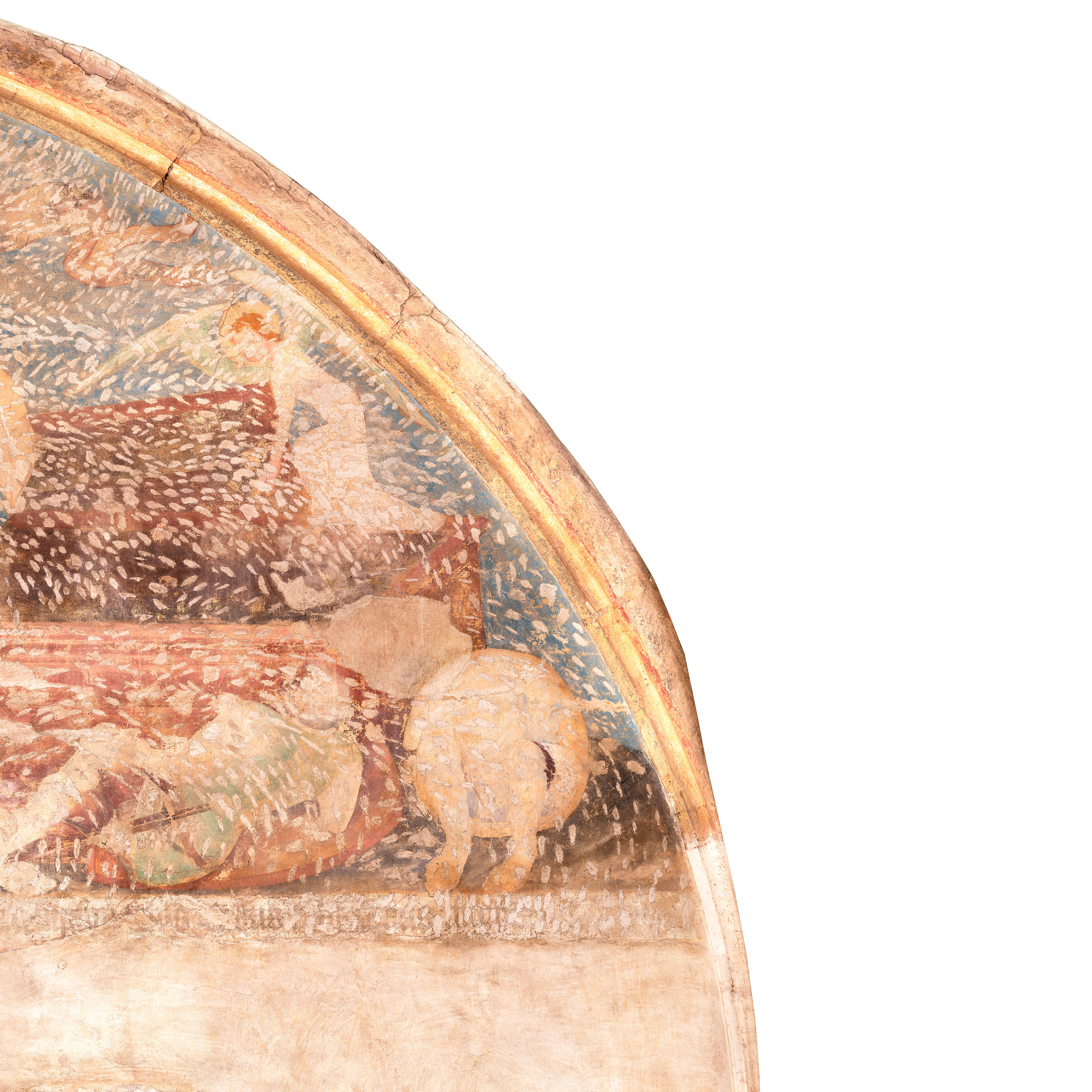
a. The scene of the Resurrection is depicted in a rather traditional manner. In the central image, we see a large, elongated tomb from which the Risen Christ emerges, dressed in a white robe and holding a banner in his left hand. He looks directly en face at the viewer and blesses with his right hand. Behind him, a pair of angels lifts the displaced lid of the tomb. In front of it, four soldiers are shown either lying down or seated.
b. The first typological parallel depicted the well-known story of the prophet Jonah, who refused to obey God’s command to go and preach in Nineveh. As a consequence, he was swallowed by a great sea creature, in whose belly he remained for three days, until on the third day the creature vomited him out onto dry land. In the scene today, we can still make out, in the upper left corner, the massive red-colored walls of the city of Nineveh. In front of them stretches a strip of land (painted green), followed by the sea, in which a large fish is swimming. Its mouth is raised upward, and from it the naked Jonah is leaping out (his legs are visible, the right one bent). The typological parallel is based on the idea that Jonah remained three days in the belly of the fish, just as Jesus lay three days in the tomb.
c. The scene on the right also depicted a well-known typological episode taken from the Old Testament, recounting another story about the Israelite strongman Samson. One night, while visiting a woman in the city of Gaza, his enemies shut the city gate in an attempt to capture him. However, Samson tore the gate's wings from their hinges, lifted them onto his shoulders, and carried them away. In the scene, the city of Gaza can be recognized on the left, with its gate shown open. On the right, we see the legs of the Samson, carrying the gate on his back. Both Jonah and Samson are frequent prefigurations of Christ (as in the Speculum humanae salvationis, chapter XXXII): Samson escaping from Gaza prefigures Christ escaping the power of death and breaking down the gates of hell.
Předchozí pole | Následující pole ✖