The Emmaus Cycle | Wall Paintings in Context and Close Up
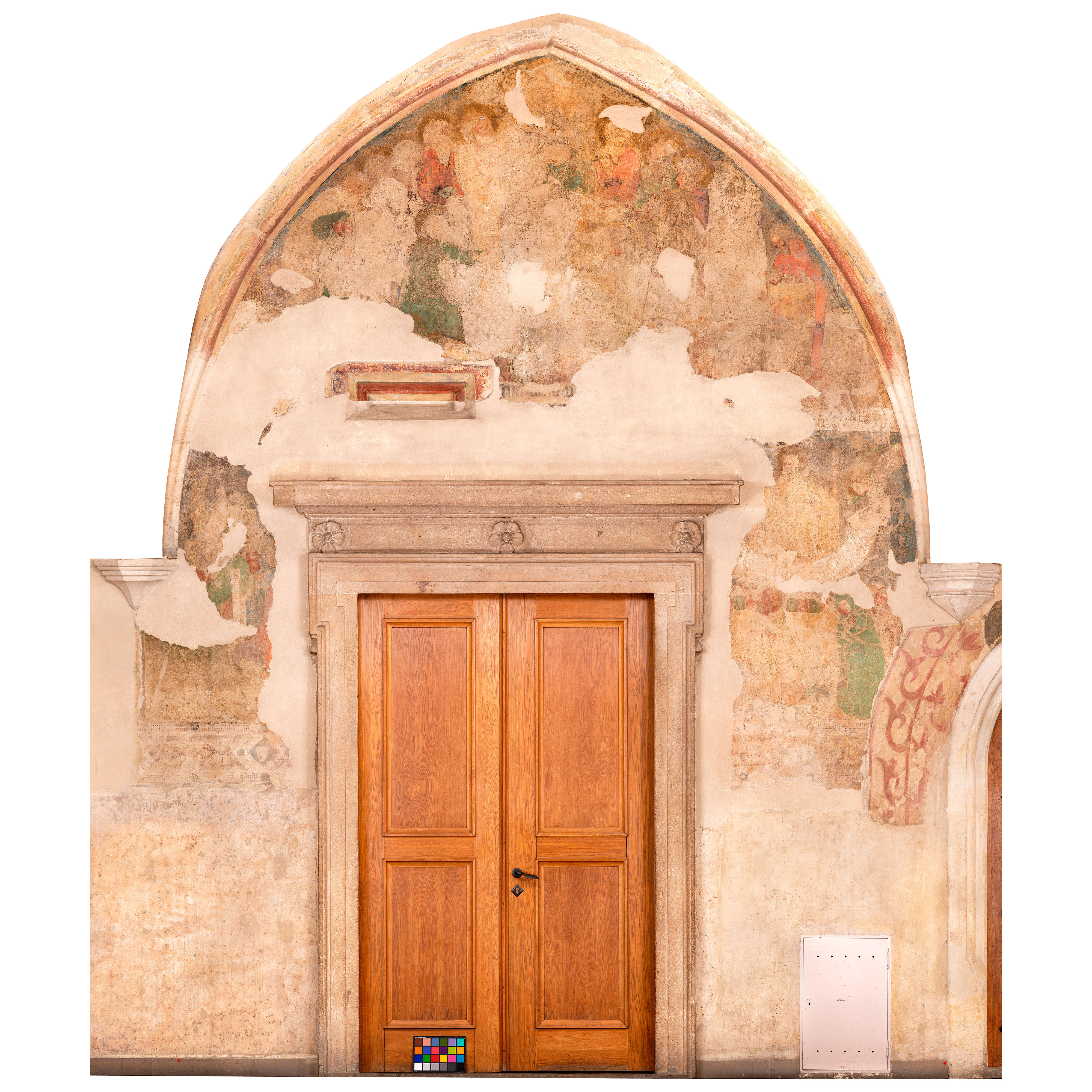
The Last Supper
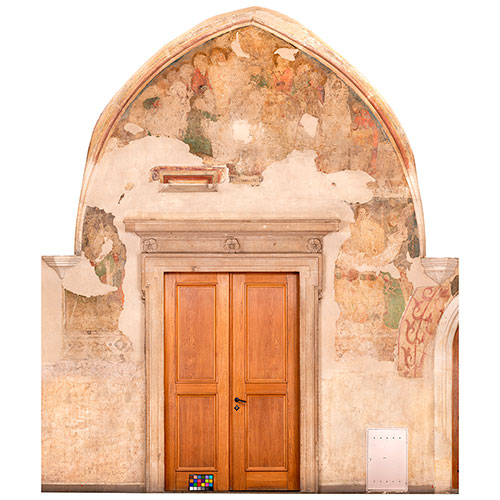
The Last Supper (Matt 26:17–30; Mark 14:12–26; Luke 22:7–38) – Eve uniting the pagans in sin and Mary uniting the faithful in grace (Speculum humanae salvationis, chap. XXXVIII)
Inscription: Cena Domini (The Last Supper) – Apparently only a fragment of a larger whole, describing the scene in the upper half.
Uppsala description: Item cena Domini. Ewa gentiles communicat per culpam. Maria communicat fideles per gratiam. (The Last Supper. Eve unites the pagans through sin. Mary unites the faithful through grace.)
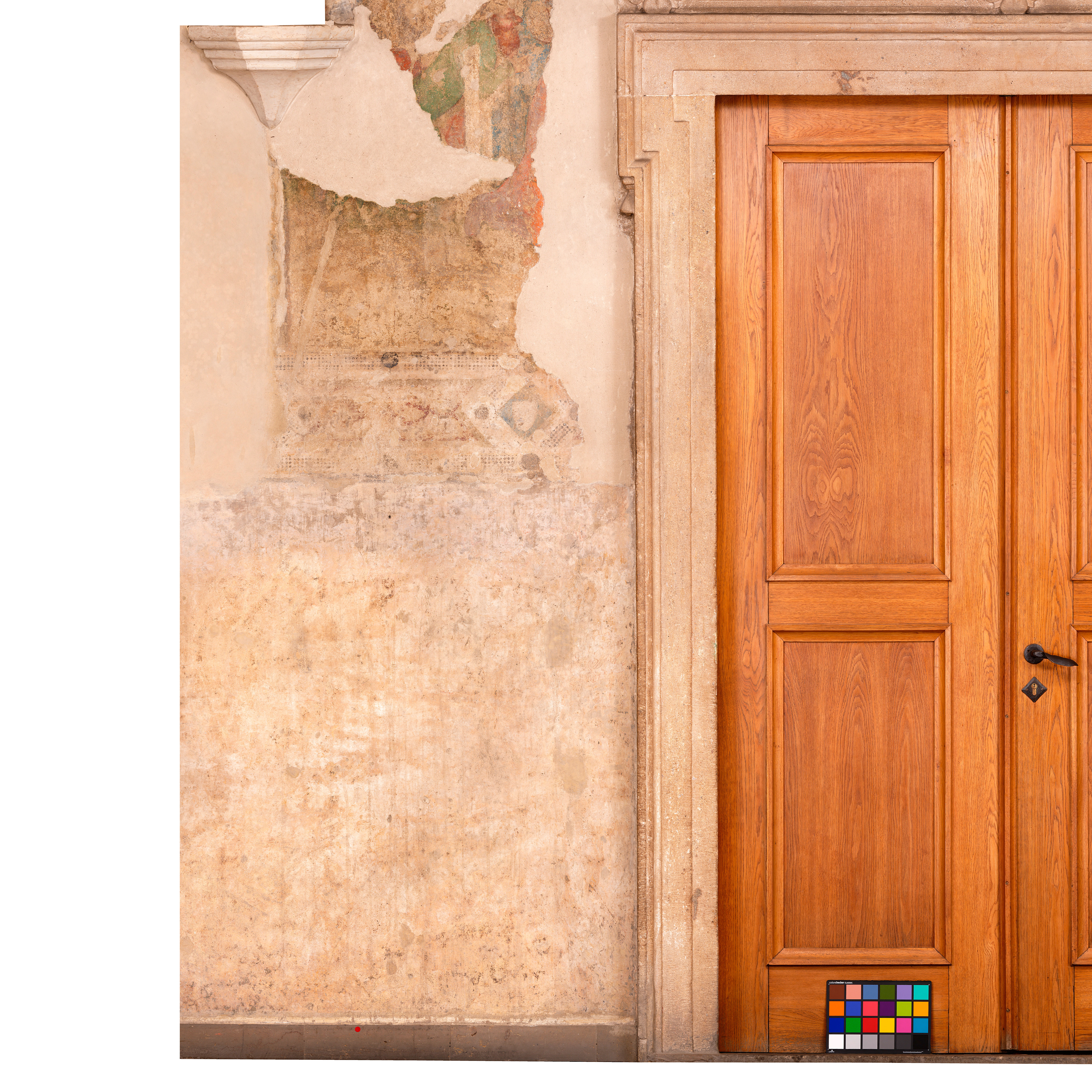
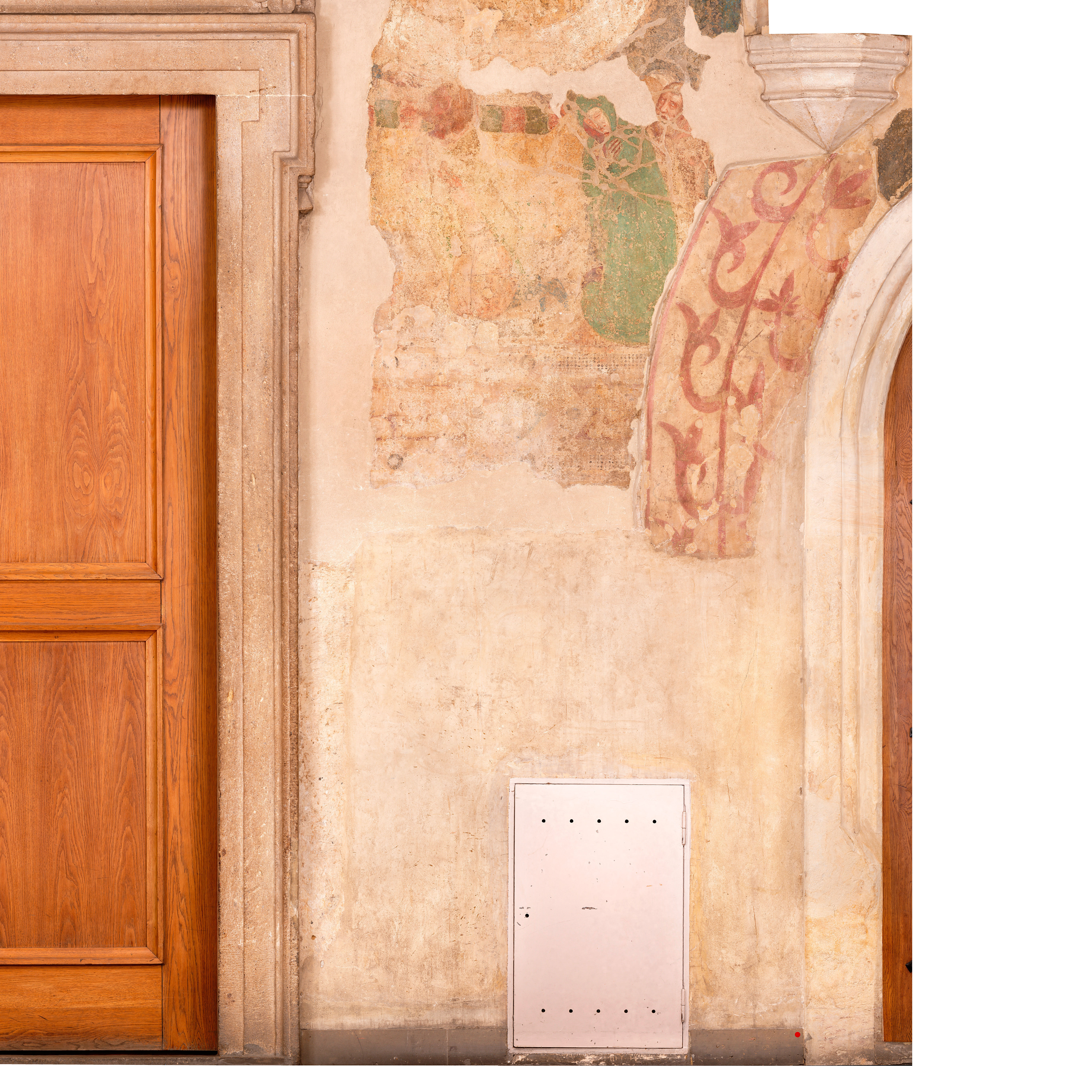
The field is damaged by the insertion of a Baroque portal. Originally, there was a rectangular window in the center leading into the refectory. The entrance to the refectory is located at the boundary with the adjacent field and was framed with floral ornamentation, fragments of which are still visible today.
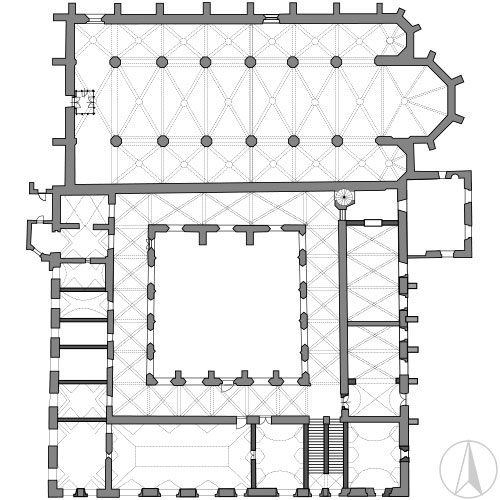
The arrangement of scenes in this field partly deviates from the chronological narrative of the cycle. The inclusion of the Last Supper in this location is undoubtedly related to the proximity of the refectory, as this scene was commonly depicted near it in monastic settings.
The two lower scenes do not depict specific events but rather represent a theological construction developing the typology of Eve and Mary. The followers of Eve are those who did not accept Christ, whereas Christians are the followers of Mary.
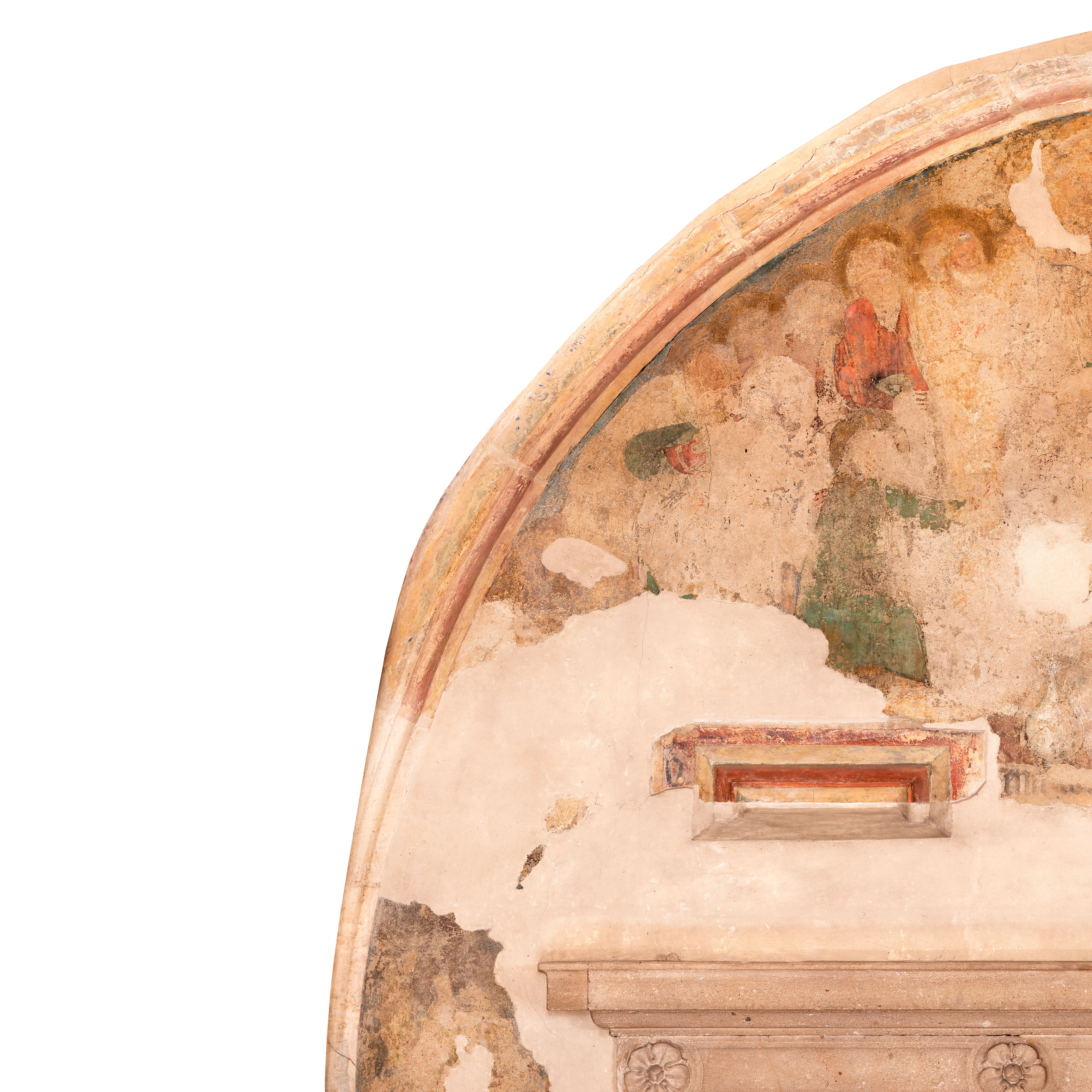
a. The apostles, led by Jesus, are seated around a circular table. The green figure reaching across the table from the front represents Judas, who receives a morsel from Jesus and is thereby identified as the betrayer. The apostles and Jesus originally had gilded haloes (including Judas); some of them also featured raised decorative elements. To Jesus’s right sits St. Peter, characterized by the typical physiognomy of a bearded man with receding hair. John is shown resting on Jesus’s chest. Clearly visible is the figure of a man on the right who appears to be either taking something out of or placing something into a basket.
b. The subject of the left scene is unclear. From the fragment, we can make out only a male figure shown in profile, with a large hooked nose and a beard—features that represent a typical negative physiognomy used in the Middle Ages to depict Jews. Based on descriptions, it is believed that Eve was depicted here, apparently distributing the fruits of the Tree of Knowledge—symbols of sin—to the Jews and possibly to other non-believers as well.
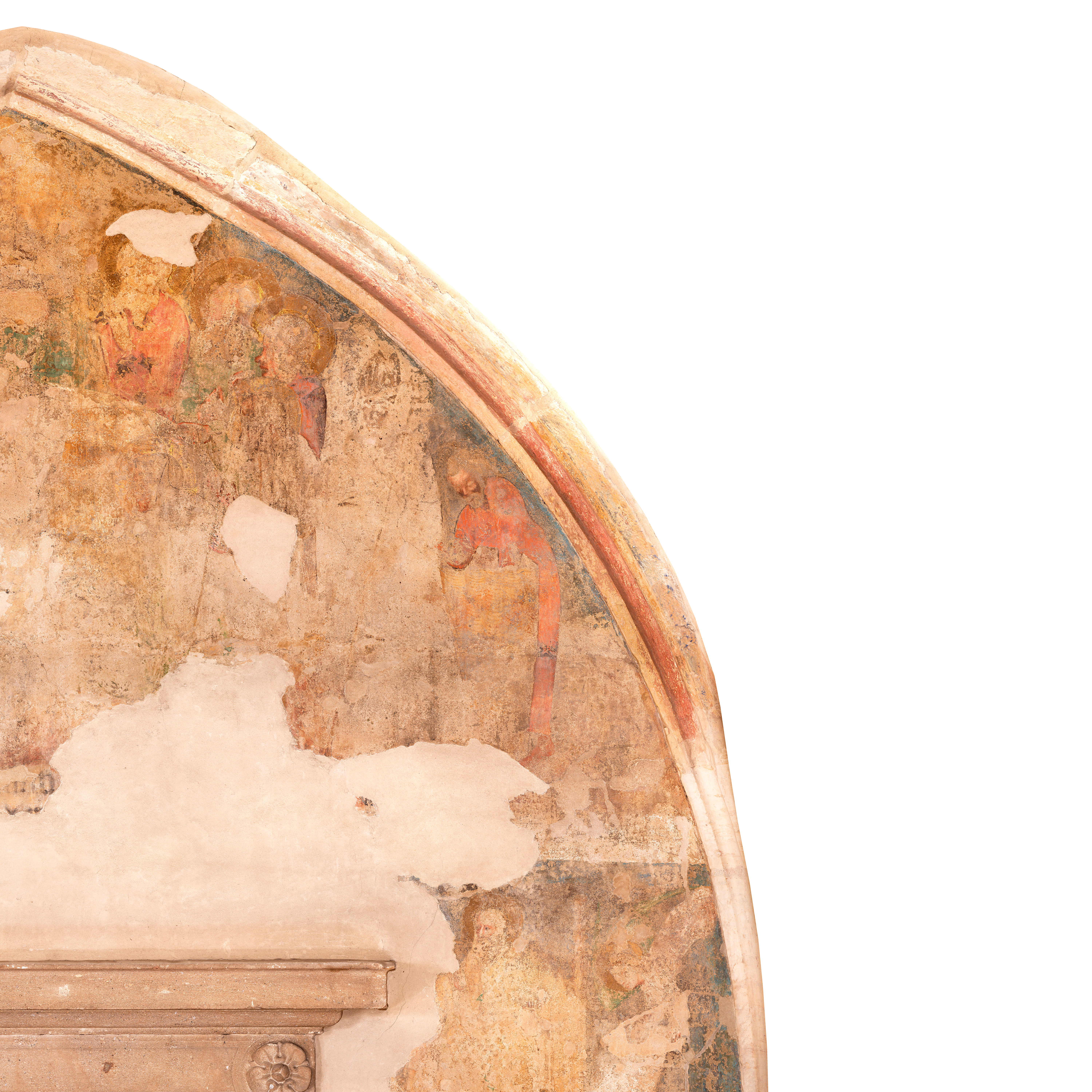
c. More of the right scene has been preserved. In the upper half, we see the Lord seated on an architecturally rendered throne. His garments were once again decorated using stencils, and his halo was gilded. To his right, an angel is depicted, apparently holding the end of a white cloth, which arches beneath God’s throne and was likely held on the other side by a second angel. This white fabric symbolized the heavens.
In the lower half, we see on the far right a kneeling pair - a woman and a man. The woman has her arms crossed over her chest, her head modestly bowed, and her eyes closed. The man is looking upward. In front of them, another kneeling man is visible, likely a beardless youth. His hands appear to be clasped in prayer before his chest, and his head is raised and slightly tilted back. A hand in a blue garment is approaching his mouth. The rest of the figure is damaged, but based on descriptions, it can be reconstructed that this was the Virgin Mary, distributing the Eucharistic hosts to the faithful.