The Emmaus Cycle | Wall Paintings in Context and Close Up
The Annunciation to the Virgin Mary
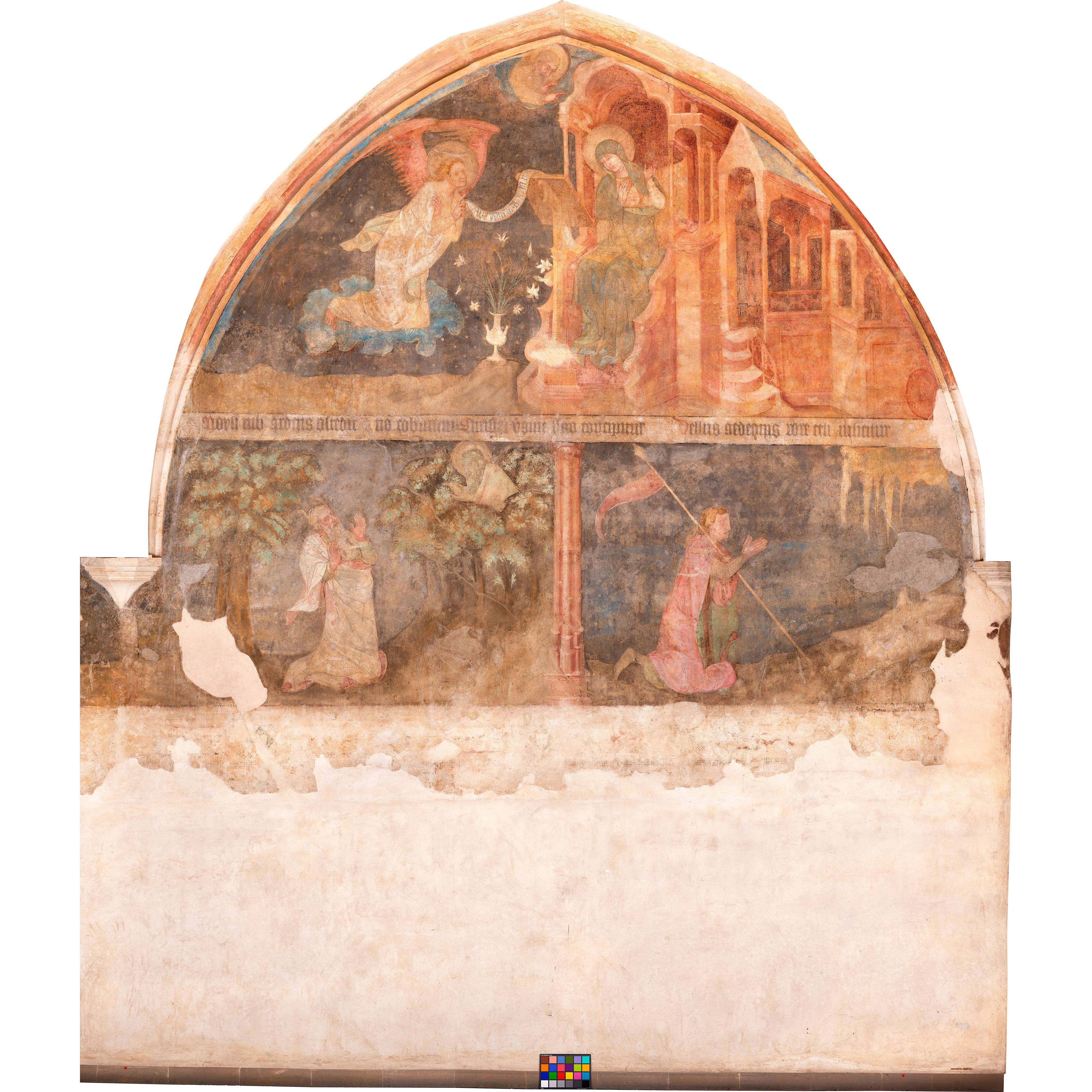
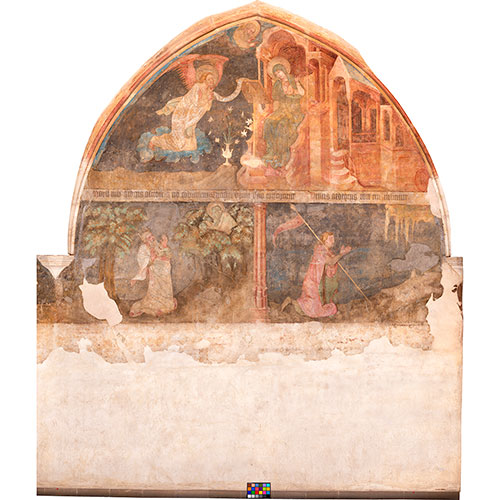
The Annunciation to the Virgin Mary (Luke 1:26–38) – Moses before the Burning Bush (Ex 3:1 – 4:17) and Gideon’s Fleece (Jdg 6:36–40)
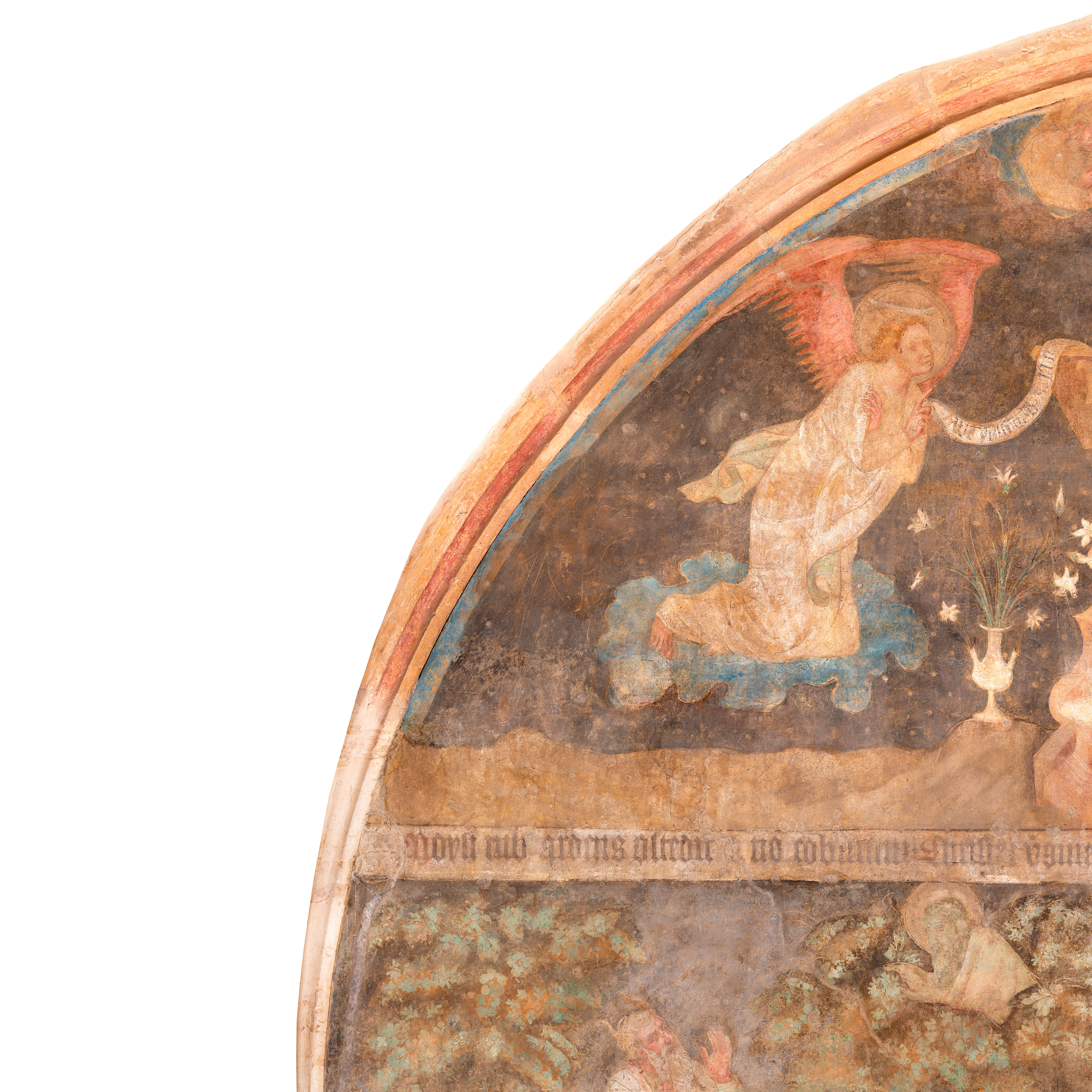
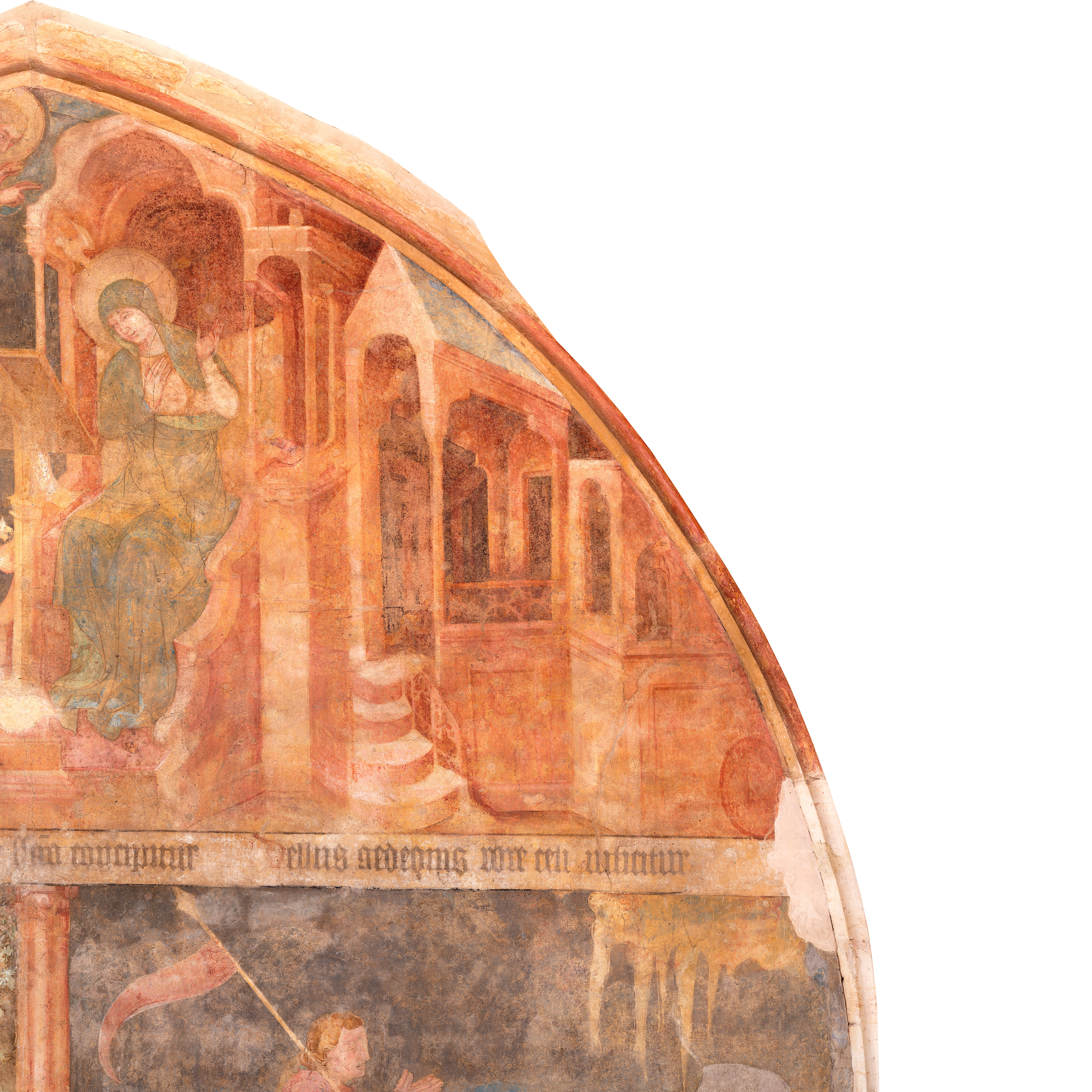
Inscription: Moysi rubus ardens ostendit et non comburitur. Christus a Virgine sanctissima concipitur. Vellus Gedeonis rore celi inficitur. (The burning bush appeared to Moses and was not consumed. Christ is conceived by the most holy Virgin. Gideon’s fleece is soaked with the dew of heaven.)
Uppsala description: Rubus Moysi non comburitur. Maria annunciatur. Vellus Gedeonis rore celi madescit. (Moses’ bush is not burned. Mary is announced to. Gideon’s fleece is moistened with heavenly dew.)
The final scene on the southern wall thematically concludes the story from the fall of the angels to the incarnation of the Savior. The central figure here is the new Eve – Mary – whose role was foreshadowed in the Old Testament.
a. The Virgin Mary sits on a grand throne, which, along with the adjoining architecture, occupies the right half of the scene. It may possibly allude to the Temple of Jerusalem, where Mary was raised, or refer to the Ark of the Covenant, one of the Marian epithets. From the left, an angel approaches on a cloud, with arms crossed over his chest and holding a scroll bearing the greeting in his right hand. Mary faces him and, with her hands raised, possibly expresses surprise; at the same time, her bowed head signifies humility. In front of her on the ground, there is a vase with a bouquet of white lilies, symbolizing Mary’s purity. God, depicted at the top of the scene, blesses Mary and sends the dove of the Holy Spirit toward her.
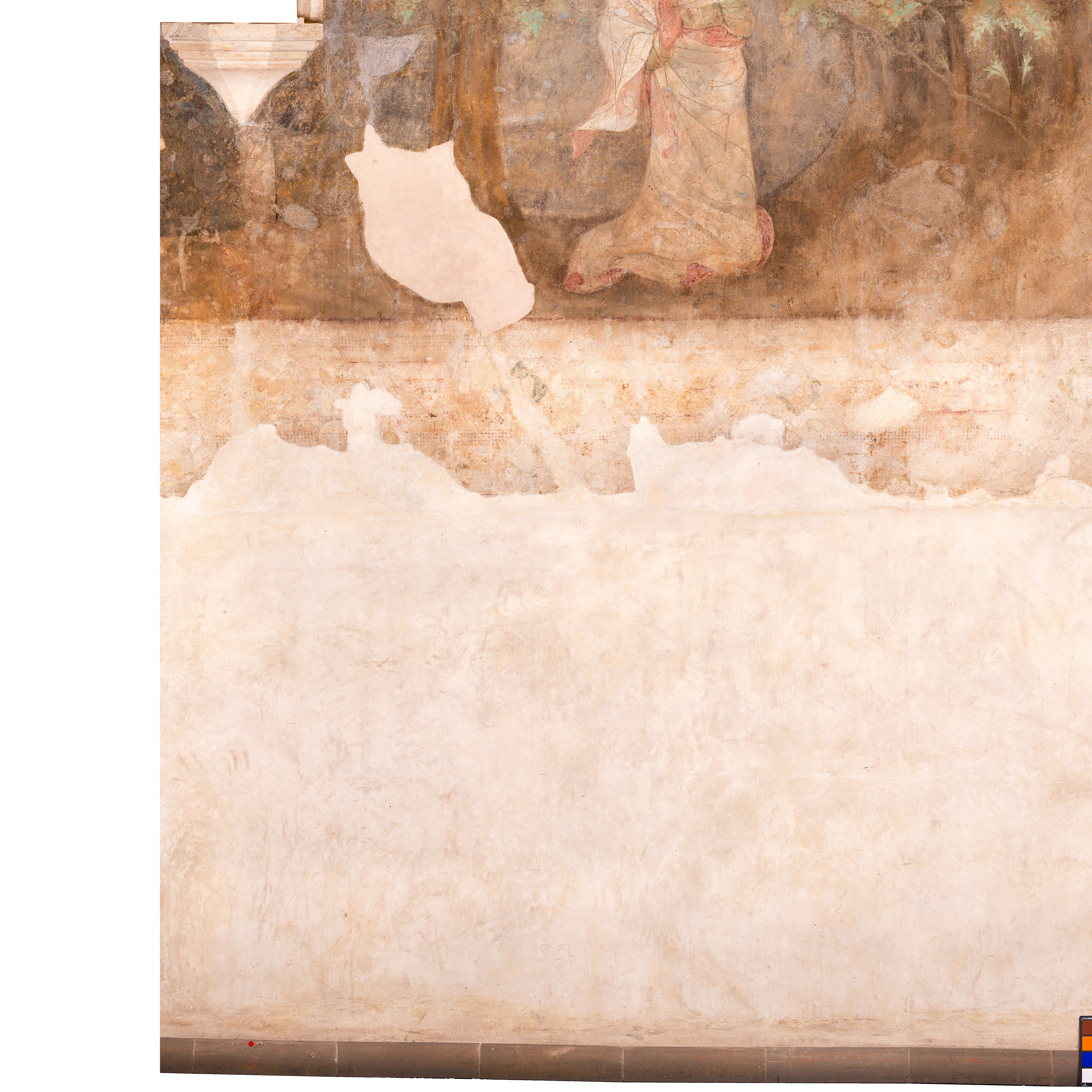
b. This scene depicts the story of Moses’ calling by the Lord, who spoke to him from the burning bush in the desert. Moses is shown here as an old bearded man (although he was young at the time), with horns on his head, which are a traditional attribute of Moses. With raised hands, he may be expressing fear or surprise. He looks toward the burning bush depicted in front of him and listens reverently to the Lord. The bush that is not consumed is a prefiguration of the Virgin Mary, who would conceive and give birth to a son while remaining a virgin.
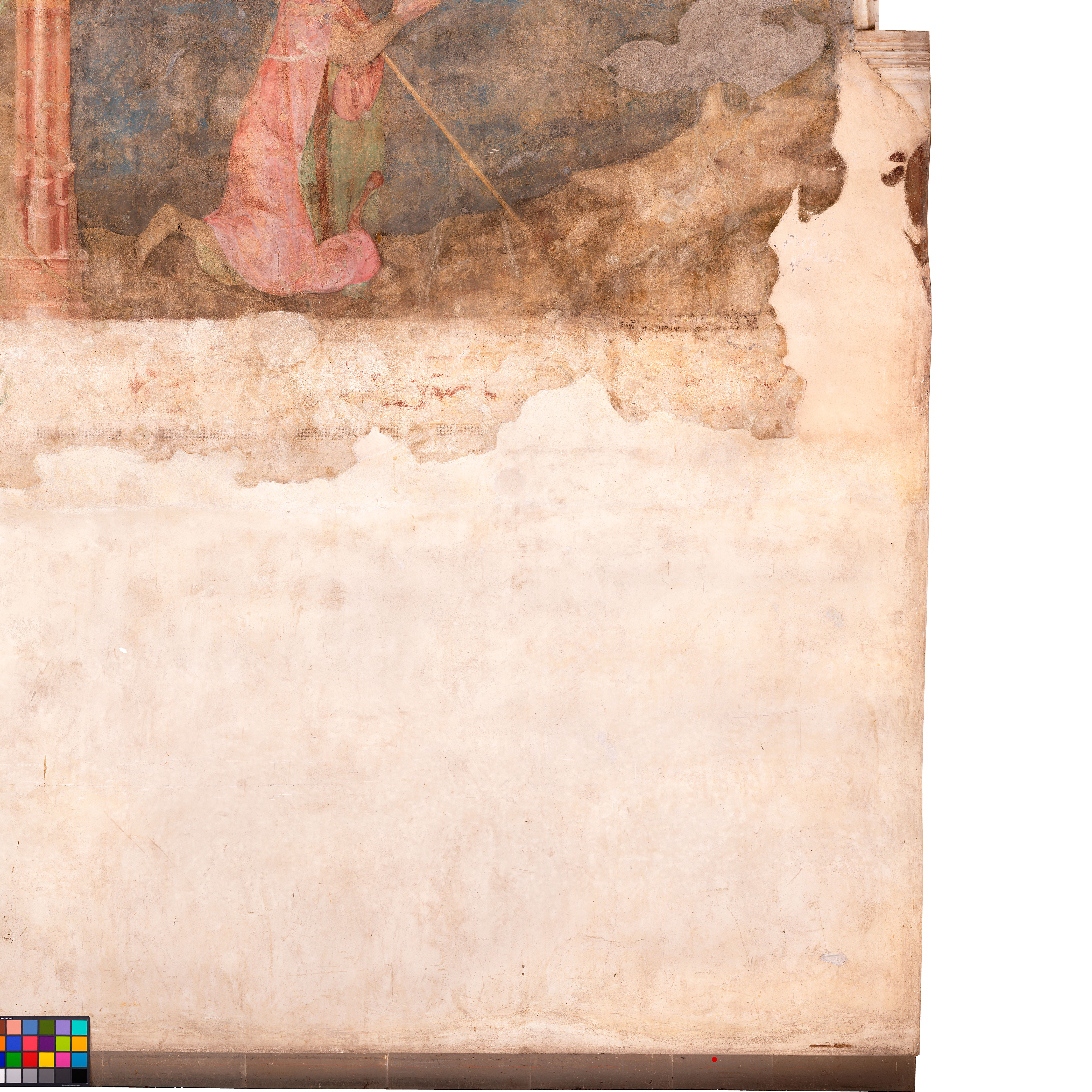
c. The fleece of Gideon carries the same meaning. God sent dew upon it as a sign to Judge Gideon that He was with him. Gideon is shown kneeling on the ground, a spear with a banner resting against his shoulder, his hands clasped in prayer. In front of him lies a sheepskin, and dew is falling onto it from the heavens. The heavenly dew recalls the Advent antiphon “Drop down dew, O heavens,” sung during the liturgical season of awaiting the Savior.
Předchozí pole | Následující pole ✖