The Emmaus Cycle | Wall Paintings in Context and Close Up
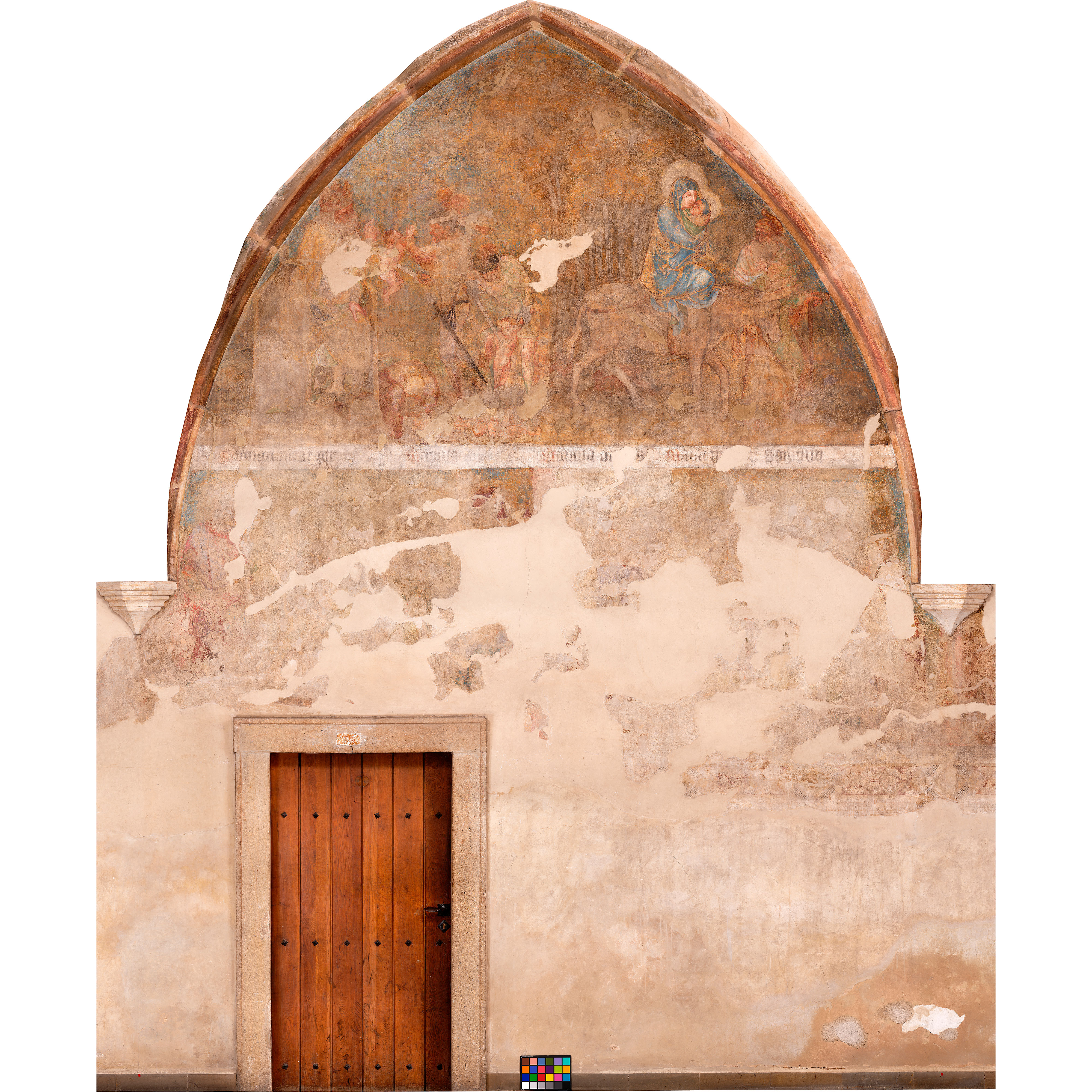
Massacre of the Innocents, Flight into Egypt
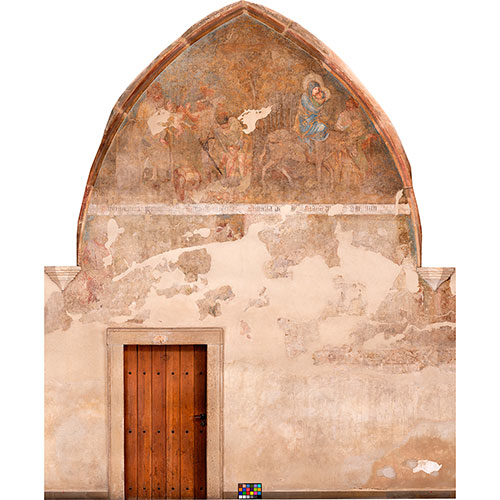
Massacre of the Innocents, Flight into Egypt (Mt 2:13–18) — Massacre of the Jewish boys by Pharaoh’s order (Ex 1:15–22 and 2:1–5) and Athaliah commands the murder of her stepsons (2 Kings 11:1–3)
Inscription: Pharao necat pueros ... Herodes ... Athalia pueros. Maria ... Egiptum. (Pharaoh kills the boys ... Herod ... Athalia kills the boys. Mary ... to Egypt.)
Uppsala description: Occiduntur masculi Hebreorum. Occiduntur innocentes. Athalia interfici iussit filios. Maria fuga fugit in Egyptum cum puero Iesu. (The Hebrew boys are killed. The Innocents are killed. Athaliah ordered the sons to be killed. Mary fled to Egypt with the child Jesus.)
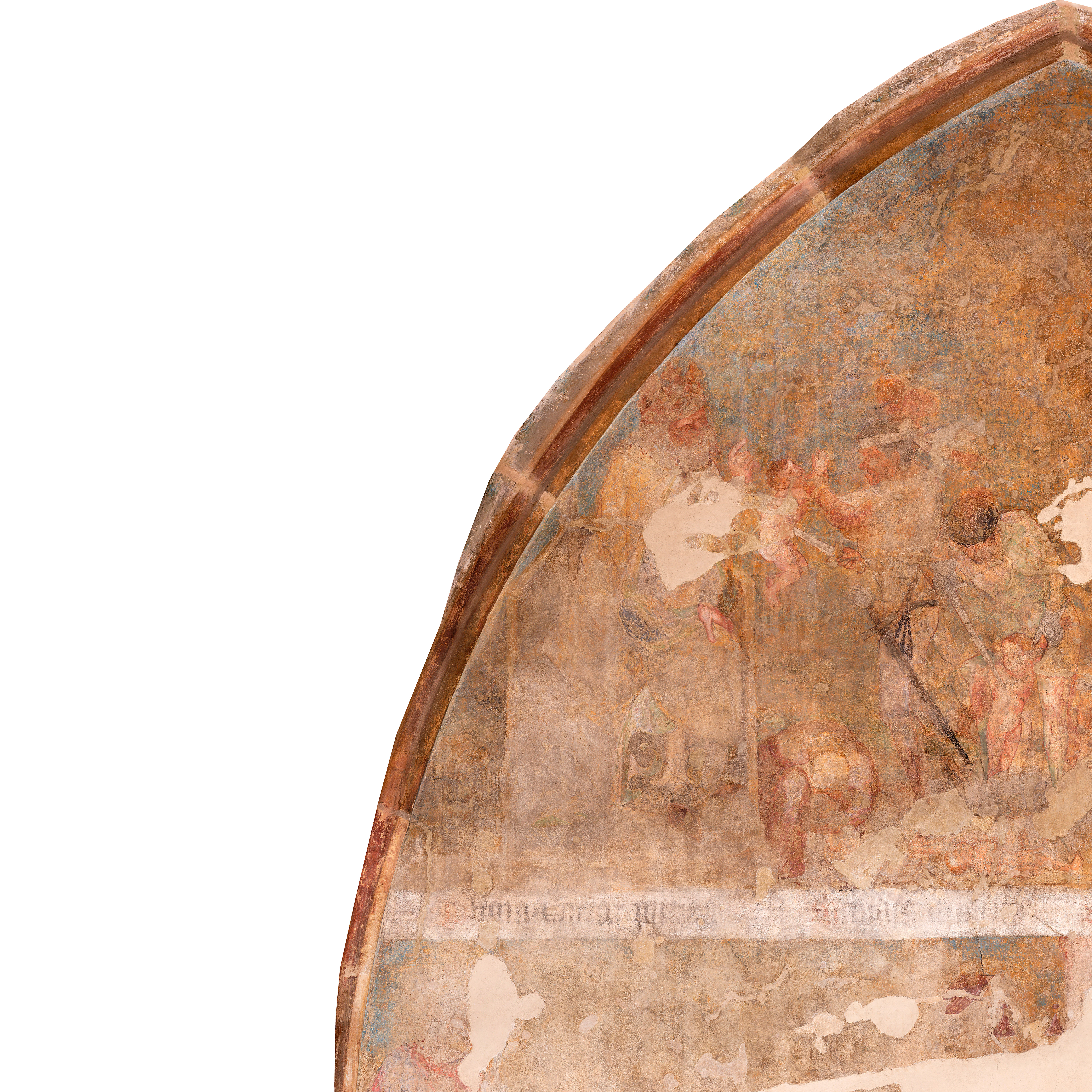
a. In the first part, on the far left, stands a throne upon which King Herod, crowned, is seated. He rests his left hand on his knee and raises his right hand to issue a command to his soldiers. In front of him, a man with a strip of cloth wrapped around his head and a sword hanging from his belt is stabbing an infant with a dagger, holding the child by its hands before him. The little boy seems to be clasping his hands toward the sky. Behind this man stands another armed soldier, bending over another child standing before him, and thrusting a sharp sword into the child’s chest. Lifeless bodies of other children lie on the ground. Next to Herod’s throne, a female figure is crouched, embracing one of the murdered little boys.
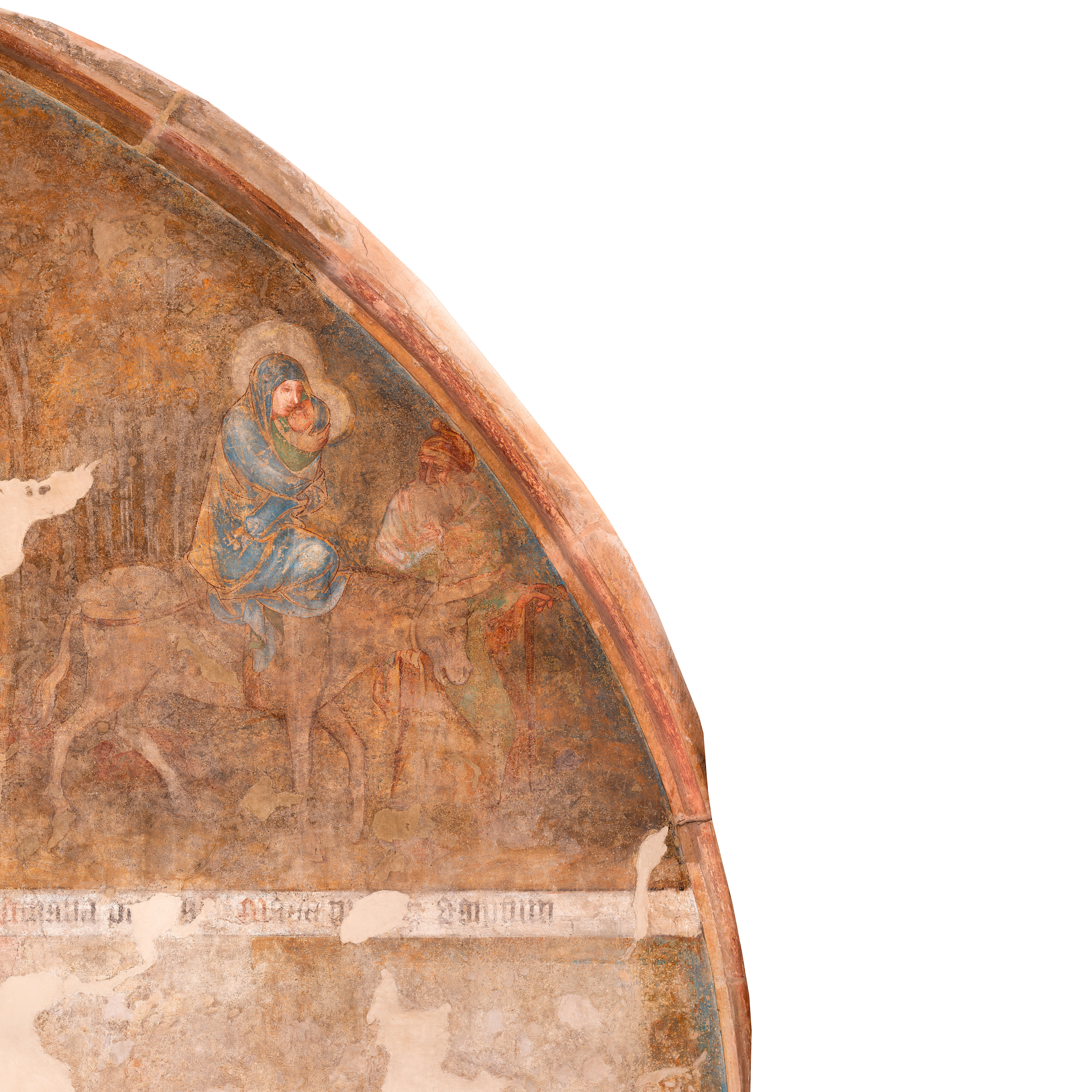
The second half of the scene is separated by a forest through which a donkey walks, carrying the Virgin Mary on its back as she holds the infant Jesus close to her. The modelling of Mary’s cloak in blue is now the most prominent feature remaining of the entire painting. In front of them walks St. Joseph, leading the animal with his right hand and leaning on a staff with his left.
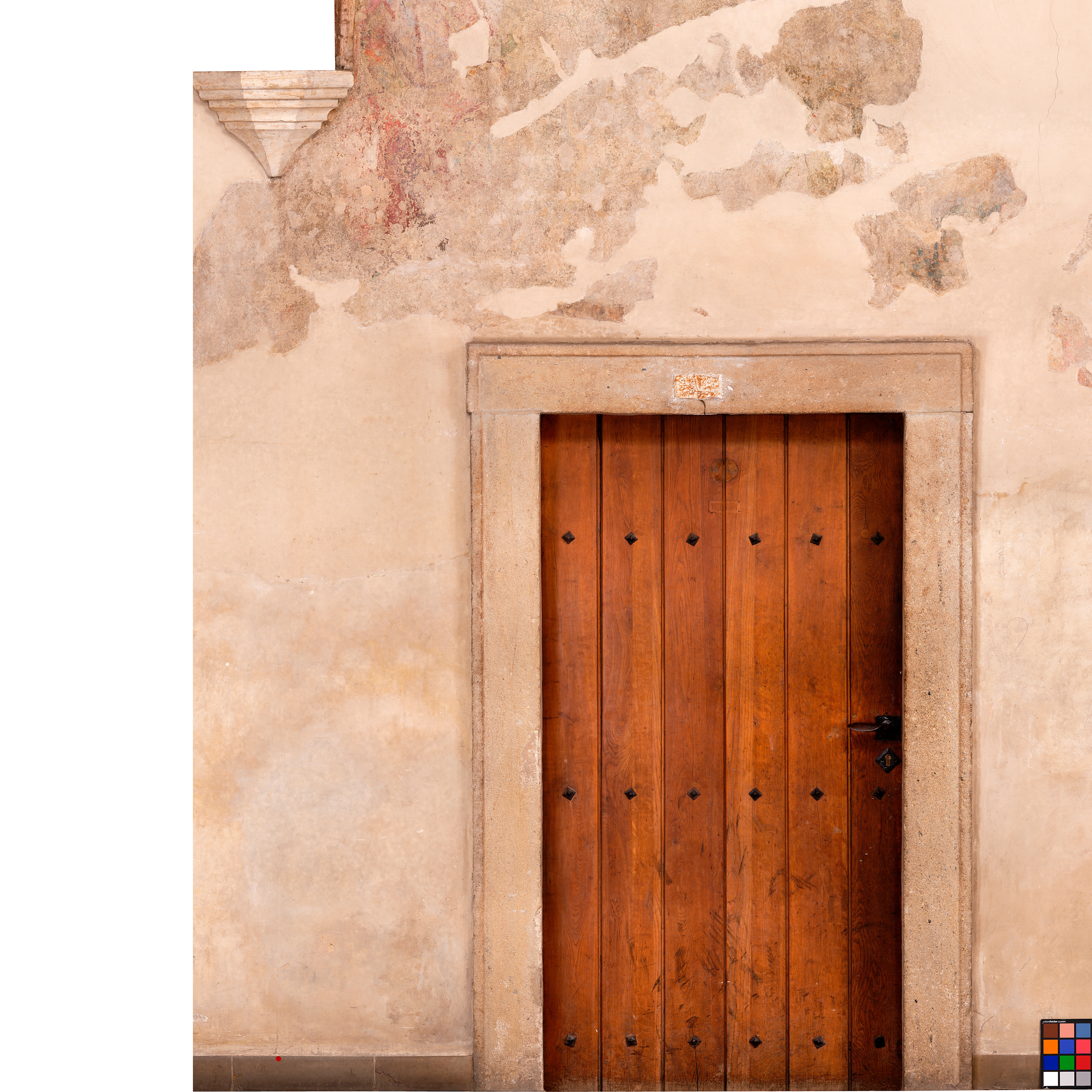
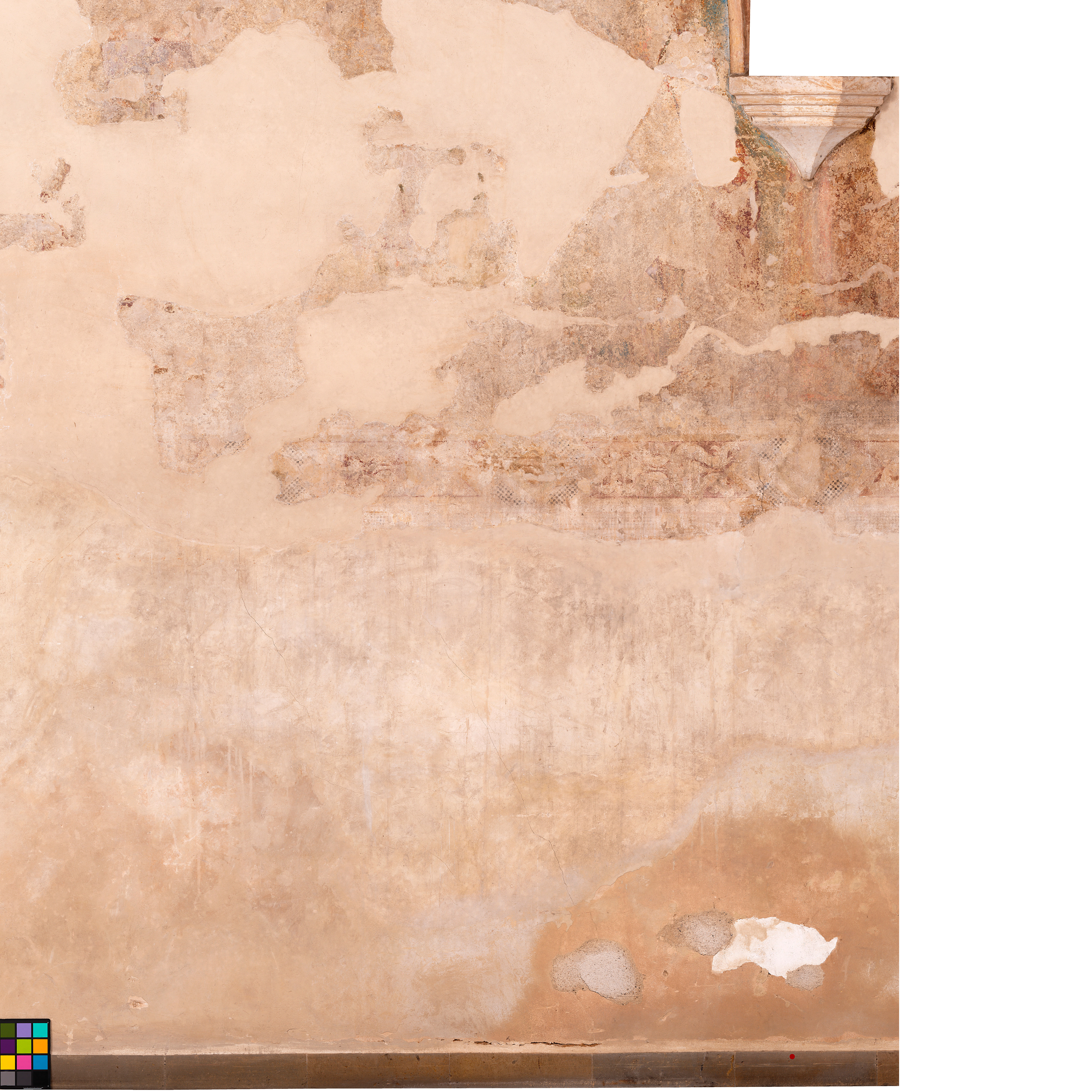
The scenes in both of the lower fields are today almost completely illegible; their iconography can be partially reconstructed thanks to historical photographic documentation.
b. In the scene depicting the Massacre of the Jewish Boys ordered by Pharaoh, a seated figure in a red robe can be discerned on the left — this was likely Pharaoh himself. In front of him, the killing of the boys was shown in a manner very similar to the main scene. Two soldiers were stabbing two little boys with swords, holding them aloft in the air. On the ground lay Jewish women in collapsed poses: on the far right, a woman was apparently depicted with her hands raised in prayer; in the centre, a seated woman watched the slaughter; and beneath Pharaoh’s throne, another woman was crouching, holding something in front of her. This may have been Moses’ mother, placing her son in a basket onto the waters of the Nile. The river was most likely painted along the bottom edge of the scene. A very similar depiction can be found in the Bible of Wenceslas IV (vol. I, fol. 54r), which preserves the same iconography as in the Emmaus cycle.
c. The story of the cruelty of the Judean queen Athaliah belongs among the lesser-known Old Testament narratives. When Athaliah learned that her son and successor Ahaziah had been killed, she resolved to have the remaining members of the royal family murdered in order to seize power for herself. Only one grandson, Joash, managed to escape.
In the scene — composed similarly to the previous ones — the cruel queen was depicted on the left, seated on her throne, watching the massacre. As with the previous scenes, the illumination in the Bible of Wenceslas IV (vol. II, fol. 165r) helps us identify the subject in the historical photograph. From behind the throne, one executioner was shown stabbing a child lying on the ground; another executioner stood in the centre of the scene with his sword raised high above his head. In front of him, two boys with their hands raised awaited the blow. On the right side of the painting stood a small group of two figures, likely Jehosheba and possibly her husband, the priest Jehoiada, who were shown rescuing their young nephew Joash and carrying him to safety.