The Emmaus Cycle | Wall Paintings in Context and Close Up
Pentecost
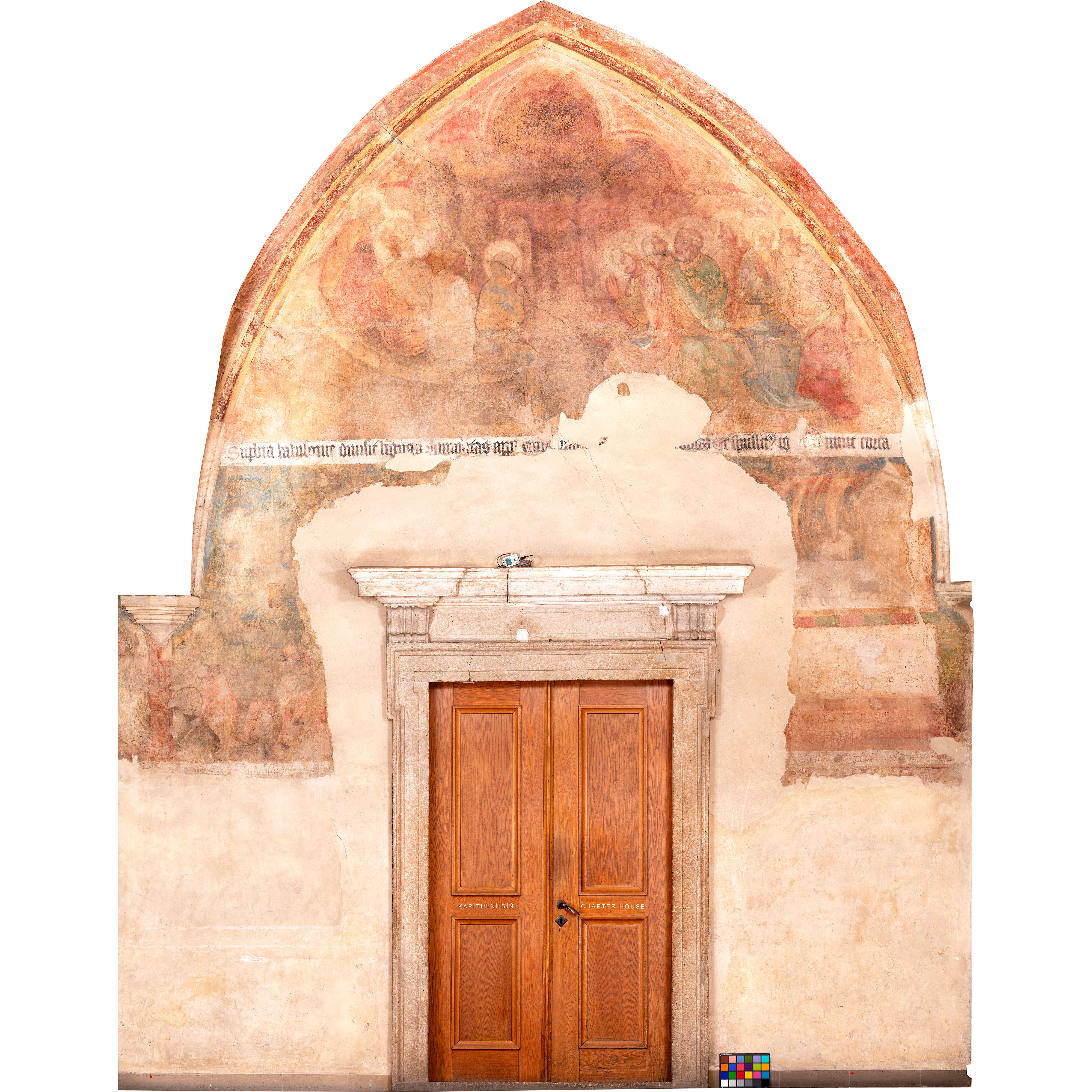
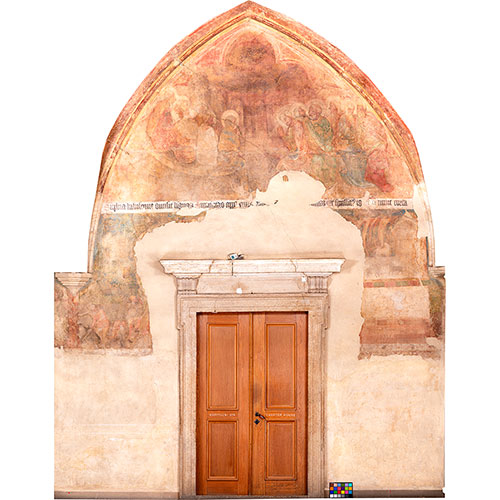
Pentecost (Acts 2:1–4) – The Tower of Babel (Gen 11:1–9) and The Lord Accepts the Burnt Offering (Lev 9:1–24)
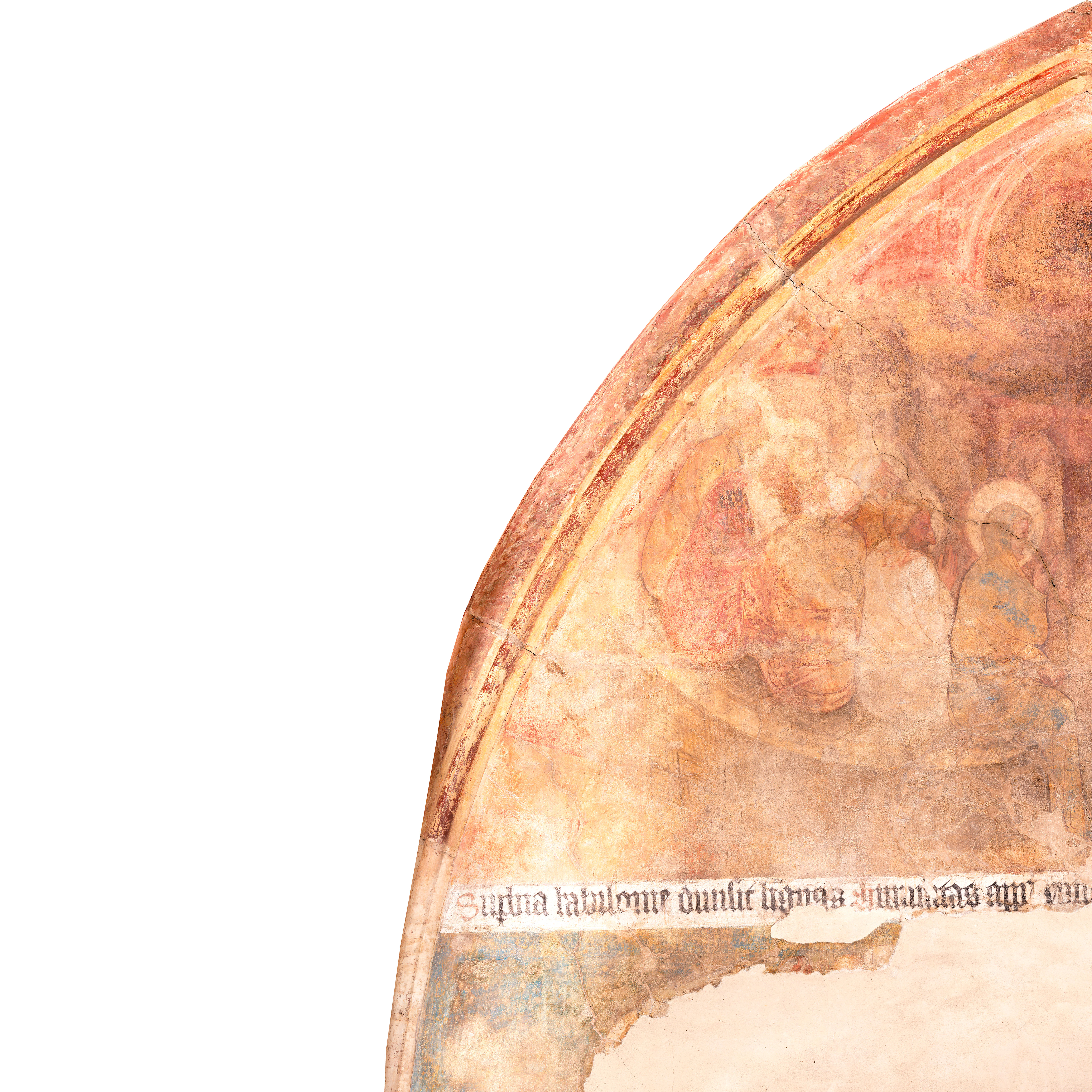
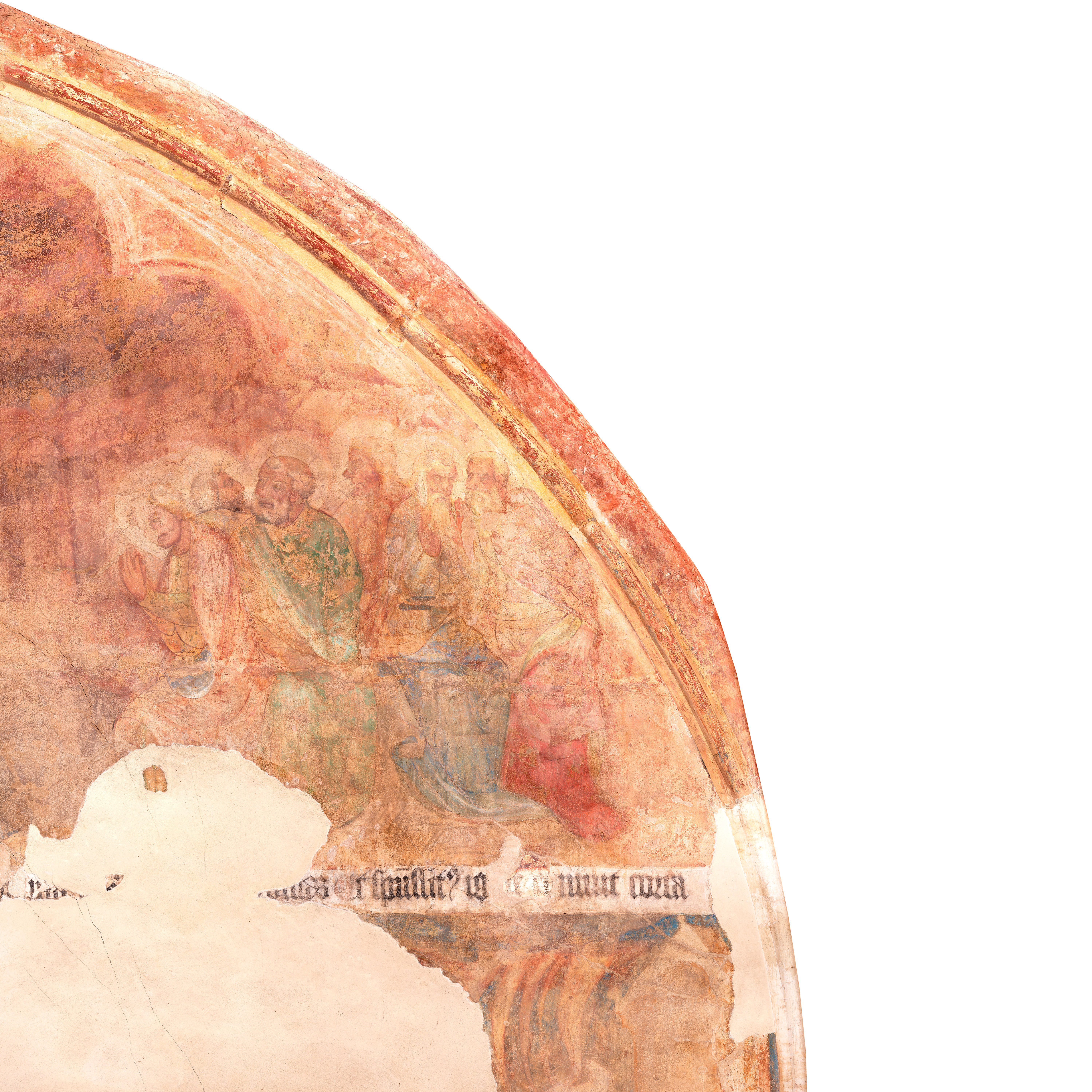
Inscription: Superbia Babilonie divisit liguas. Humilitas appostolorum uni<vit> … …as. Et Spiritus sanctus ig<n>e <re>vivit corda.
(The pride of Babylon divided the languages. The humility of the apostles united …. And the Holy Spirit revived hearts with fire.)
Uppsala description: Circa turrim Babel lingue variantur. Spiritus sanctus mittitur. Holocausta per ignem consumuntur.
(Around the Tower of Babel, the languages are confused. The Holy Spirit is sent. The burnt offerings are consumed by fire.)
a. The Descent of the Holy Spirit is traditionally believed to have taken place in the same room as the Last Supper, the so-called cenaculum. In this depiction, the room appears as a vaulted circular chamber with a row of windows in the background. The apostles are seated on benches arranged in a semicircle. On the left side is a group of six apostles, and in the center sits the Virgin Mary. Her hands are joined in prayer, just like St. John, who is seated opposite her. Behind him sits St. Peter and four other apostles.
The way the descent of the Holy Spirit was depicted is no longer clear. Today, we see neither the dove nor tongues of fire or flames above the heads of the figures.
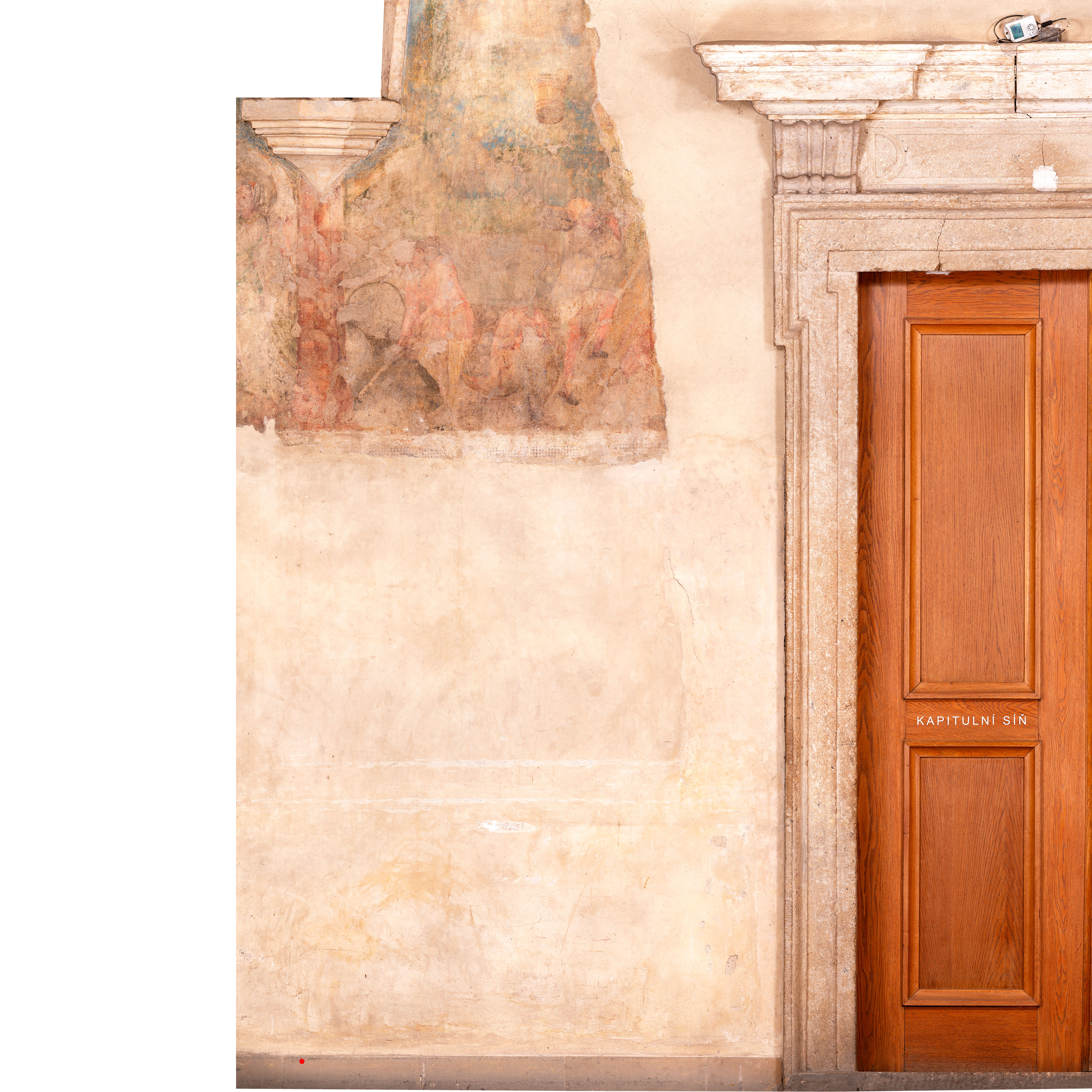
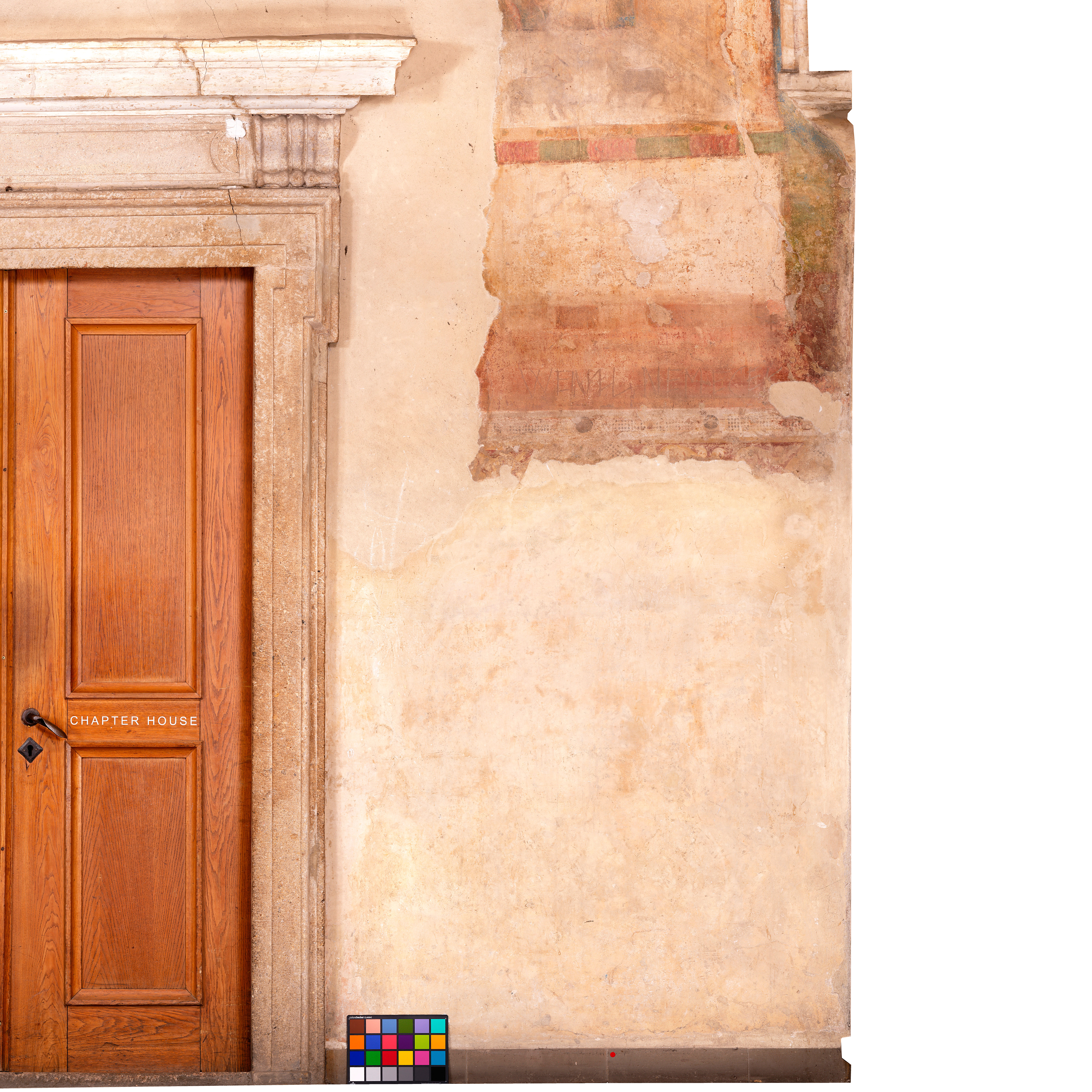
b. The well-known story of the Tower of Babel tells how people attempted to build a tower reaching to the heavens. For their pride, they were punished by the confusion of their languages. Today, the painting is almost entirely destroyed due to the insertion of a Baroque portal. Only a few small figures of workers can still be identified: on the far left, one is digging or raking something; next to him, another is bent over a vessel; and finally, a third is climbing a ladder while carrying something on his shoulder. Above him, a wooden bucket is being lowered on a rope.
c. This scene most likely depicts the first sacrifice carried out by Aaron in his priestly role. At the end of the ritual, the glory of the Lord appeared to the people of Israel, and then fire descended from heaven and consumed the offering. The inscription identifying this scene is missing, so we must rely on the Uppsala description. On the right-hand fragment of the scene, we see an altar with small animals placed on it, and tongues of fire are descending from the heavens.
The Sending of the Holy Spirit forms a fitting conclusion to the entire cycle. This moment marks the beginning of the final chapter in human history—the era of awaiting the Second Coming of the Lord. The Comforter, the Holy Spirit sent from heaven, stands as a source of strength and a heavenly intercessor for all believers.
Předchozí pole | Následující pole ✖