The Emmaus Cycle | Wall Paintings in Context and Close Up
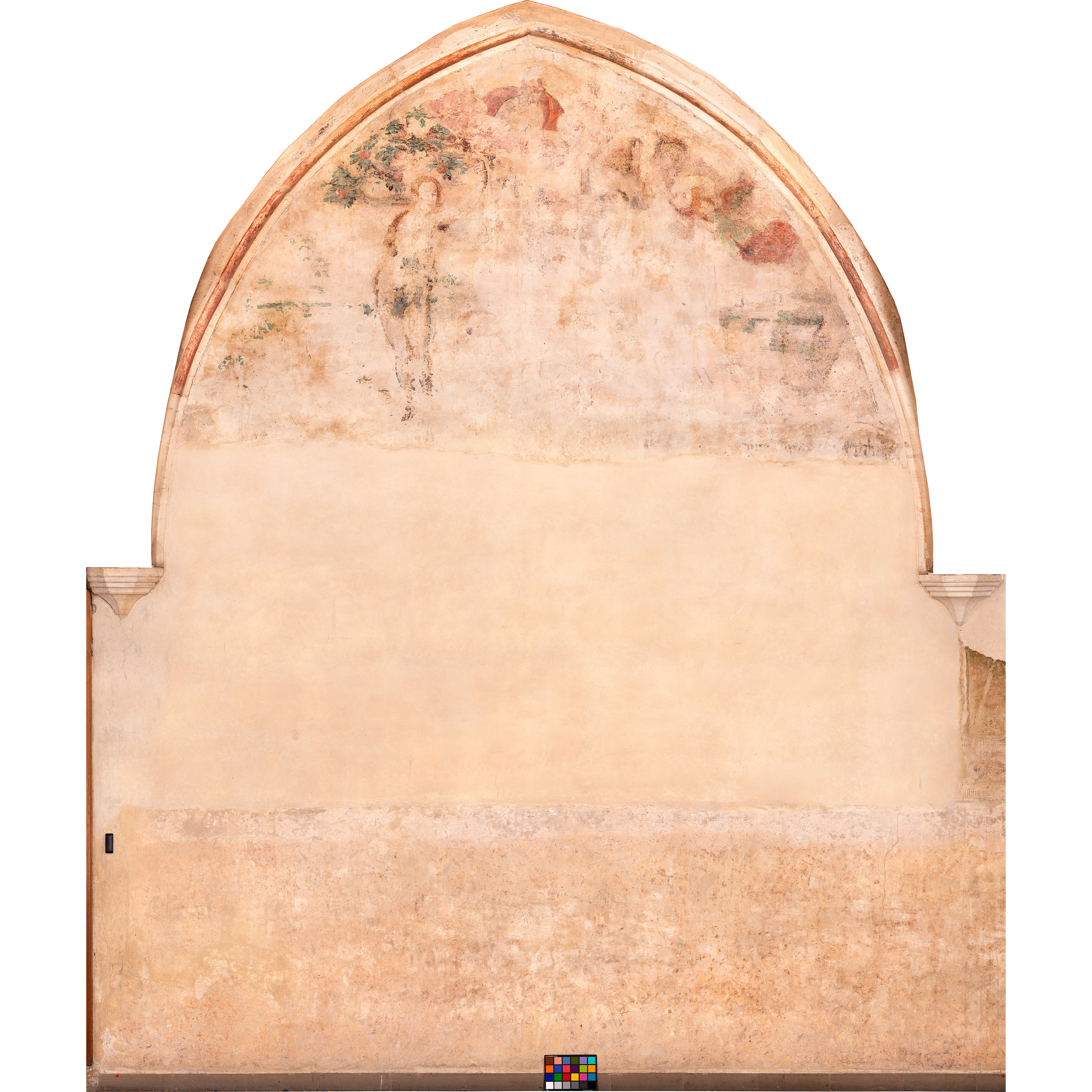
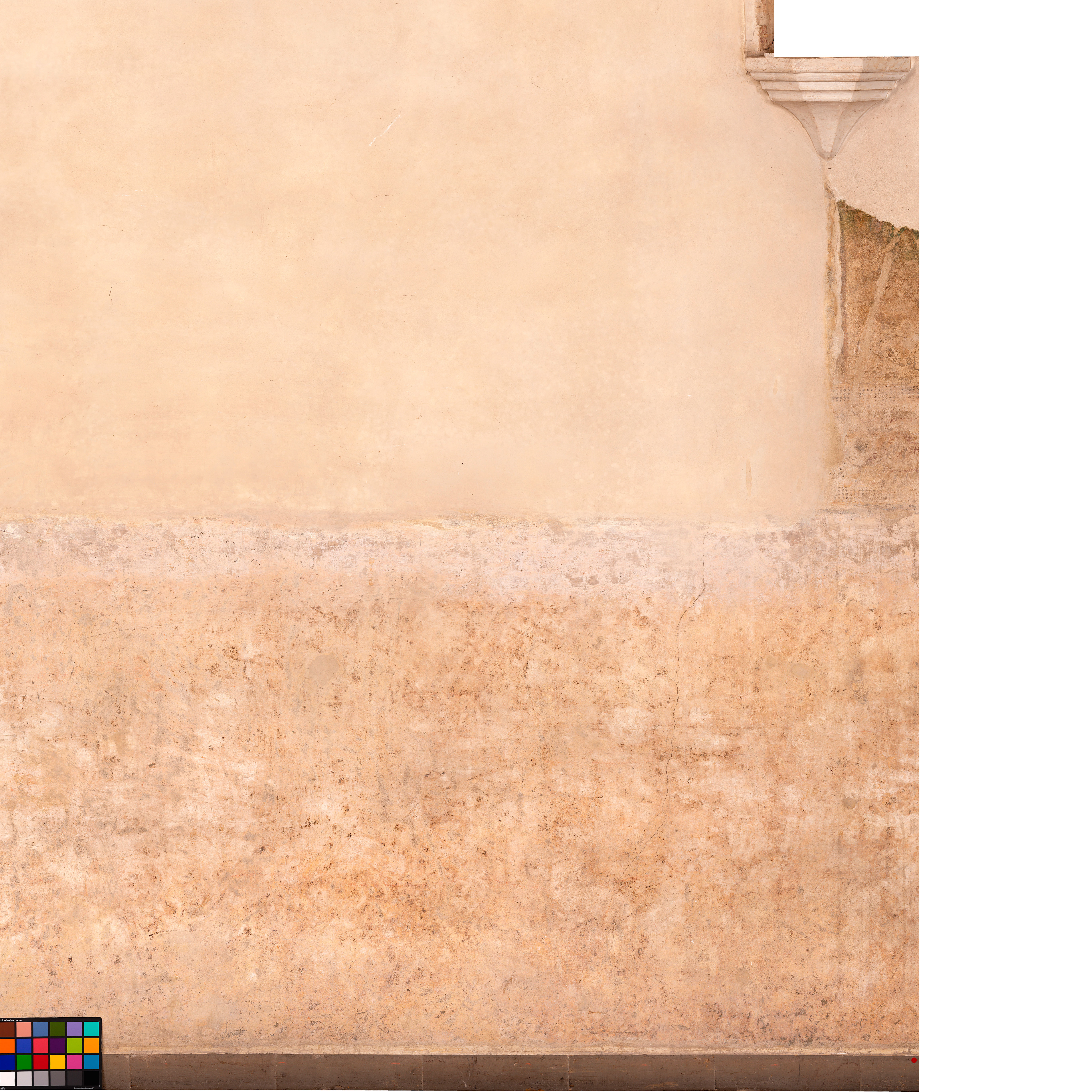
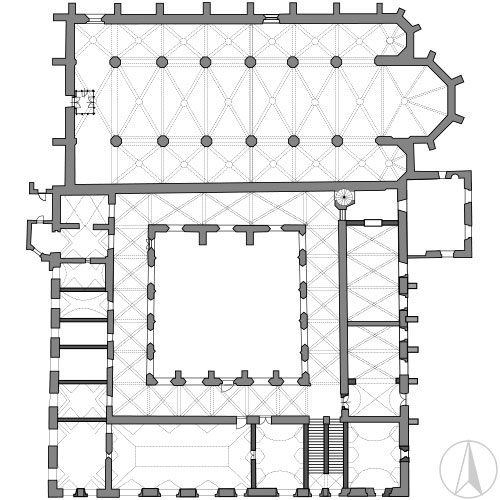
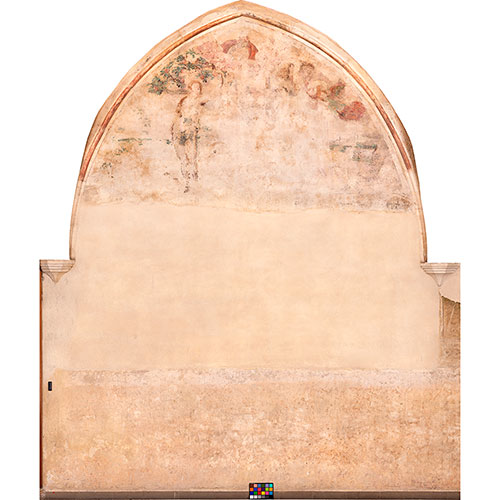
The creation of Eve
The creation of Eve (Gen 2:21-22) - The birth of Jesus from Mary (Luke 2:1-7)
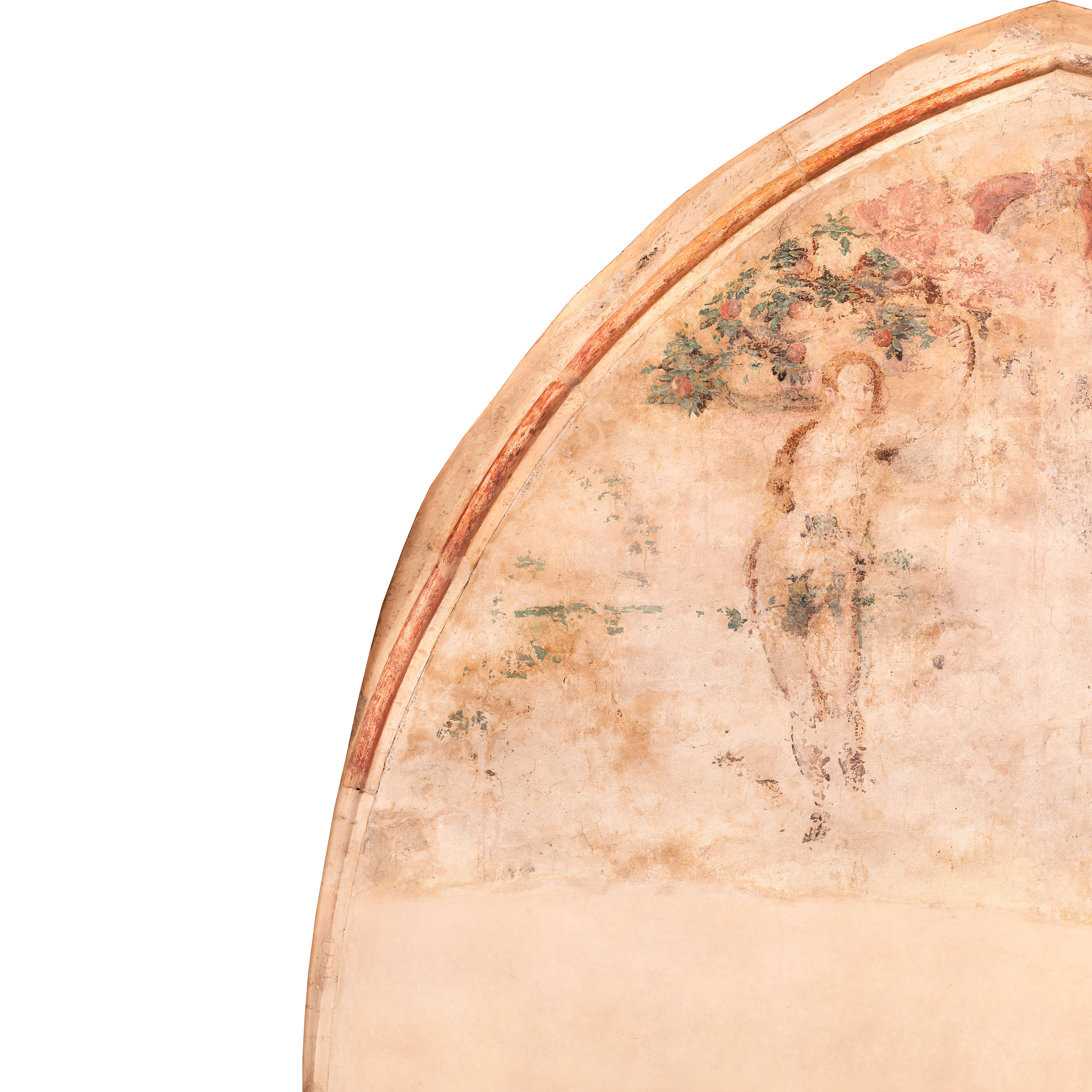
Eve's sin (Gen 3:1-7)- Mary takes Jesus down from the cross (Speculum humanae salvationis, chap. XXVI)
Inscription: Ex costa Ade Eva formatur. Eva capit pomum de arbore. Maria Christum suscepit de Cruce. Christus ex Maria. (Eve is formed from Adam’s rib. Eve takes the apple from the tree. Mary receives Christ from the Cross. Christ from Mary.) Transcription according to Josef Neuwirth (p. 23); the inscription is documented in historical photographs, today only fragments remain.
The layout of the scenes in this panel was not entirely typical—the uppermost register contained two scenes. To preserve the chronological order, the scenes must be read from the bottom up. The composition was based on the typological pairing of Eve and Mary. Mary is understood as the new Eve, who helped to redeem Eve’s sin by becoming the mother of the Savior.
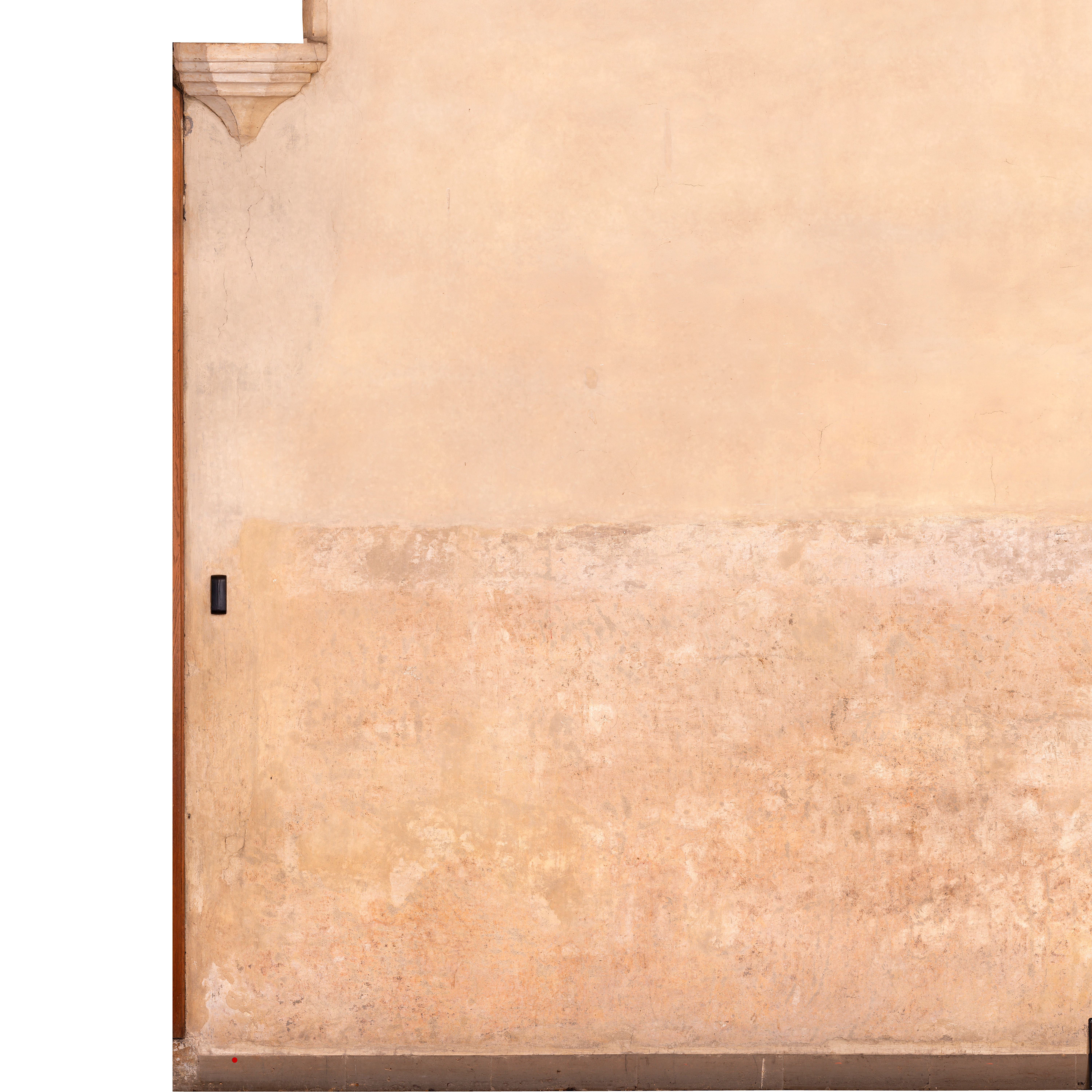
In historical photographs, we can see paintings from the late 16th century which, although they likely preserved the original subject matter, may have followed a different conceptual approach. Based on research, we know that the medieval plaster in the areas of the lower two scenes has not been preserved.
a. The now-destroyed scene at the bottom left depicted the Creation of Eve from Adam’s rib. We can envision this scene based on a number of analogies. The Lord was likely leaning over Adam, who was sleeping in Paradise, either holding a rib with a female head in his hand or standing before him was Eve, newly created.
b. The opposite scene was likely quite original in terms of iconography; its design was created to form not only a thematic but also a visual parallel to the preceding scene. According to a photograph and description documenting the state in the 19th century, the Lord stood on the left, leaning over the reclining Virgin Mary, and was reportedly taking the small Jesus from her hands.
c. The scene of Eve picking the fruit from the Tree of Knowledge is marked by an overpainting from the late 16th century, which is clearly visible in historical photographs and was only partially removed during restoration. It appears that the Rudolfine painters followed the original layout. On the far right edge, the Tree of Knowledge is depicted; beneath its branches stands Eve, raising her left hand to pluck one of the fruits. A serpent is coiled around a branch, its head bent toward Eve’s ear. At the top of the panel, just beneath the vault, God the Father is painted in the open heavens, surrounded by clouds. This figure extends into both halves of the field, thereby visually connecting the two scenes.
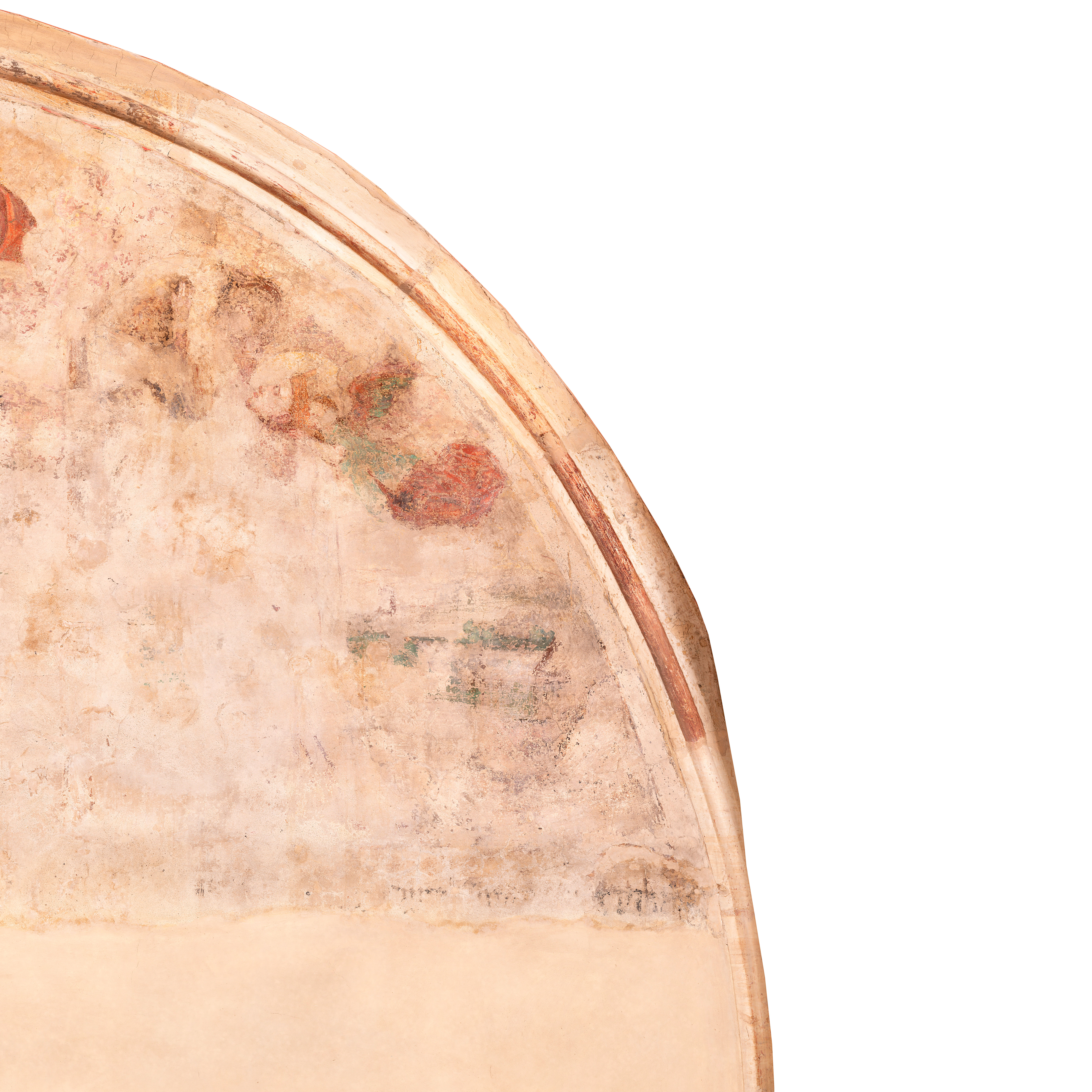
d. The right half of the scene is now quite illegible, and it is unclear what belongs to the medieval original and what is a later addition. According to a historical photograph, a cross with the body of Jesus was painted on the left side. To the right of it stood the Virgin Mary (her face is still recognizable today), reaching out her arms to receive her son into her embrace. An angel hovered near Mary’s head.
Předchozí pole | Následující pole ✖