The Emmaus Cycle | Wall Paintings in Context and Close Up
The Nativity of the Lord
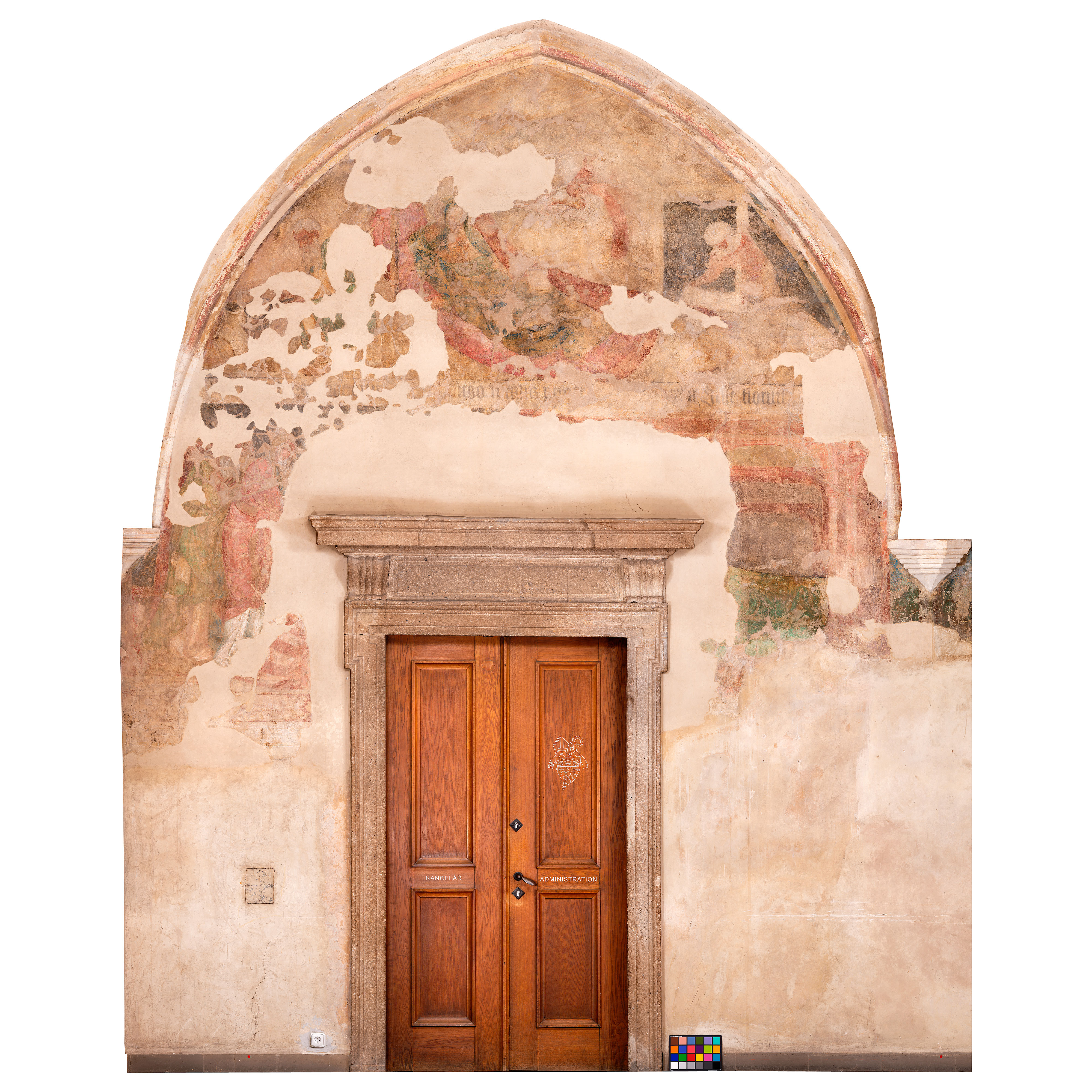
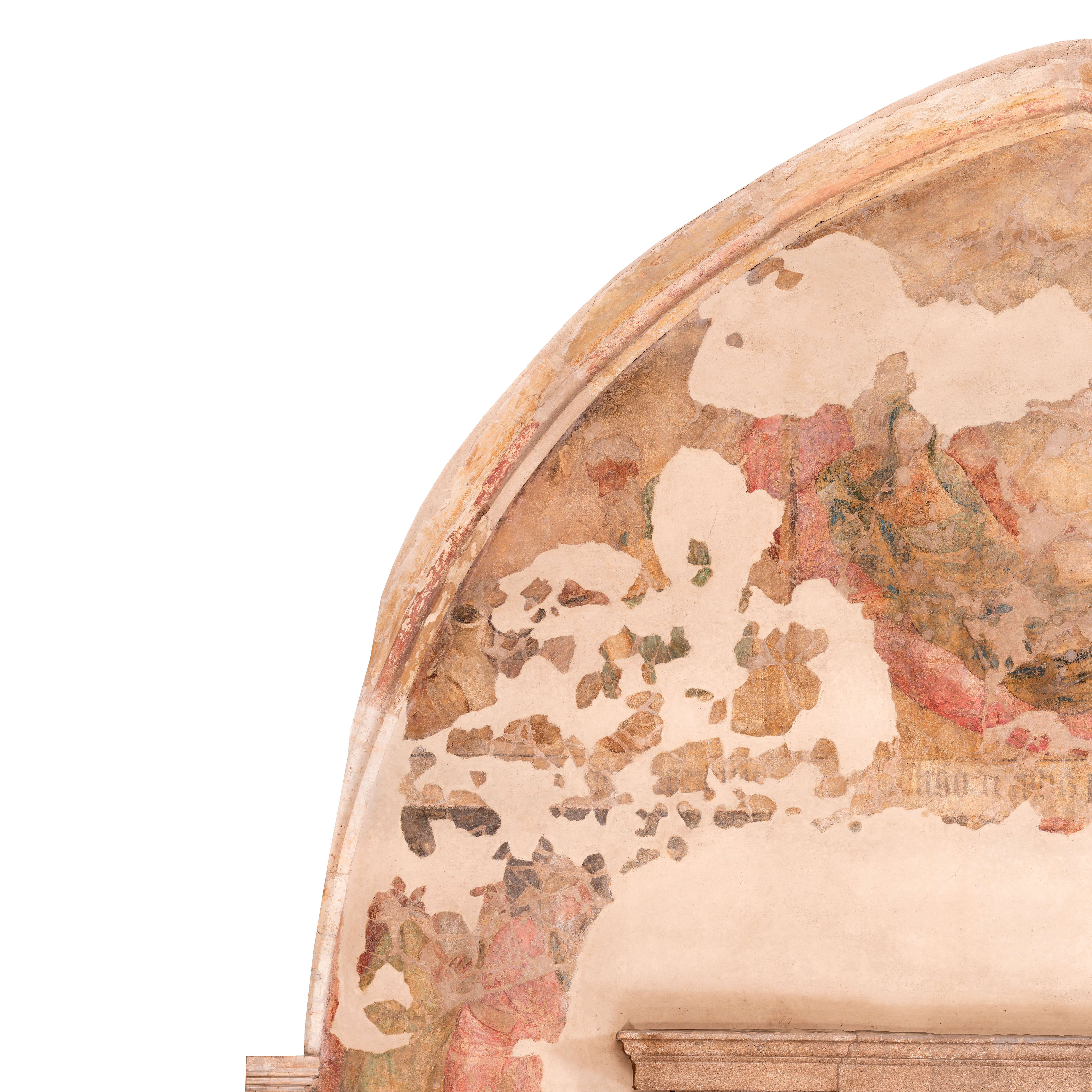
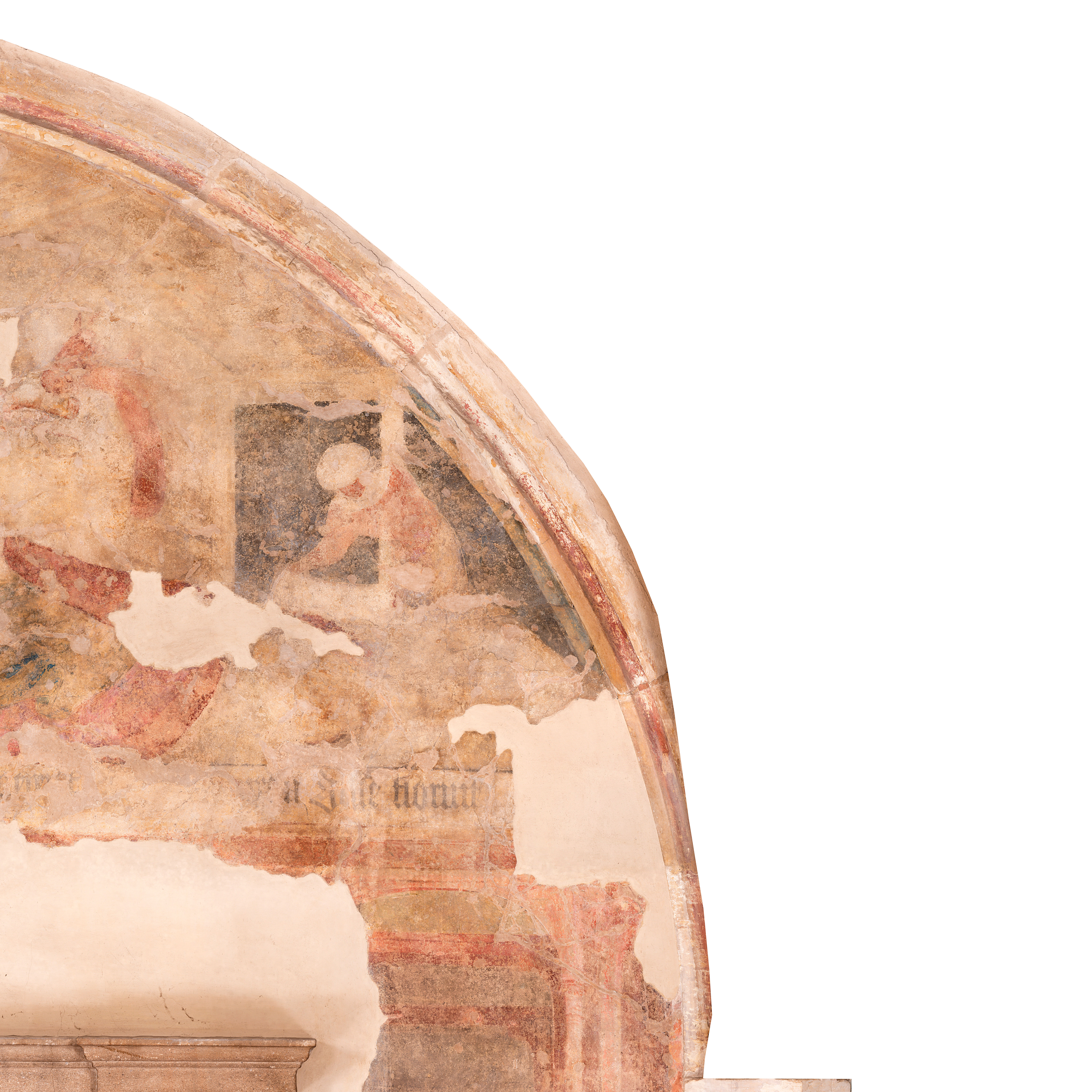
The Nativity of the Lord (Luke 2:1–7) – Aaron’s Rod (Num 17:16–26) and the Stem of Jesse (Isa 11:1)
Inscription: Virga Aaron fronduit. Virgo Christum peperit. Virga Jesse floruit. (Aaron’s rod has blossomed. The Virgin gave birth to Christ. The rod from the stem of Jesse has blossomed.)
Today the inscription survives only in fragments, preserved in the transcription by Josef Neuwirth and in historical photographs.
Uppsala description: Virga Aaron fronduit. Nativitas Domini. Virga Iesse floruit. (Aaron’s rod has blossomed. The Nativity of the Lord. The rod from the stem of Jesse has blossomed.)
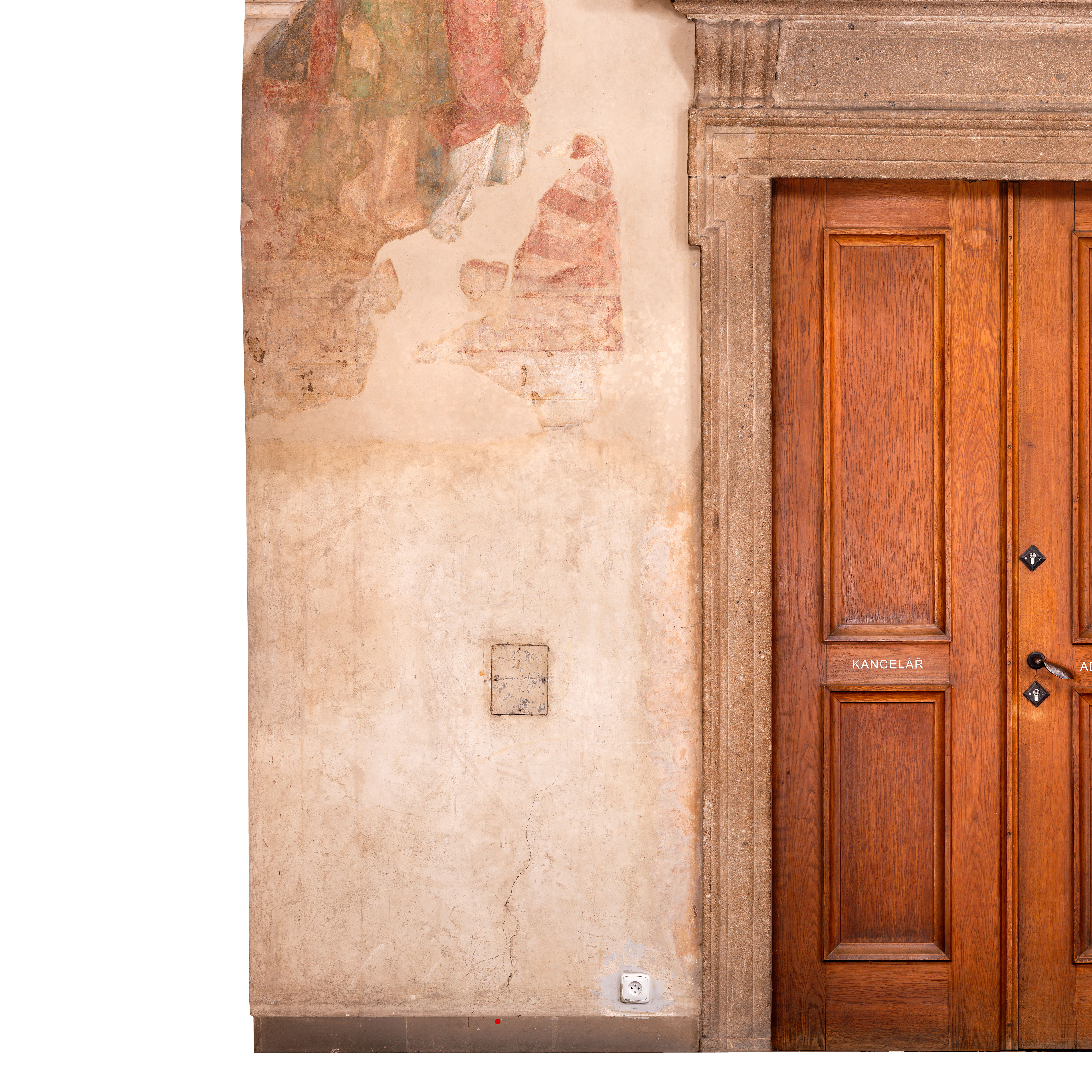
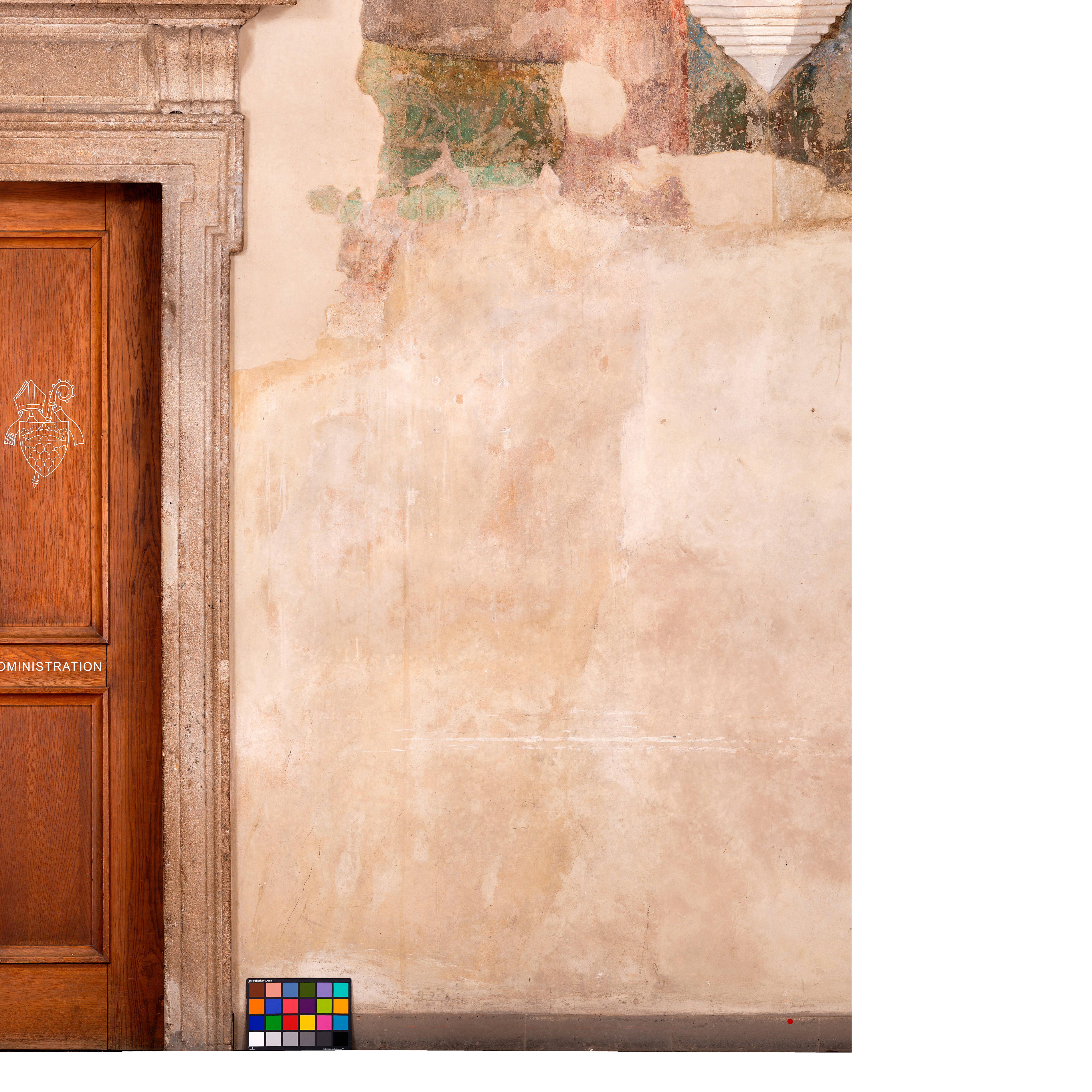
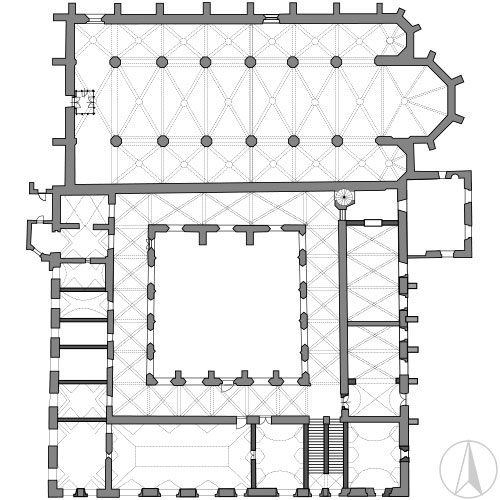
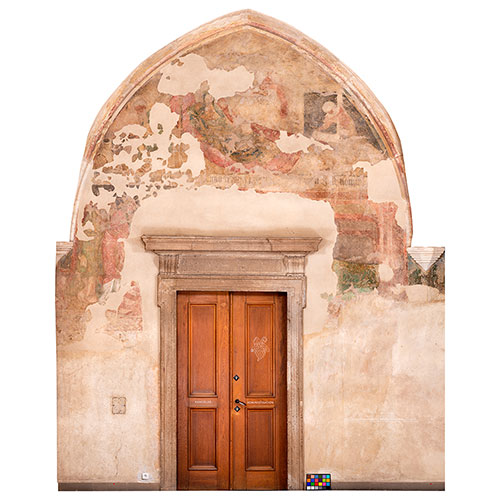
a. This field marks the beginning of the cycle on the western wall, depicting scenes from Jesus’ childhood and his preparation for public ministry - what is often referred to as his “hidden life”. The field was damaged by the later addition of a Baroque portal and further severely damaged in 1945. Its appearance is preserved in historical photographs.
b. The Nativity scene most fittingly begins this wall, as it marks the moment of the Saviour’s coming. At the center of the field, the Virgin Mary is lying beneath a wooden shelter on a bed laid over a straw mat. She supports her head with her right hand and holds a small book in her left. Behind her, in a wicker manger, lies the naked infant, upon whom an ox and a donkey breathe. In the left corner of the scene, Joseph sits with his back to Mary, stirring porridge in a small pan over a fire (now very fragmentary). On the opposite side, a woman appears probably to be preparing a cradle. This story is a traditional typological parallel to the Nativity. In Latin, moreover, the word virga (rod) resonates with virgo (virgin), further underscoring the connection.
c. The scene is a visual interpretation of Isaiah’s prophecy: “A shoot will come up from the stump of Jesse; from his roots a Branch will bear fruit.” The shoot is understood to be the Virgin Mary, and the fruit she bears is Jesus. Only a small part of the field is still visible on the right side. One can make out a kind of vault or arcade and a drapery covering the legs of a reclining figure. This was likely Jesse, the forefather of the Virgin Mary, from whose side a branch bearing a blossom symbolizing Christ may have sprung. This iconographic motif is often depicted as a visualization of Isaiah’s prophecy about a virgin who will bear a Son.
Předchozí pole | Následující pole ✖