The Emmaus Cycle | Wall Paintings in Context and Close Up
The Presentation in the Temple
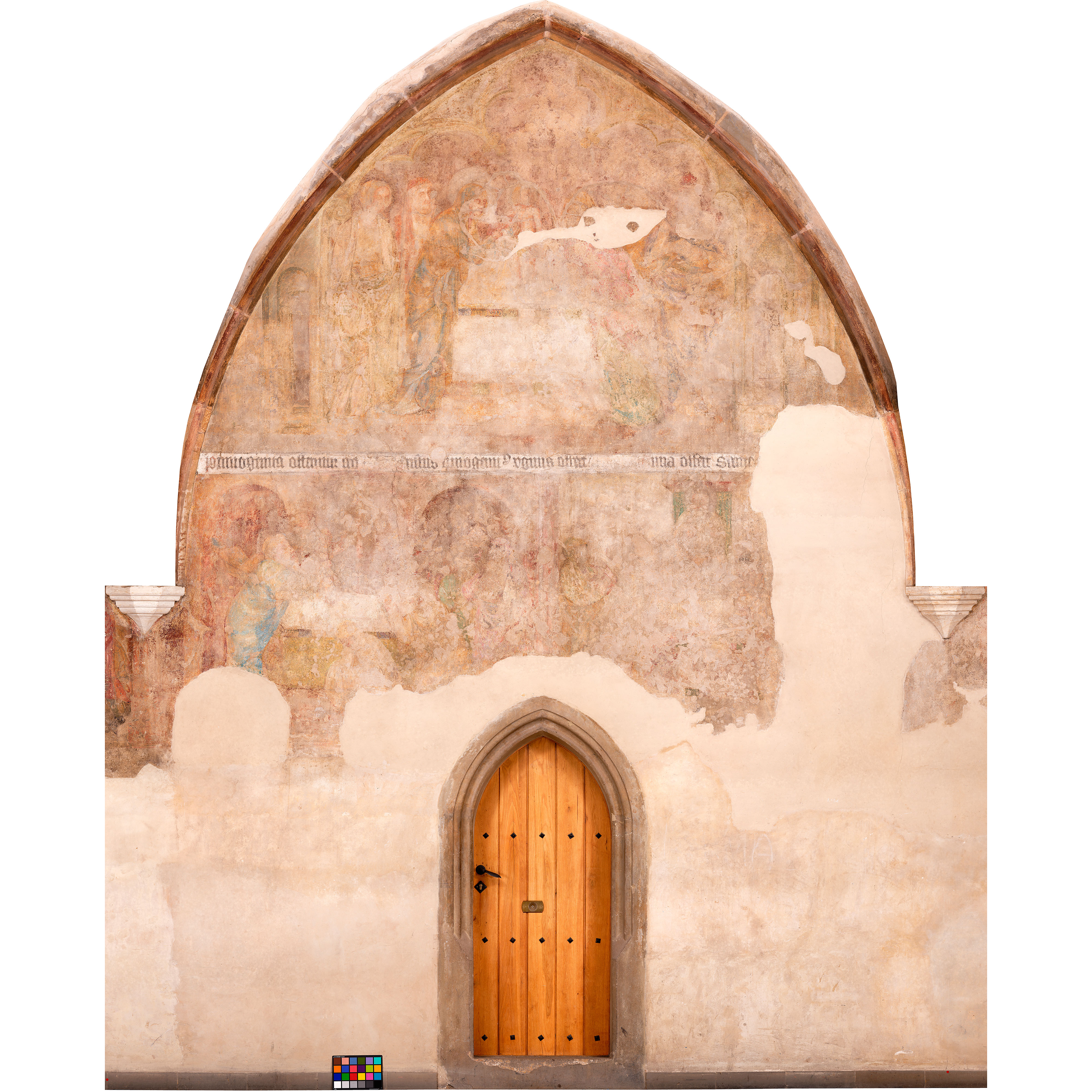
The Presentation in the Temple (Luke 2:22–39) – The Substitutionary Offering for the Firstborn (Exod 13:2 and Num 18:15–16) and The Offering of Samuel (1 Sam 1:24–28)
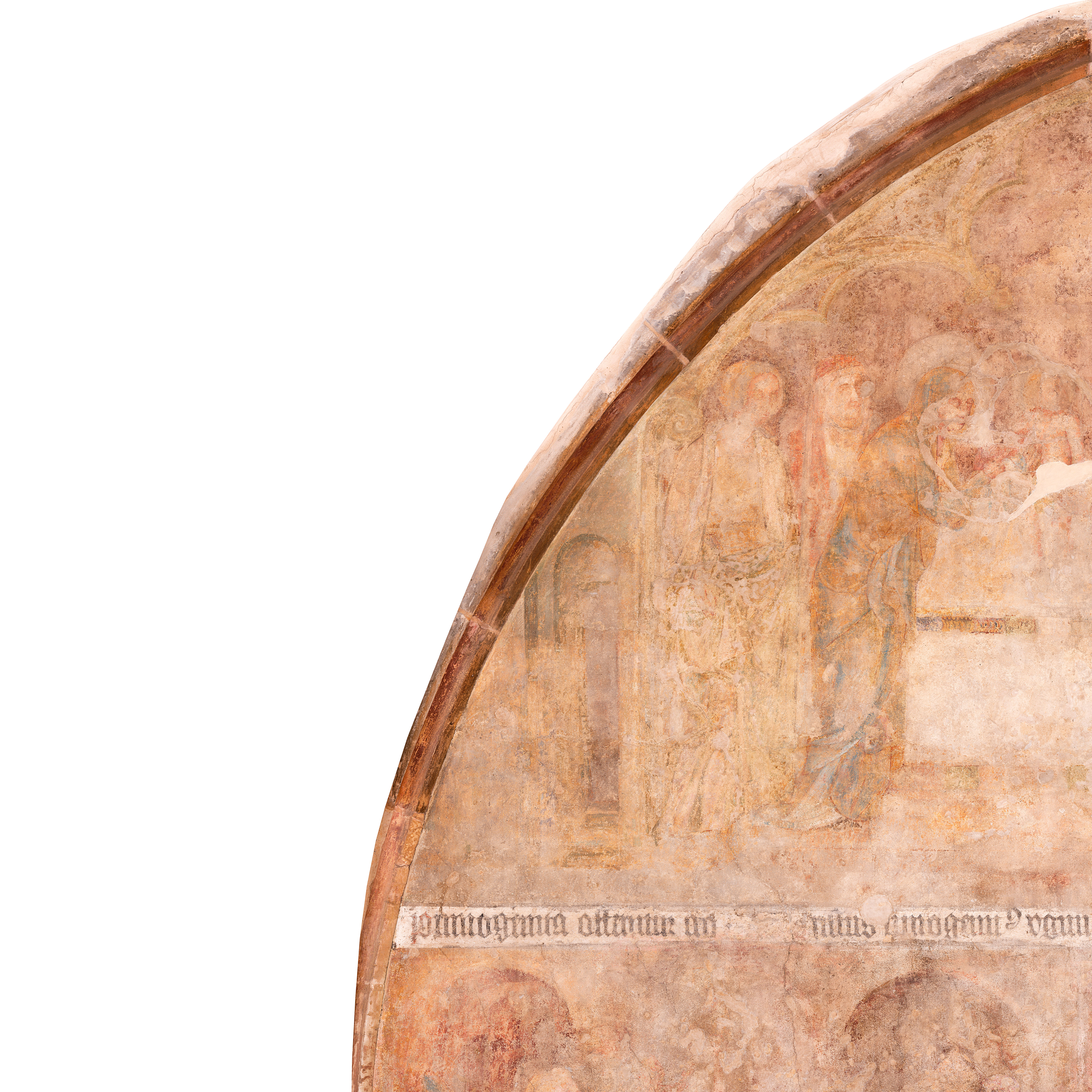
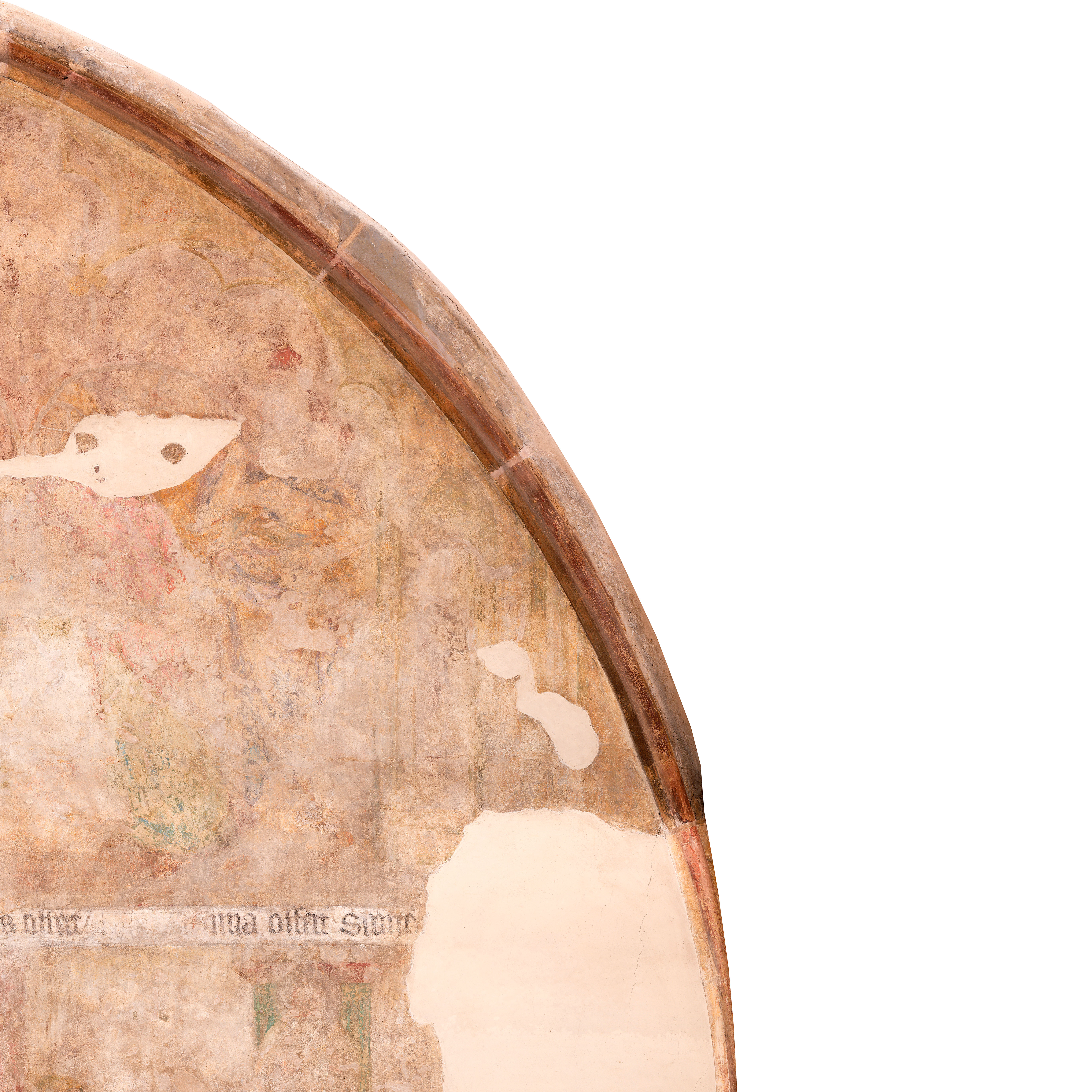
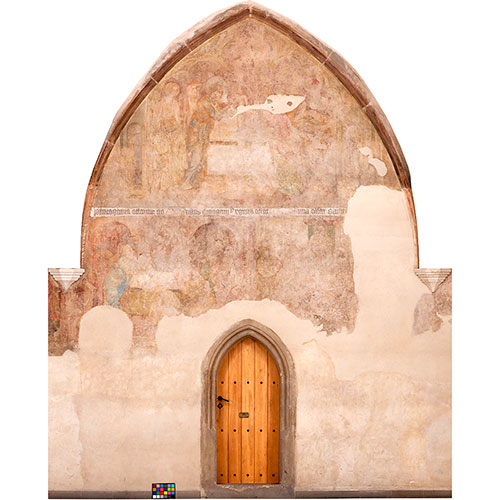
Inscription: Primogenita offeruntur do<mino>. Christus primogenitus Virginis offertur. Anna offert Samue<lem>.
(The firstborn are offered to the Lord. Christ, the Virgin’s firstborn, is offered. Anna offers Samuel.)
Uppsala description: Offeruntur primogeniti Ebreorum. Offertur Christus. Offertur Samuel.
(The firstborn of the Hebrews are offered. Christ is offered. Samuel is offered.)
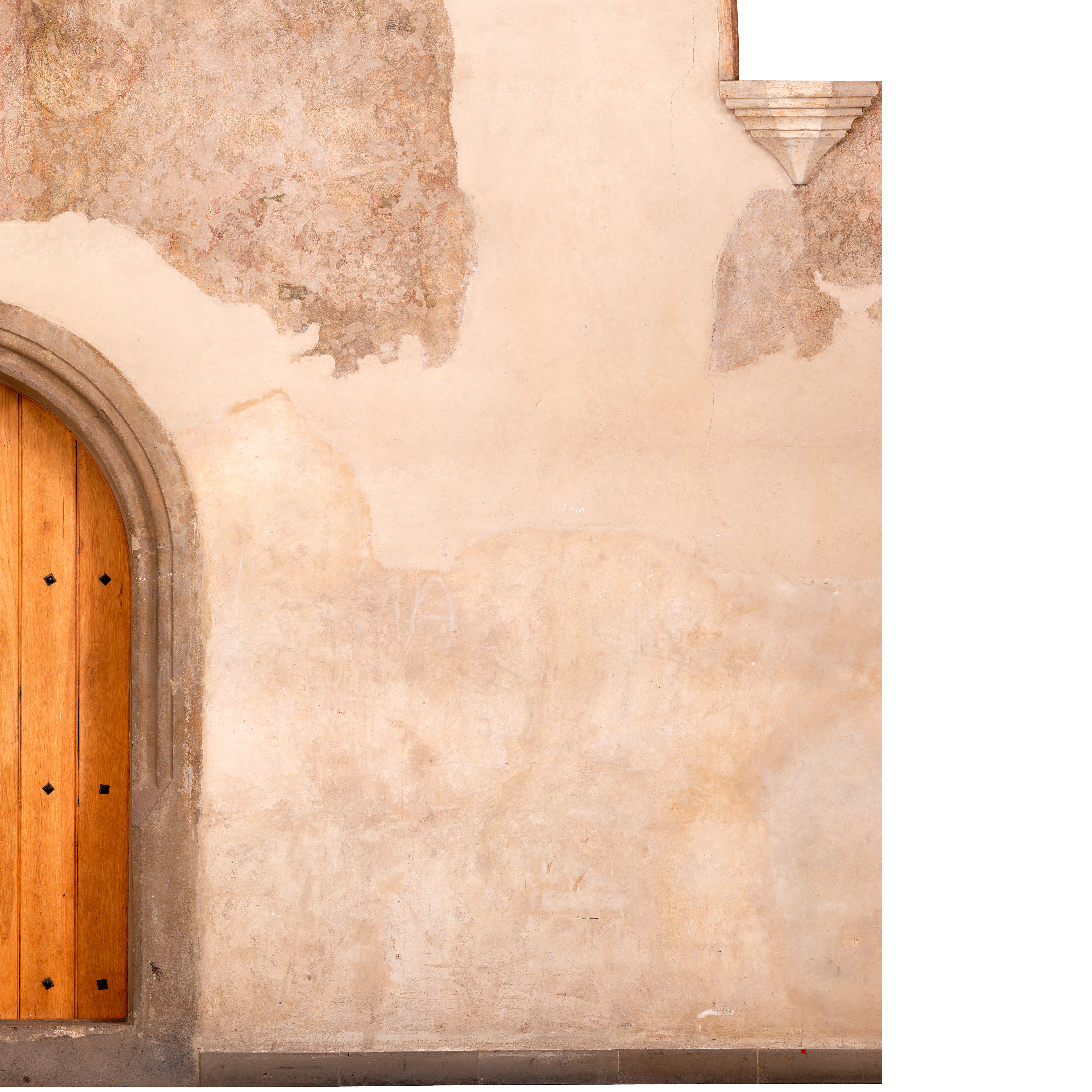
a. The scene referred to here as the Presentation of Christ in the Temple may also be called, in iconographic and liturgical tradition, the Presentation of the Lord or the Purification of the Virgin Mary. All of these aspects are encompassed in this single event. However, the inscription, description, and choice of typological scenes clearly indicate that it is the act of offering which is emphasized here. According to Old Testament law, a woman was to undergo purification forty days after childbirth and bring a substitutionary offering for the firstborn (as the firstborn belonged to God). Upon entering the temple, Mary and Joseph encountered the old man Simeon and later the prophetess Anna—both recognized Jesus as the Saviour. The scene is composed similarly to the Circumcision: in a temple space indicated by an illusory vault, an altar stands in the center. From the left, three women approach. At the altar stands the Virgin Mary, holding Jesus by the hand as He stands upon the altar. Behind her is likely the prophetess Anna (perhaps depicted as an old woman, but without a halo), and at the very edge a young woman—whether she carries two doves, as is traditional, is unclear (they are not visible in a 1935 photograph). To the right of the altar are three men. The first is the elderly Simeon, who leans forward and takes Jesus by the other hand. Behind him are two more men, possibly temple priests.
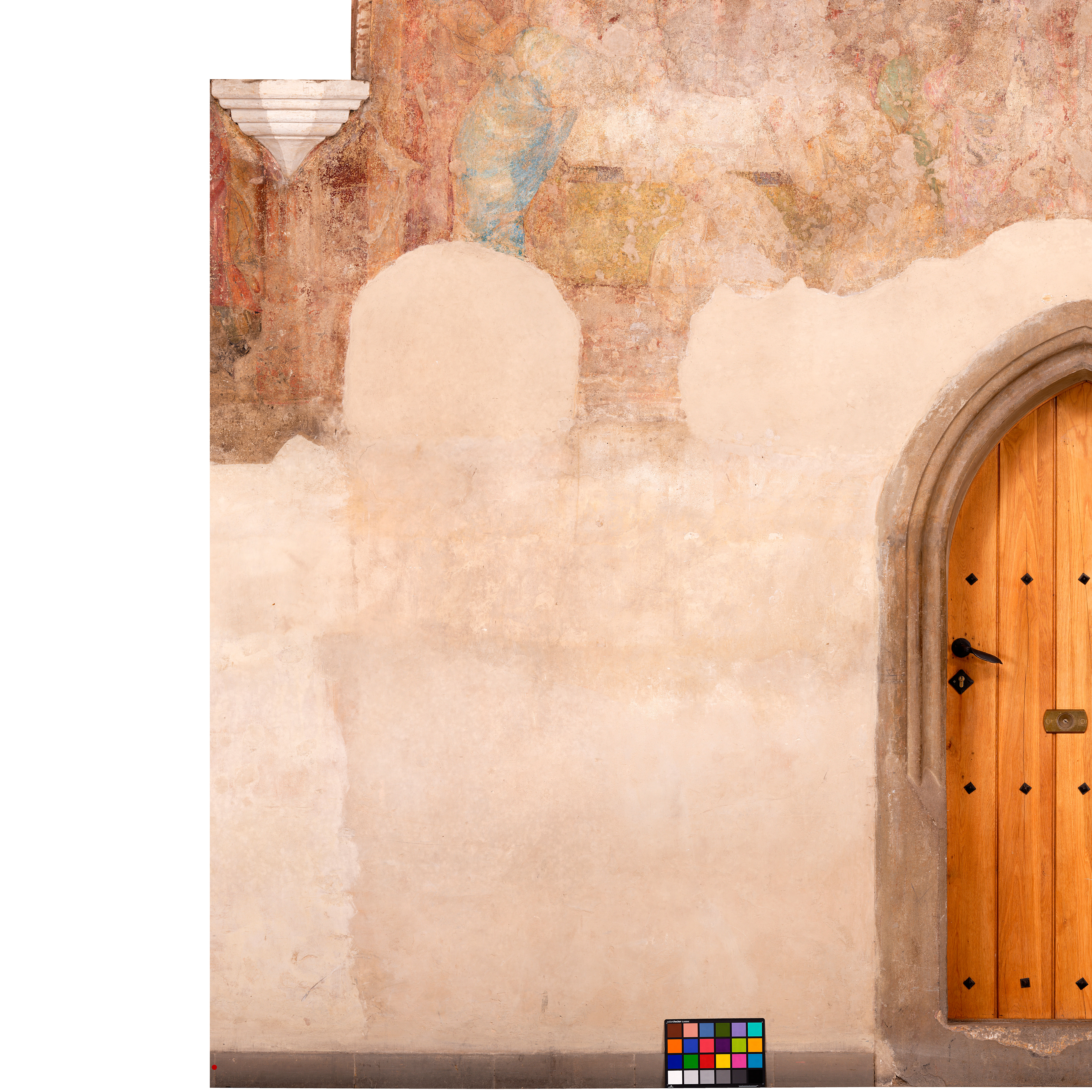
b. The scene of the Offering for the Firstborn is now almost entirely illegible. It recalls the commandment requiring a sacrifice to be made for every firstborn Jewish boy. The composition of the scene appears to have been similar to that of the main scene. In the center of the temple stood an altar, and upon it, a boy. On the left, he was held by a priest; in front of the altar, on the left side, his mother knelt, accompanied by another figure (or possibly more). A woman in front of the altar was laying something down or preparing something.
c. From the following scene, The Offering of Samuel, the right third has been irretrievably lost, and the remaining portion is heavily damaged. The childless Hannah had pleaded with the Lord for a son, promising to dedicate him to God's service in return. The moment depicted here shows Hannah presenting her son Samuel at the temple. On the left, the green-robed figure of Hannah can be identified. The boy stood in front of the altar, reaching his hand across it. God was represented as a figure enthroned on the altar (in the upper right of the scene). It is possible that the missing section of the painting may have depicted the priest Eli.
The substitutionary offering in the temple was interpreted by theologians as a foreshadowing of Jesus’s future sacrifice on the cross. Once again, the central scene on the wall recalls the pivotal moment of Christ’s life.
Předchozí pole | Následující pole ✖