The Emmaus Cycle | Wall Paintings in Context and Close Up
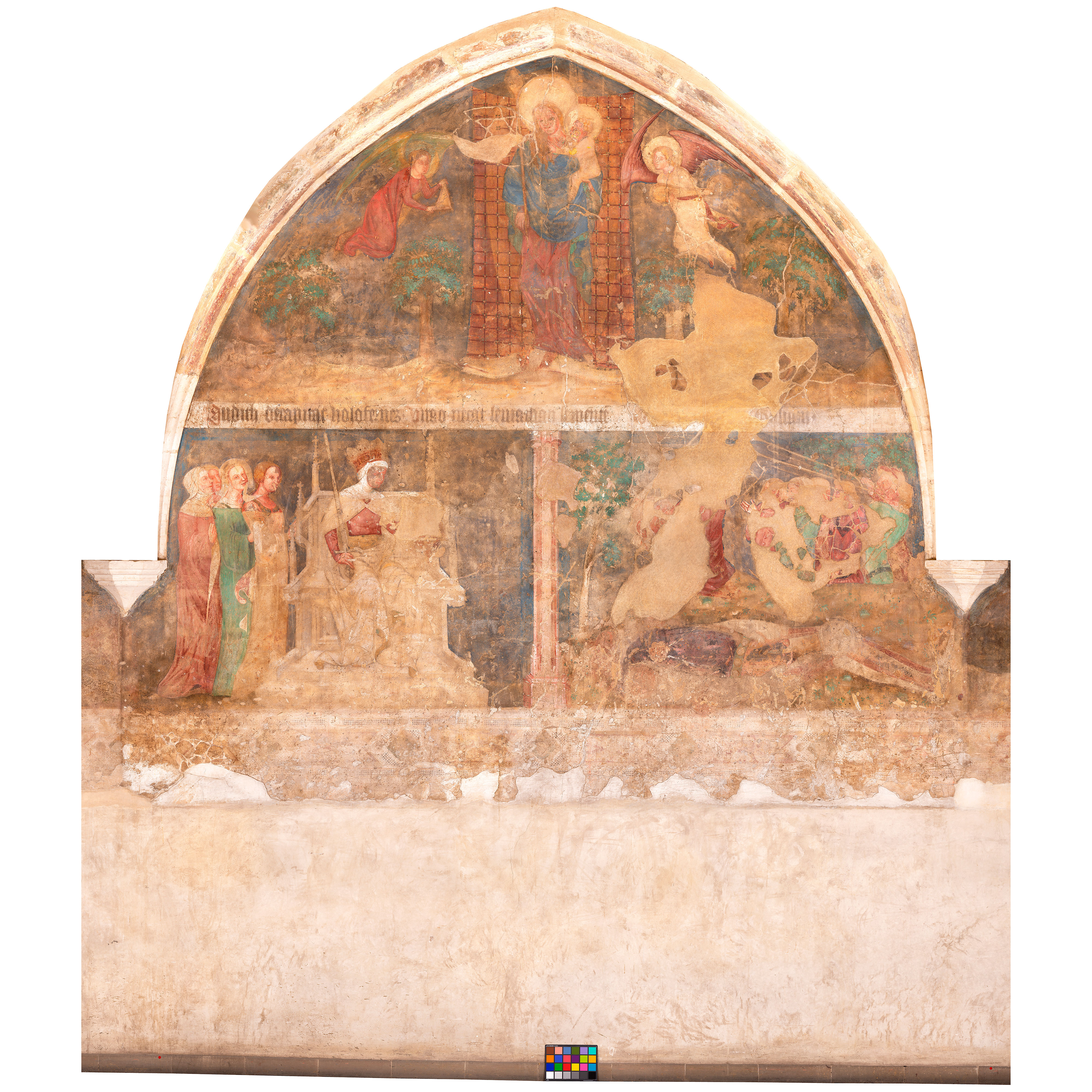
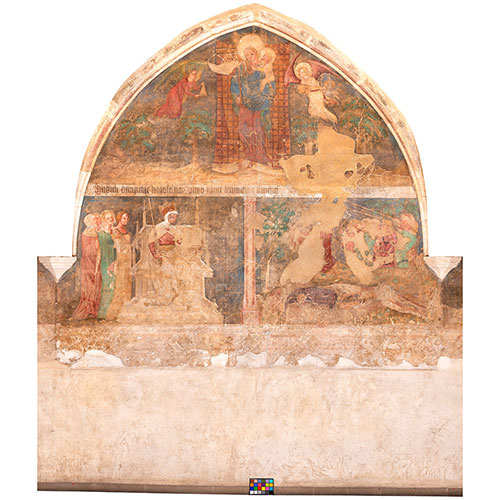
The Virgin Mary trampling the serpent – triumph over the ďáblem
The Virgin Mary trampling the serpent – triumph over the ďáblem (Speculum humanae salvationis, chap. XXX) – Judith with the head of Holofernes (Jdt 13) and David with the head of Goliath (1 Sam 17:48–54)
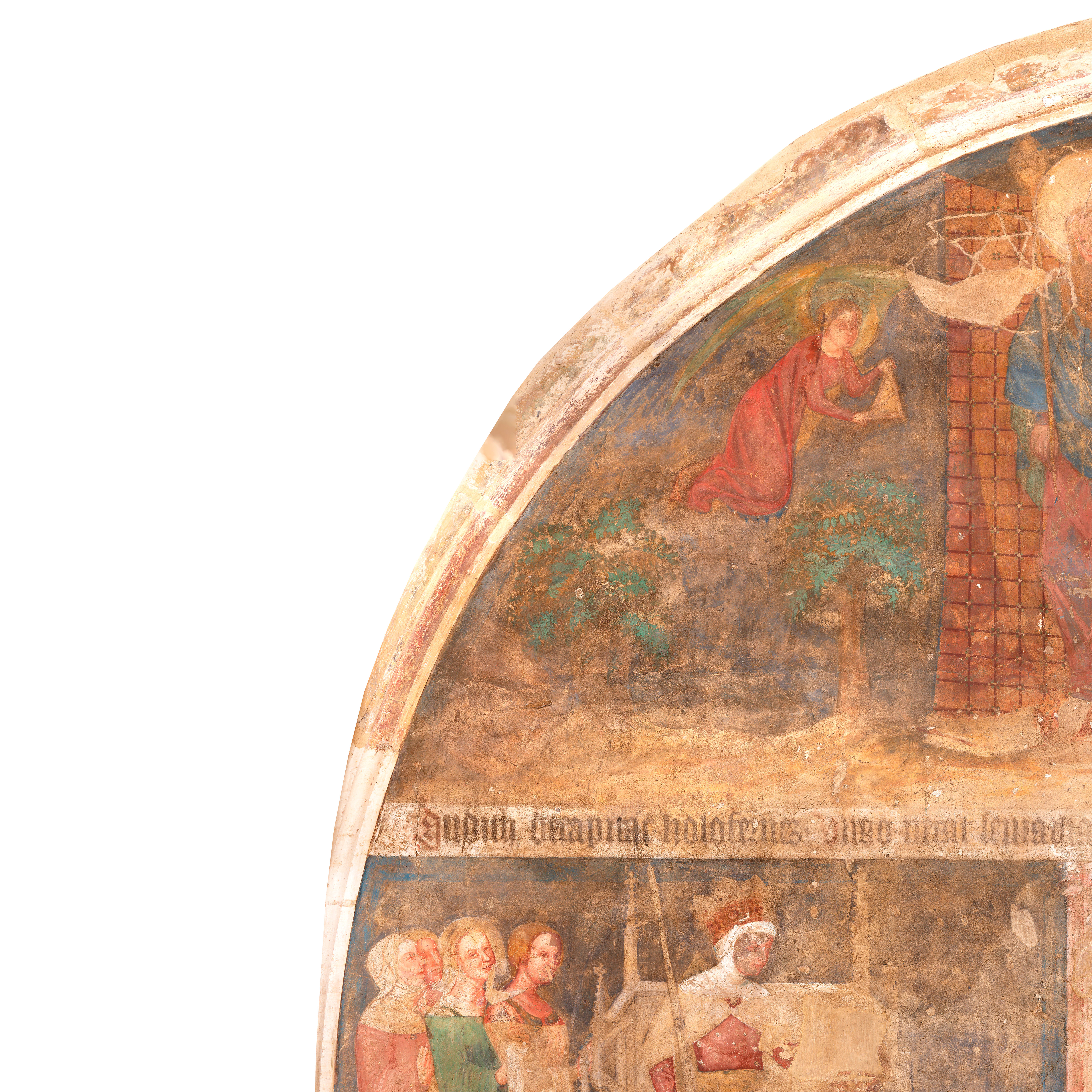
Inscription: Judith decapitat Holofernem. Virgo necat Leviathan serpentem. David prostravit Goliam. (Judith beheads Holofernes. The Virgin kills the serpent Leviathan. David struck down Goliath.)
Uppsala description: Judith abscidit caput Olofernis, sic Maria caput serpentis, Davit caput Golie. (Judith cut off the head of Holofernes; thus Mary [cut off the head of] the serpent, and David [the head of] Goliath.)
The main scene in this field once again does not depict a narrative moment, but rather visualizes the doctrine concerning the Virgin Mary, who—by giving birth to the Savior—helped to redeem humanity from the sin into which it had been cast by the first woman, Eve. The two parallels were chosen based on the thematic similarity of "crushing" the head. While Judith is seen as a prefiguration of Mary’s victory, King David is a foreshadowing of Christ’s triumph.
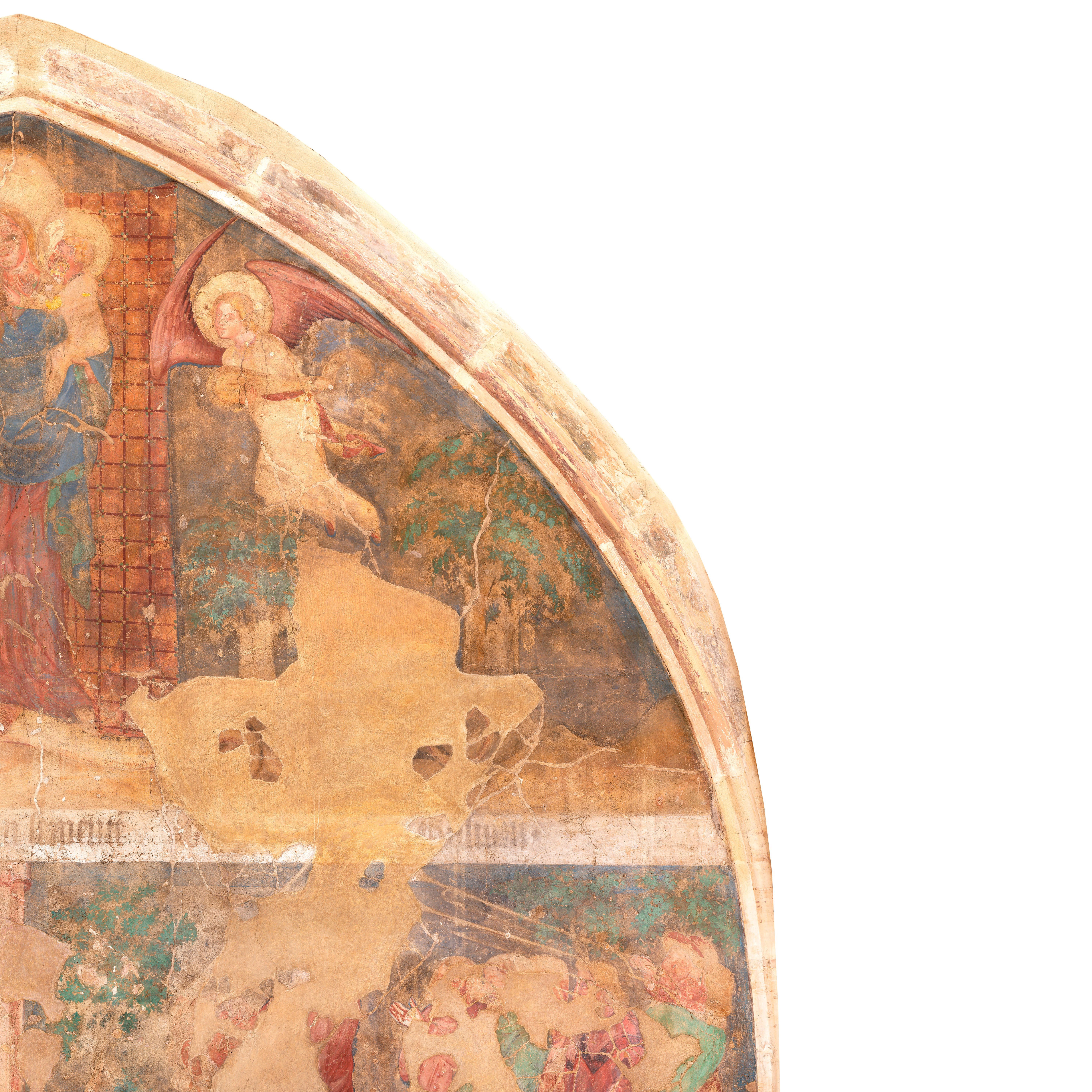
a. Mary, holding the Christ Child in her arms, wears a crown on her head and a long golden scepter in her right hand. She stands on a serpent that slithers beneath her feet. Behind Mary hangs a sumptuous silk cloth, emphasizing the importance of the figure depicted. From both sides, an angel flies in, each holding a musical instrument. The angel on the left plays a triangle, and the one on the right a quinterne; both are likely also singing. Mary is here honored as the woman to whom the words of the Lord (Gen 3:15) are applied: that her offspring will “crush his head, and you will strike his heel.” Therefore, both typological parallels shown here speak of the crushing of the enemy.
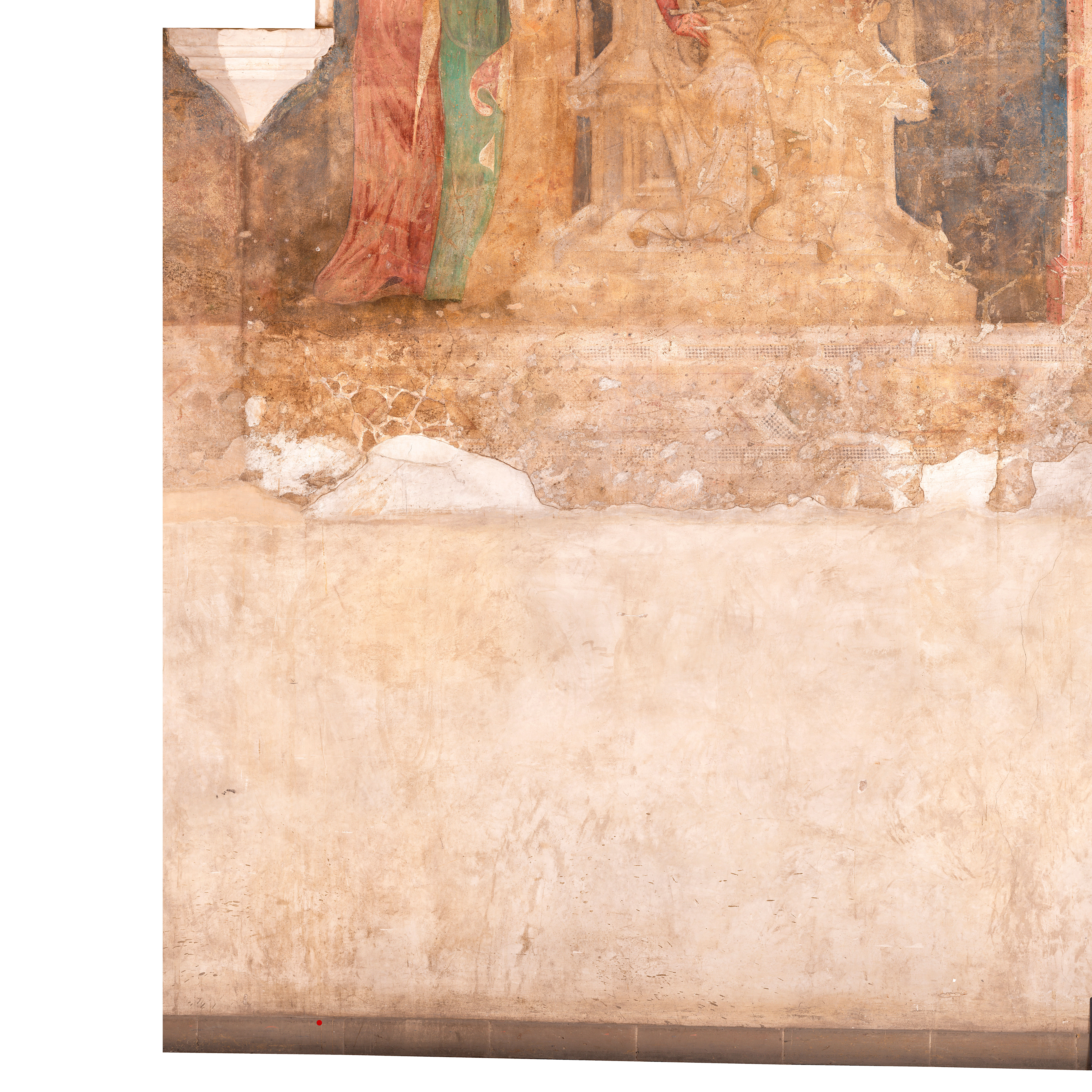
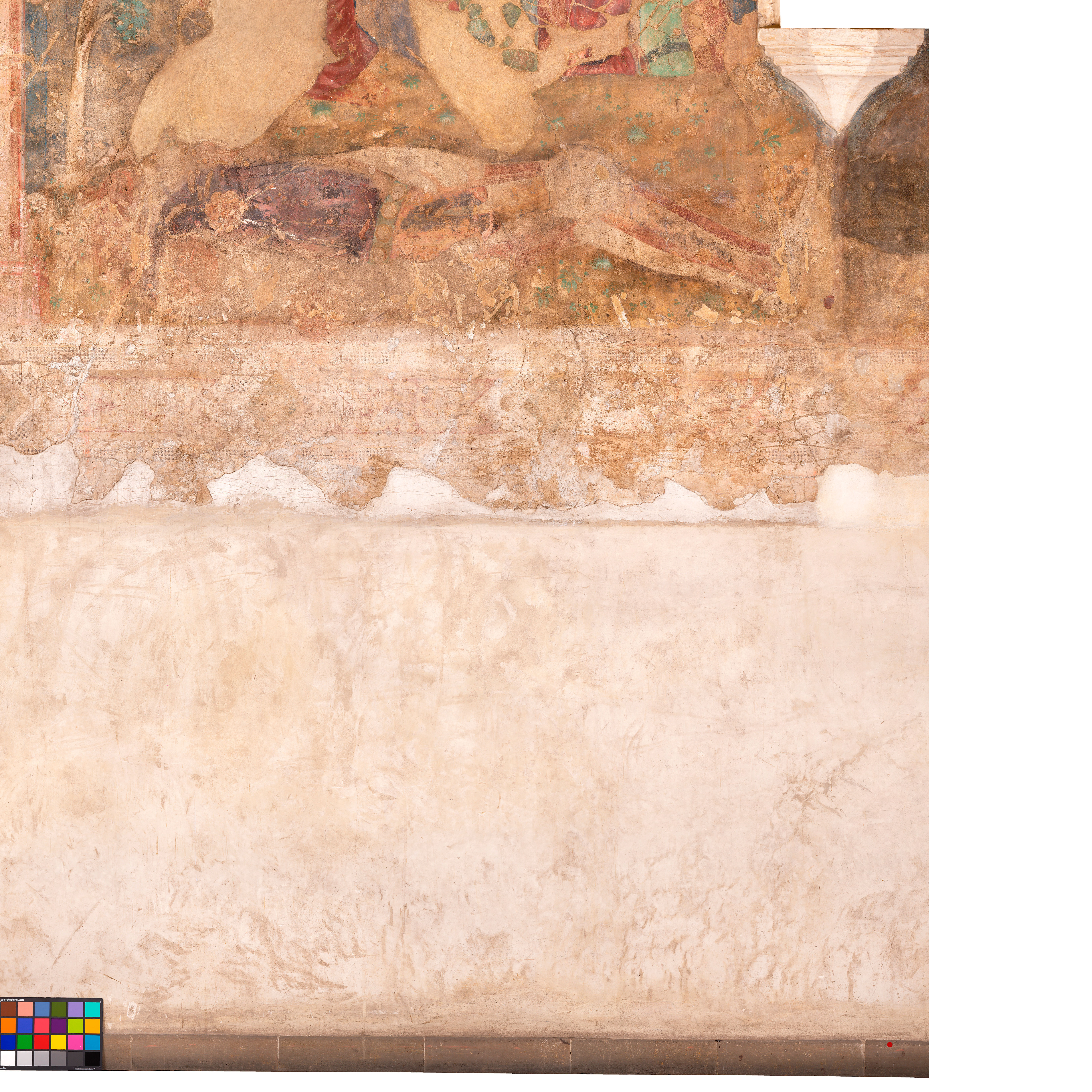
b. Judith sits on an ornate throne, adorned with a crown like a queen. In her right hand she holds a long, upright sword, and in her left she once held the head of Holofernes (now destroyed, but known from historical photographs). On the left, she is accompanied by four women, who represent a sort of courtly retinue. The depiction of Judith as a queen does not correspond to the Old Testament text, which tells of a young Jewish widow who outwitted the Assyrian general.
c. The second scene was more severely damaged in 1945 than the previous one, and thus it is necessary to rely on older photographic documentation. It depicts the well-known story of David, who defeated the strongest of the Philistines, the giant Goliath. The giant’s massive body lies on the ground, and above it stands King David, holding Goliath’s severed head in his hands. This is the final moment of the story, when David took the enemy’s head and went to Jerusalem. However, David here is not portrayed as a young boy, but as a bearded man wearing a crown. Moreover, his deed is celebrated by trumpeters, and he is accompanied by a procession of men, as if in a kind of triumph — a portrayal that does not correspond to the biblical text.
Předchozí pole | Následující pole ✖