The Emmaus Cycle | Wall Paintings in Context and Close Up
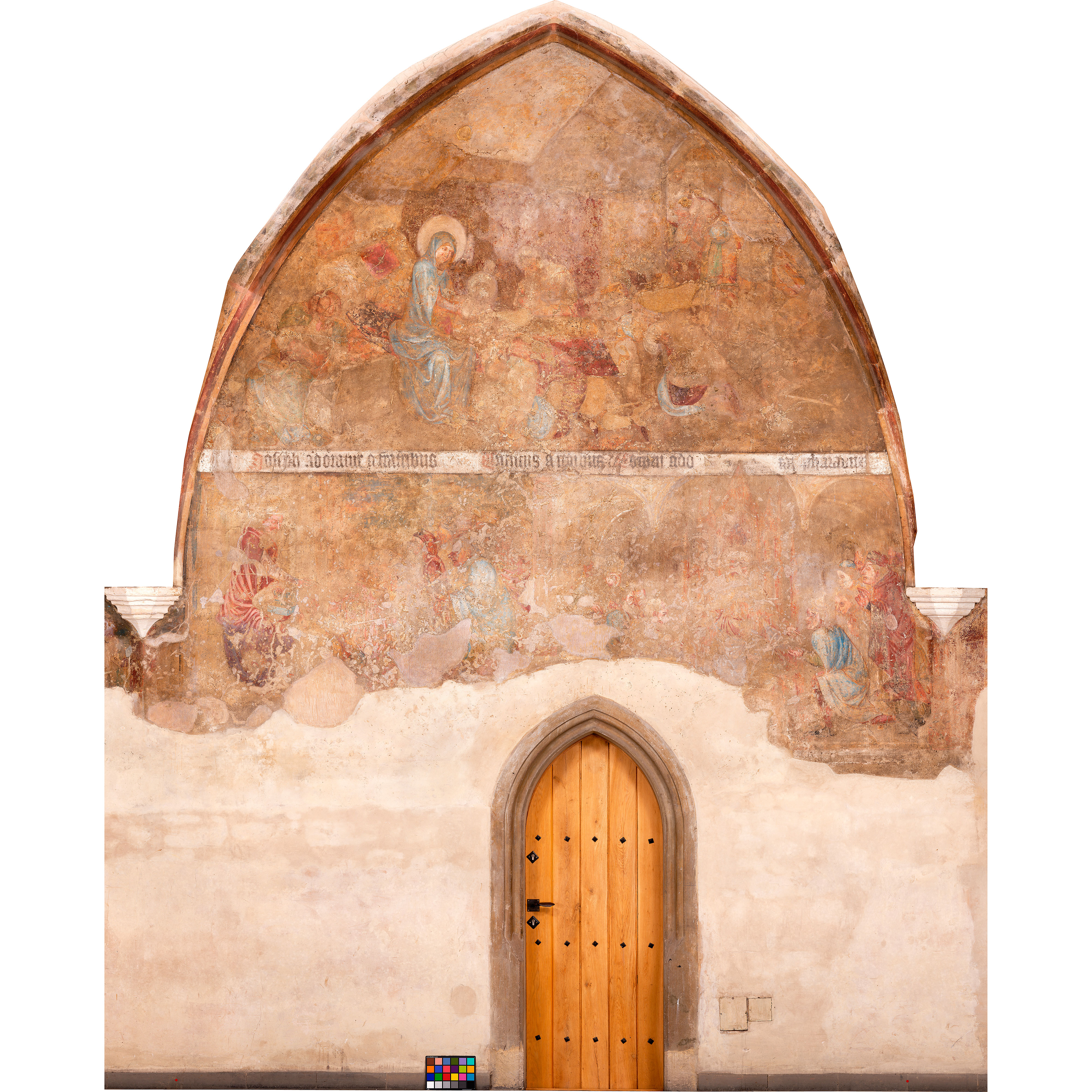
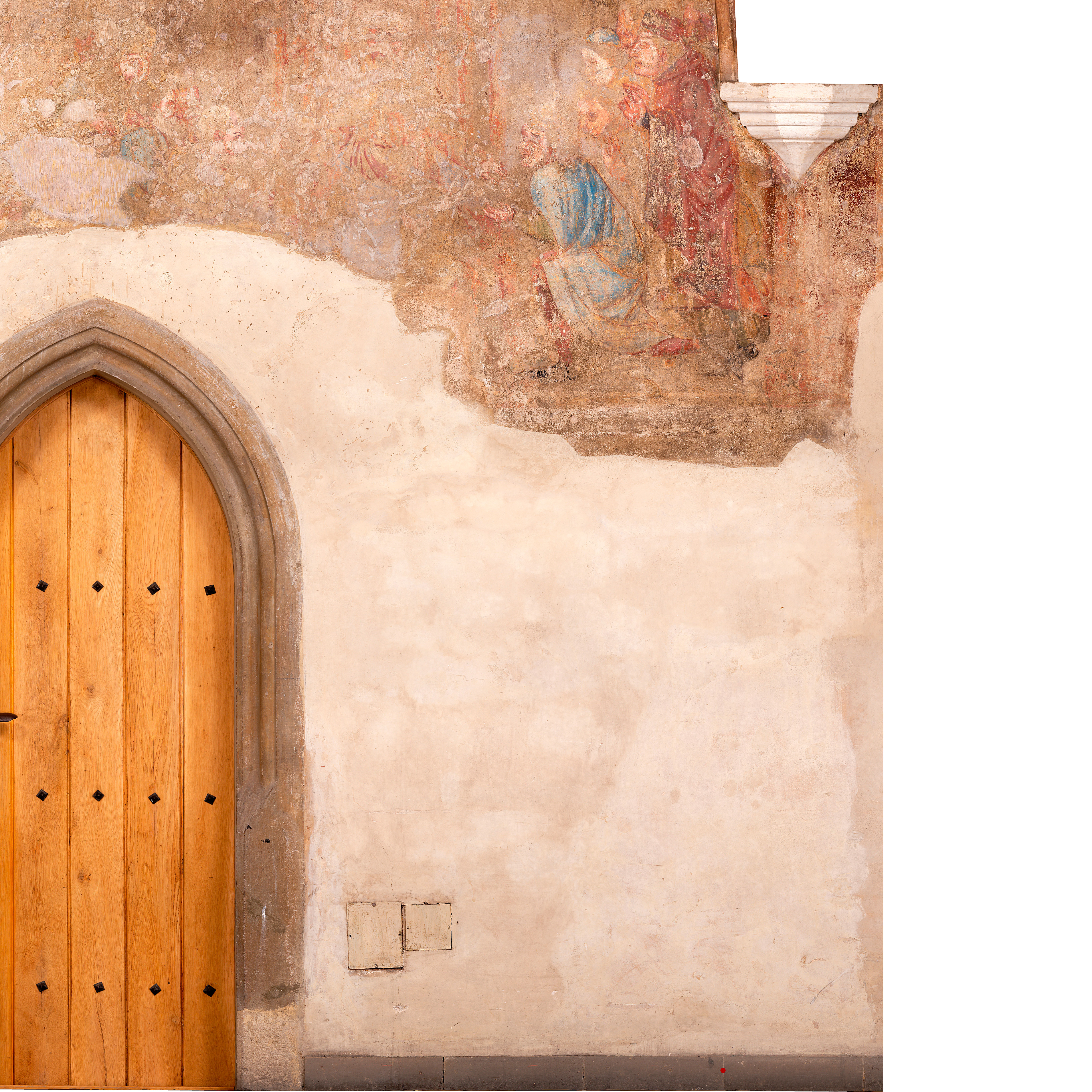
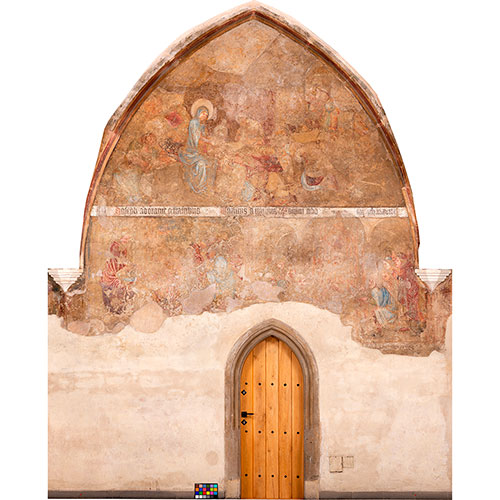
Adoration of the Magi
Adoration of the Magi (Matt 2:1–12) – Joseph’s brothers bow before him (Gen 43:26) and the leaders of the Israelites present offerings in the Tabernacle (Num 7:1–88)
Inscription: Joseph adoratur a fratribus. Christus a regibus. Egipcii adorant pharaon.
(Joseph is venerated by his brothers. Christ by kings. The Egyptians venerate Pharaoh.)
Uppsala description: Ioseph fratres adorant, magi Christum. Moysi offerunt principes mortariola in tabernaculo.
(Joseph is venerated by his brothers, the Magi [venerate] Christ. The leaders present small offering bowls to Moses in the Tabernacle.)
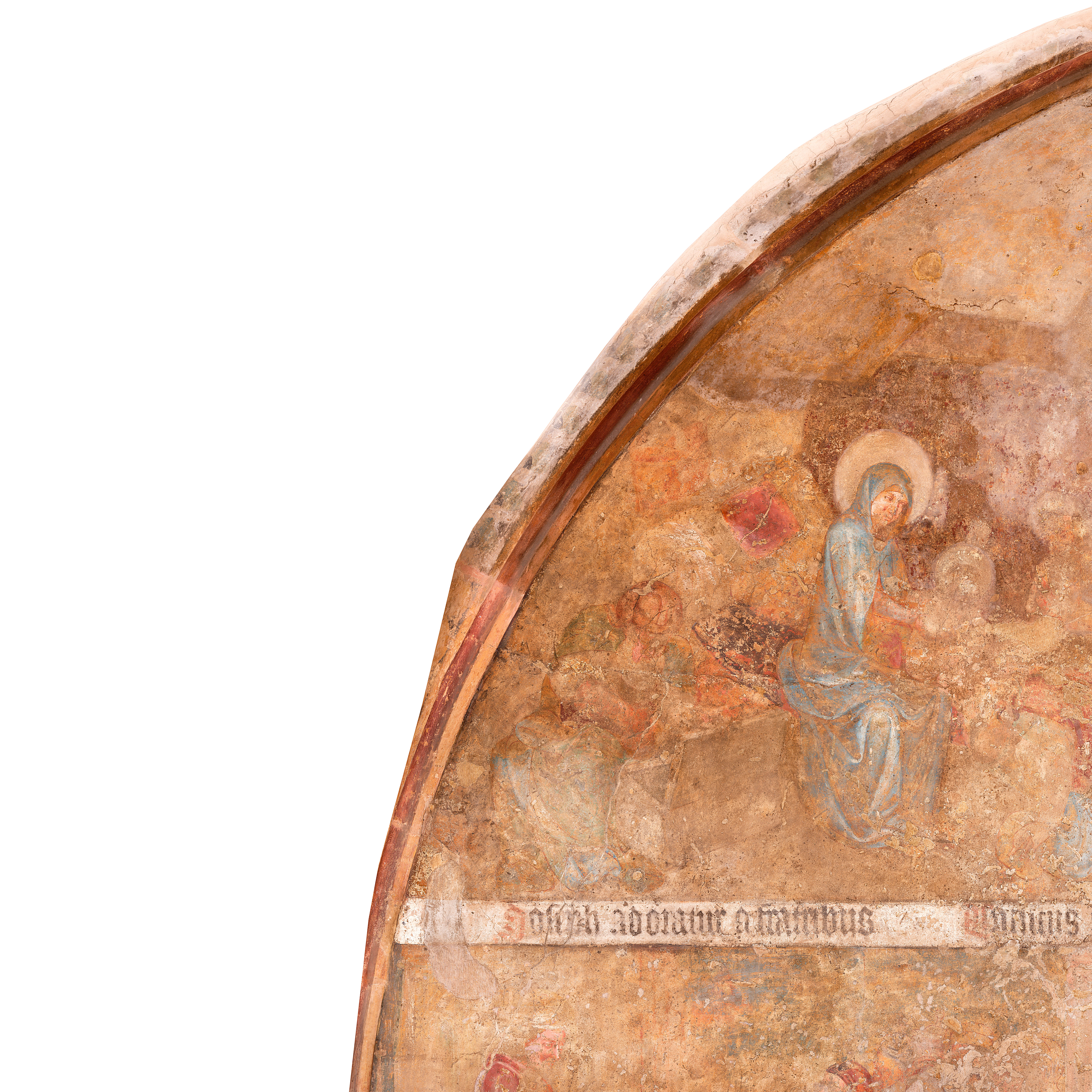
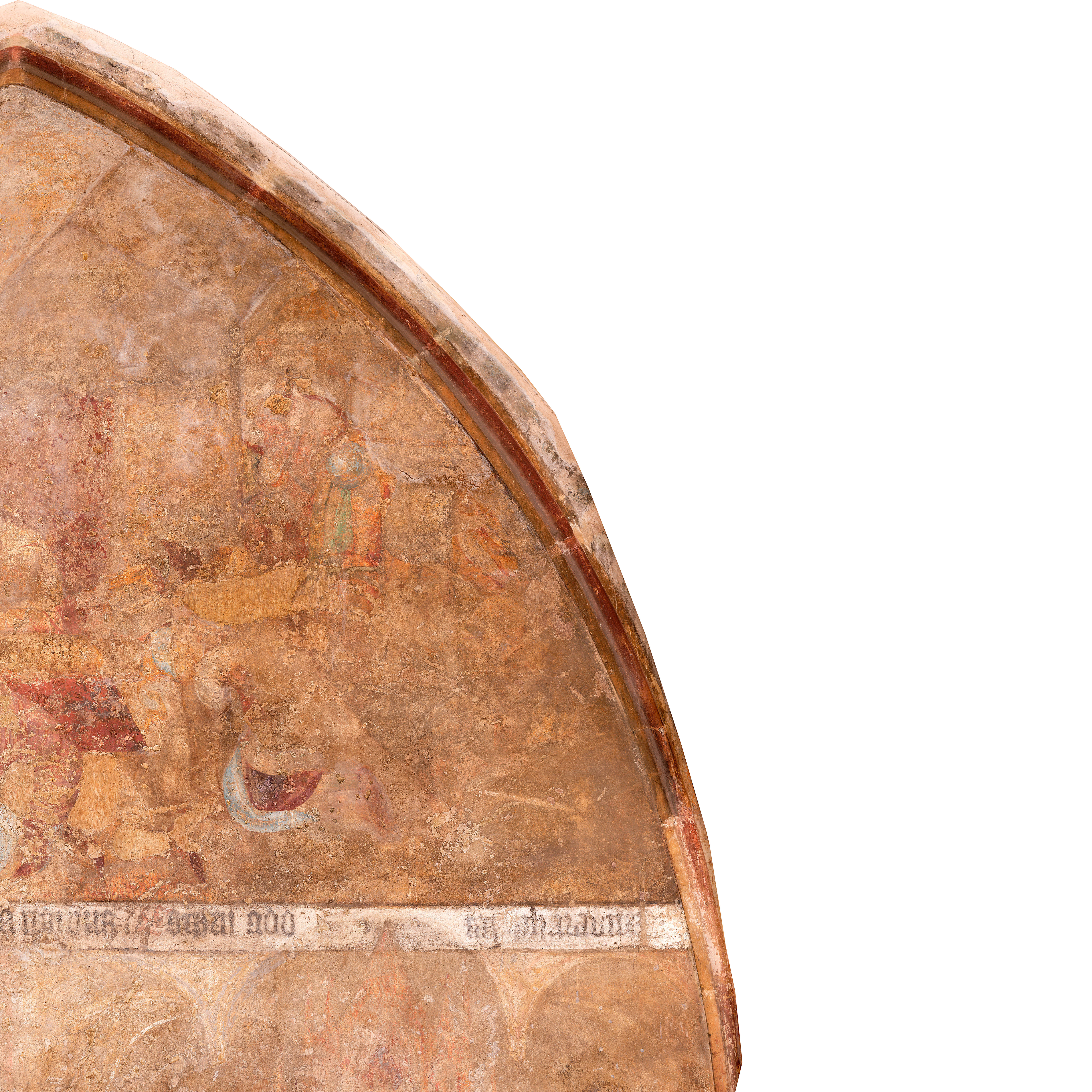
a. The main scene of the Adoration of the Magi is today very difficult to discern, due to damage caused by debris from a detonation, water infiltration during the extinguishing of the 1945 after bombing fire, as well as the removal of later overpainting. Once again, historical photographs must be used for reconstruction. The most clearly visible figure today is the Virgin Mary in a blue robe, seated on the left side of the scene. On her lap she holds the Christ Child, who reaches out to the oldest king kneeling before him on the ground. This king, having set aside his crown, is apparently kissing the Child’s foot. Another king kneels to the right of him; in a 1935 photograph, his face appears black, though this was likely a later overpainting. The third king may have been painted slightly higher between the two. To the right behind them, a pair of horses waited, accompanied by a man. An open chest stood on the ground. In the opposite corner, St. Joseph is seen storing what appear to be the brought gifts into a large chest. Above him, Mary’s bed with a red pillow is still visible, and behind it stood a wicker manger and the ox and the donkey. The scene was framed by the roof of a wooden stable.
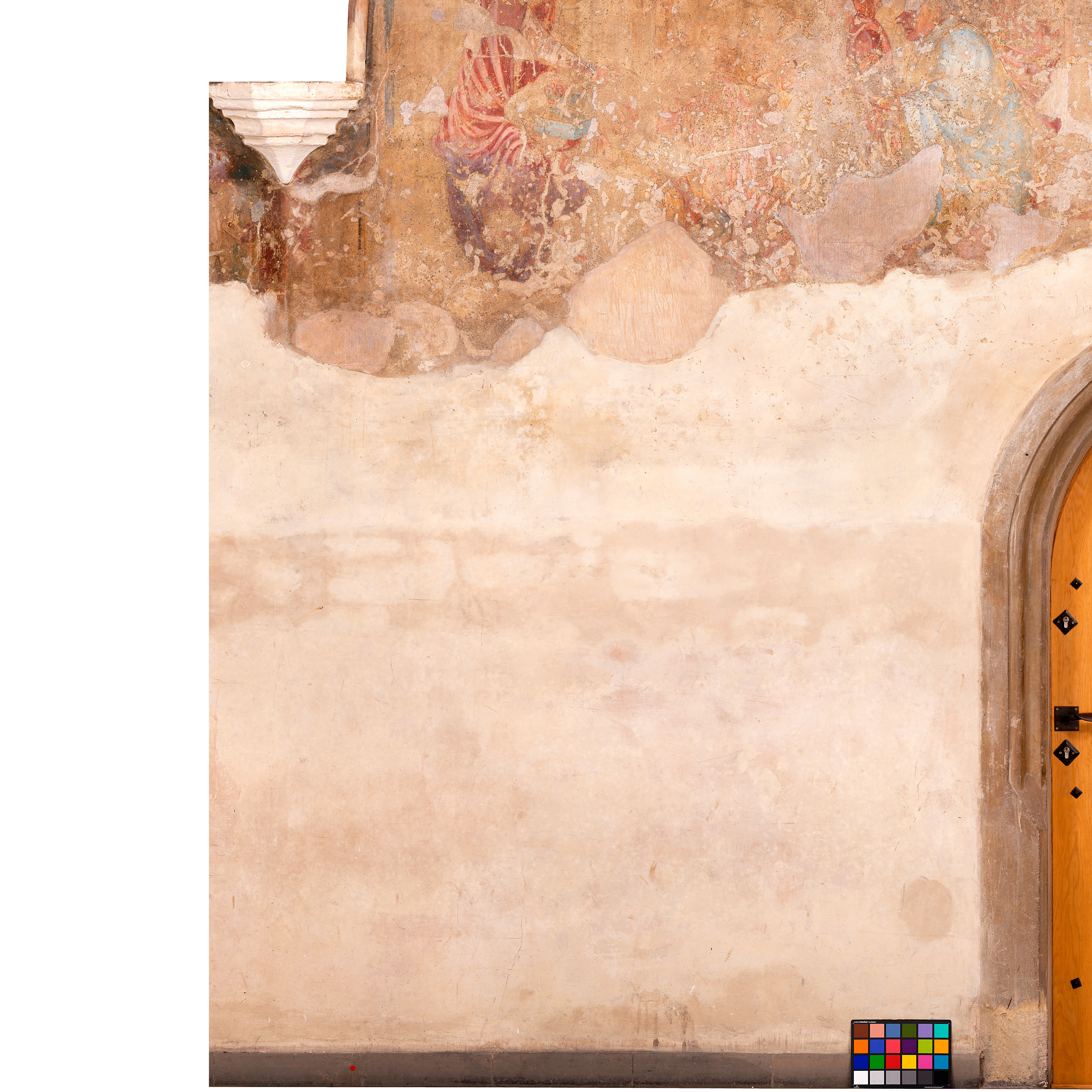
b. Joseph of Egypt is one of the Old Testament figures whose life was often seen as a prefiguration of Jesus. This scene depicts part of the story of Joseph’s reunion with his brothers. When Joseph was governor of Egypt, his brothers came to him to buy grain, though they did not recognize him. This is likely the moment of their second visit to Egypt, when, following the instruction of their father Jacob, they brought gifts for Joseph. In the left half of the scene, Joseph is shown wearing a red garment and what appears to be a cap indicating his high status. He is holding a small chest on his lap. In front of him stands a group of men, slightly bowing. The first of them presents a gift to Joseph. Another prominent figure in the foreground, dressed in a blue robe, also holds something in his hands. Two of the men are once again marked by the typical Jewish cap.
c. The subject of the final scene is somewhat unclear, as it is very difficult to decipher. Moreover, the Latin inscription differs from the Uppsala description. Part of the painting extends into the inscription band, but the text was placed around it, clearly indicating that the inscription postdates the painting. The discrepancy in the text also suggests that the inscriptions on the wall were created at a later time. The accuracy of the Uppsala description is supported by the matching iconography of this scene in the first volume of the Bible of Wenceslas IV. In the center of a vaulted room, there was a richly architectural throne, upon which sat the Lord (His bearded head bears a nimbus with an incised border). The Lord’s arms are outstretched to both sides toward small groups of kneeling Jewish men. Their affiliation with the Jewish people is indicated by the physiognomy of some figures (notably prominent hooked noses) and by the typical Jewish caps.
Předchozí pole | Následující pole ✖