The Emmaus Cycle | Wall Paintings in Context and Close Up
The Arrest of Jesus
The Arrest of Jesus (Matt 26:47–56; Mark 14:43–49; Luke 22:47–53; John 18:1–14) – Cain Kills Abel (Gen 4, 1-8) and Joab Kills Abner (2 Sam 3, 20-27)
Inscription: not preserved
Uppsala description: Cahym interfecit Abel. Judas Christum osculo tradidit. Joab sub pacis osculo interfecit Abner. (Cain killed Abel. Judas betrayed Christ with a kiss. Joab killed Abner under the kiss of peace.)
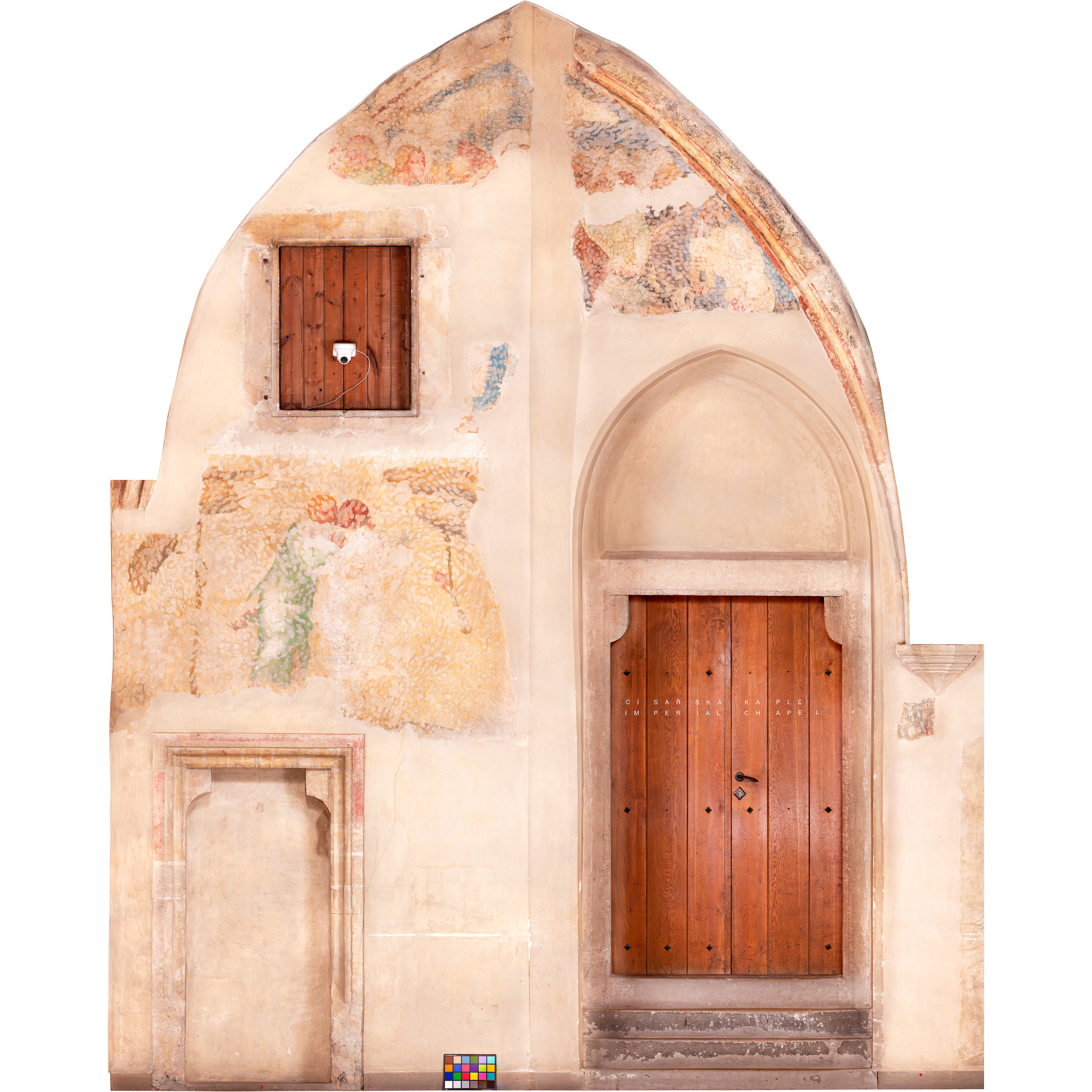
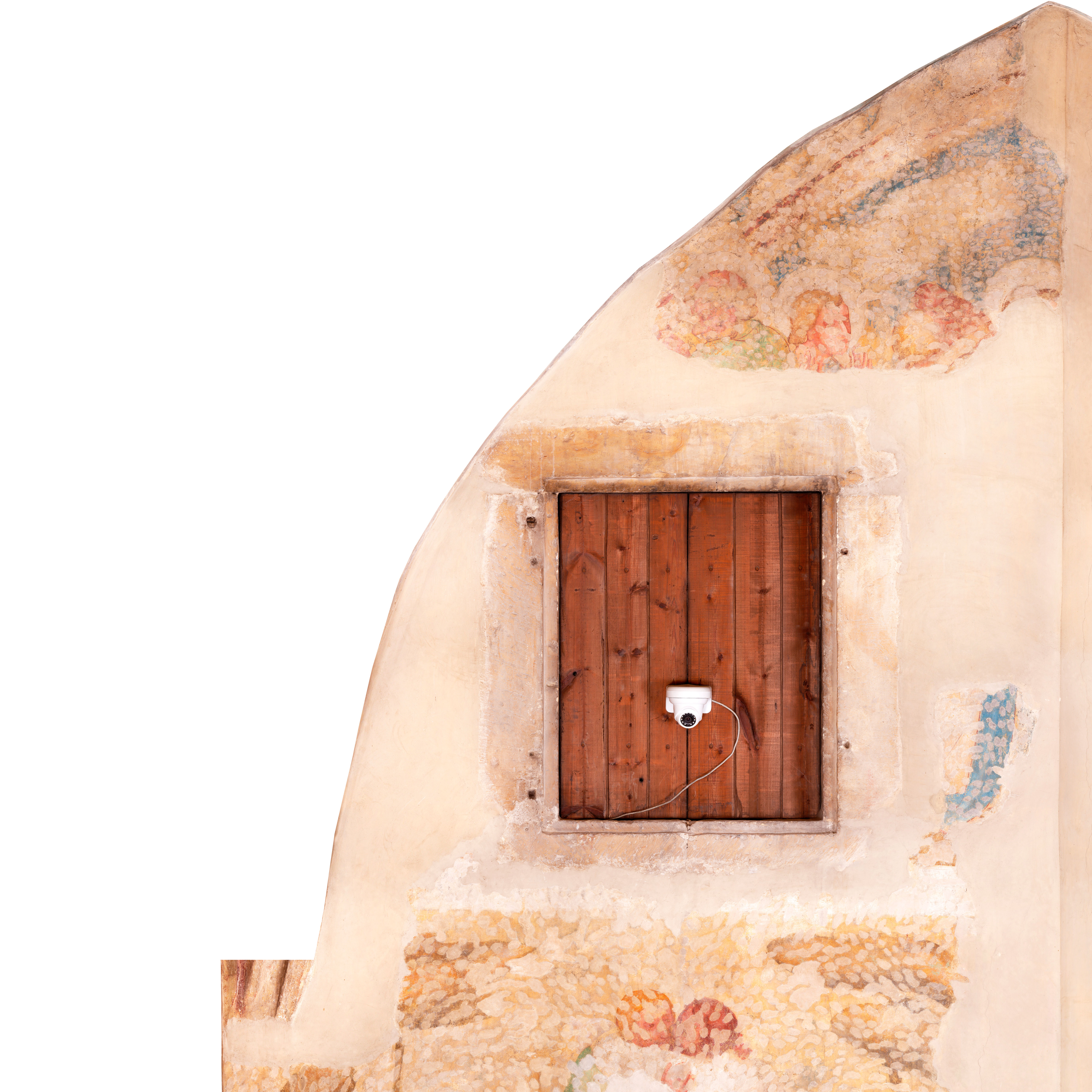
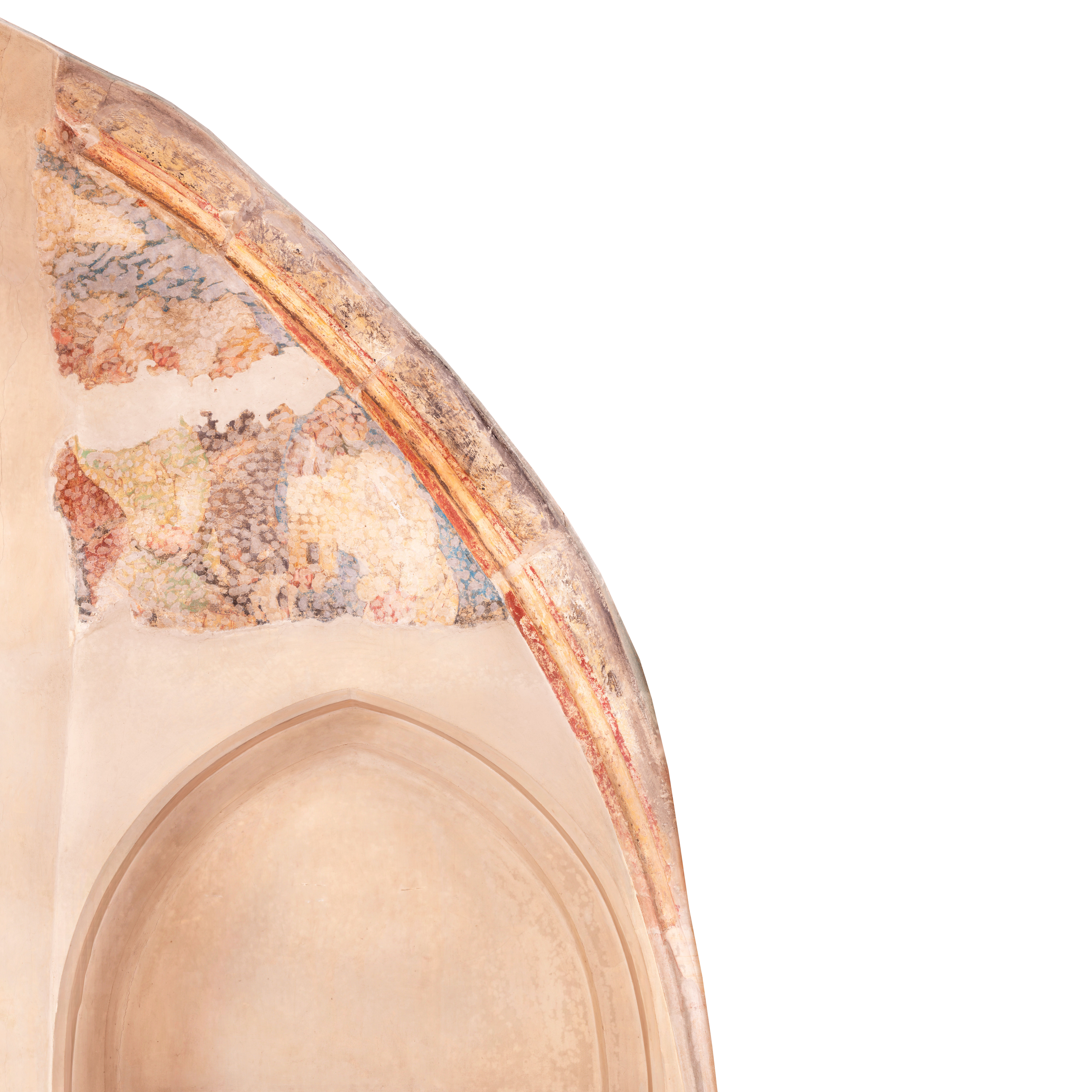
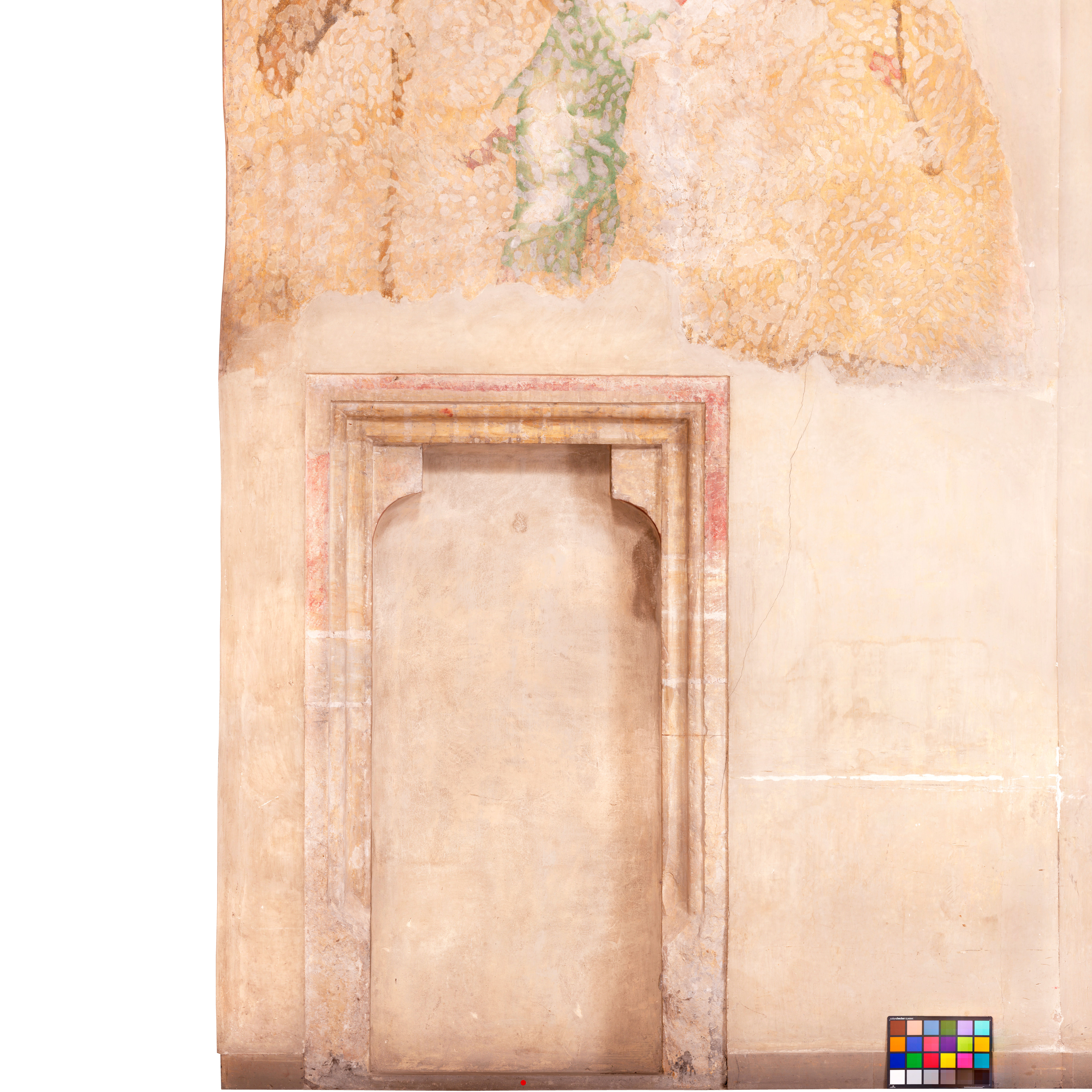
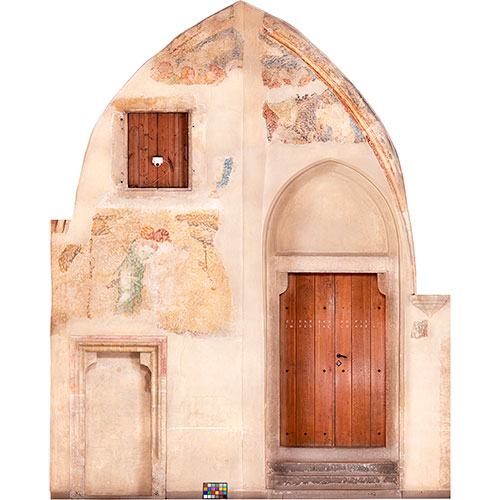
Only fragments of the first two scenes are discernible in this severely damaged field, which was further disfigured by pecking—small incisions made to roughen the surface in preparation for a new layer of plaster.
The original paintings were replaced by new paintings dating from the late 16th century, which are now known only partially through historical photographs. The same fate befell the paintings in the following four fields, which were similarly overpainted.
a. The arrest of Jesus is described by all four Evangelists. It took place in the Garden of Gethsemane, where Jesus had gone with his disciples to pray. Judas led a group of armed men to the place and identified Jesus with a kiss (a detail omitted only by John). During the arrest, one of the disciples - Peter, according to John - cut off the ear of the high priest’s servant. Jesus, however, stopped the armed resistance. The iconography of this scene is typically assembled from the various details provided by each Gospel.
From the fragments and contemporary parallels, it is clear that Christ was positioned at the center of the scene (a halo and a fragment of his robe is visible in the middle of the field). From the left, Judas seems to be approaching and pressing a kiss to Jesus’ cheek (a small fragment of the head outline is preserved). Soldiers are grabbing at Jesus from the opposite side. We can still see figures wearing helmets and with swords at their belts. On the far right stands a bearded, slightly hunched man. To the left, above a small window that once lit the staircase leading to the dormitory, is the head of a young apostle, likely John, and behind him St. Peter, who is turned away and appears to be fighting with the high priest’s servant.
b. Cain and Abel each offered a sacrifice to God - Cain brought grain, while Abel offered an animal from his flock. The Lord accepted only Abel’s offering. Out of jealousy, Cain killed his brother.
In the scene, two men are depicted in the center: one wearing a green robe with light-colored hair, and the other with reddish-brown hair and what appears to be a yellow garment. The second man is kissing the first on the cheek, but at the same time he has a hand extended behind his back, holding a club with which he is about to kill his brother.
c. If we can trust the Uppsala text, the scene depicted the murder of Abner, former commander of Saul’s army, by Joab, the commander of David’s forces. Joab lured Abner under the pretence of a private conversation and then stabbed him. We do not know how exactly the scene was composed, but it is likely that it was visually designed to resemble the main scene. Thus, Joab likely greeted his victim with a kiss, as the description also suggests.
Předchozí pole | Následující pole ✖